The Best Free Alternatives to ElevenLabs
ElevenLabs is the most advanced AI voice generation service available — it produces speech that is nearly indistinguishable from a human voice, with control over tone, pacing, and emotional delivery. It also costs eleven dollars a month for the entry-level plan, and the free tier is limited to ten thousand characters per month, which is roughly ten minutes of audio. The alternatives that follow are real text-to-speech tools that produce usable results, and each is free to use. The right one depends on whether you need natural quality, commercial rights, or simplicity.
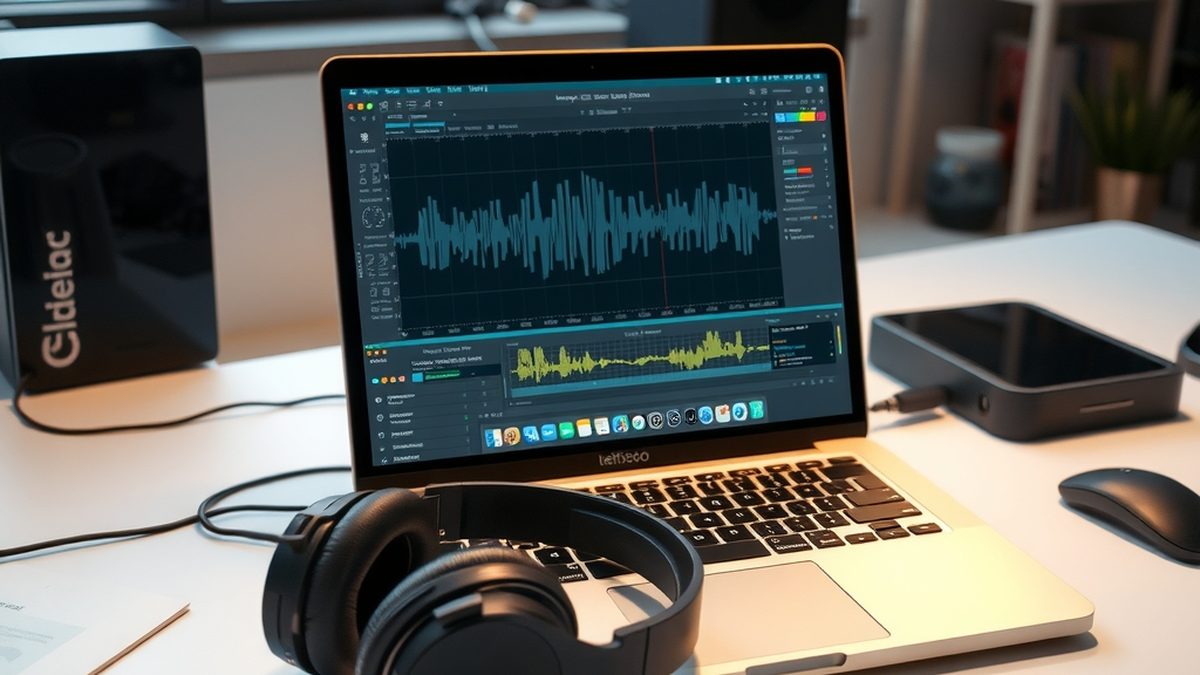
Illustration generated by Nexulab. Inline photo by Egor Komarov via Pexels
- NaturalReader Free is the best option for someone who wants the most natural-sounding AI voices without paying. The free tier gives you access to premium voices, and the pronunciation is smoother than most free alternatives. The trade-off is a daily character limit.
- Murf Free is the best choice for someone making videos or presentations: the studio interface lets you sync voice with visuals, and the free tier includes ten minutes of voice generation. The voices are designed for media production, not just reading text aloud.
- TTSFree.com is the most straightforward option: open the website, paste your text, pick a voice, and download an MP3. No account, no install, no daily limit that stops you mid-project. The voices are less natural than ElevenLabs, but they are usable for internal demos and quick prototypes.
- TTSMP3.com is the best option for someone who wants to download voice files in multiple languages without any account or limit. It supports over thirty languages and dialects, and the download is instant. The voices sound robotic, which limits its use to non-consumer projects.
- VoiceMaker Free is the best free alternative for someone who needs to adjust the way the voice speaks: you can add pauses, change the speed and pitch, and control emphasis. The free tier is limited to a certain number of characters per week, but the control it gives is unmatched among free tools.
The free tier of ElevenLabs is generous enough to test the technology, but it runs out fast. Ten thousand characters per month is roughly ten minutes of audio, and once it is gone, you are either waiting for the next month or paying eleven dollars. The alternatives that follow are free text-to-speech tools that let you generate voice audio without a subscription. Each has a different strength, and the best one depends on what you are making — the same way the best free alternative to Adobe Audition depends on whether you are editing a podcast or mixing music.
NaturalReader Free — the most natural voices at no cost
NaturalReader is a text-to-speech platform that has been around since before the AI voice boom, and its free tier gives you access to premium AI voices that sound more human than most free alternatives. The pronunciation is smooth, the pacing is natural, and the voices handle complex sentences without the robotic flatness that plagues older text-to-speech engines.
The free tier works in the browser. You paste your text, pick a voice from the library, and the tool reads it aloud. You can download the audio as an MP3 file. The interface also has a text-highlighting feature: as the voice reads, it highlights the current word on screen, which is useful if you are using the tool for proofreading or for accessibility.
The limitation of NaturalReader Free is the daily character cap. You can generate a certain amount of audio each day, and once you hit the limit, you wait until the next day. The cap resets at midnight, and it is not published in advance, which makes it hard to plan around. For short projects — a thirty-second voiceover, a quick prototype, a single paragraph of dialogue — the daily limit is rarely an issue. For longer projects, it forces you to spread the work across several days.
NaturalReader also has a mobile app that syncs with the web version, and the paid plans add more voices, higher character limits, and the ability to use the voices for commercial projects. The free tier is for personal use only, which is the most important limitation to know before using it for anything public.
Murf Free — the video creator’s choice
Murf is a text-to-speech studio designed for media production. The free tier gives you ten minutes of voice generation, and the interface is built around a timeline where you place voice blocks, adjust timing, and sync the audio with visuals. It is the best free alternative for someone who is making a video, a presentation, or a podcast and needs the voice to match the pacing of the content.
The voices in Murf Free are good, though not quite at the level of ElevenLabs or NaturalReader’s premium tier. They are designed for clarity and professionalism — the kind of voice you would hear in a corporate training video or a product demo — and they handle technical language well. Murf also lets you add background music from its built-in library, and you can adjust the volume of the music relative to the voice, which is a feature that simpler free tools do not offer.
The free tier includes commercial rights, which is unusual among free text-to-speech tools and is the main reason to choose Murf over NaturalReader if you are making content for YouTube or a client. The ten-minute limit is for the total voice generation across all projects, not per project, so once you use it, you need to upgrade to generate more. For short projects — a one-minute explainer video with ten iterations — the free tier is enough. For a full audiobook, it is not.
The downside of Murf Free is that you need an account, the interface is more complex than a simple paste-and-download tool, and the free voices are a subset of the full library. The paid plans unlock more voices, more minutes, and features like voice cloning, but the free tier covers the core workflow of generating a voiceover and exporting it as an audio or video file.
TTSFree.com — paste, download, done
TTSFree.com is the most straightforward free text-to-speech tool available. There is no account, no installation, and no daily limit that stops you mid-project. You open the website, paste your text, pick a voice from the dropdown, and click convert. A few seconds later, the audio is ready to download as an MP3.
The voices on TTSFree.com are a mix of standard and neural. The standard voices sound robotic — the kind of text-to-speech that has been around since the early 2000s — and the neural voices sound better, though not as natural as NaturalReader or Murf. The voice library includes male and female voices in several English accents, plus voices in Spanish, French, German, and a handful of other languages.
The main use case for TTSFree.com is quick prototyping: you need a voiceover for an internal demo, you want to hear how a script sounds read aloud, or you are testing different phrasings before recording a real voice. The quality is not good enough for a consumer-facing product, but it is fast and free, and that combination is valuable when you are iterating.
TTSFree.com also has a Pro version with premium voices and an API, but the free version does the basic job without asking for anything in return. The website runs ads, which is how it stays free, and the download process sometimes routes through an ad page before giving you the file. It is a minor friction point, not a dealbreaker.
TTSMP3.com — the multilingual option
TTSMP3.com focuses on simplicity and language coverage. It supports over thirty languages and dialects — from US and UK English to Hindi, Arabic, Thai, and Turkish — and each language has at least one male and one female voice. The download is instant, and there is no account or character limit.
The voices on TTSMP3.com are standard text-to-speech voices, not neural. They sound robotic, with the flat intonation and slightly unnatural pacing that characterises the older generation of speech synthesis. For English, the voices are clear and understandable, but they lack the warmth and natural rhythm of a human speaker or a neural voice. For languages that have less representation in neural text-to-speech, the standard voices on TTSMP3.com are often the only free option available.
The value of TTSMP3.com is in its language coverage. If you need a voiceover in Turkish or Thai for an internal project, TTSMP3.com gives you a usable result in seconds without installing anything or creating an account. The quality is not suitable for a consumer product, but for testing, learning, or internal communication, it works.
TTSMP3.com also supports SSML — Speech Synthesis Markup Language — which lets you add pauses, control the speed, and adjust the pronunciation of specific words. It is a power-user feature that most free tools do not expose, and it gives you more control over the output than you would expect from a free browser-based tool.
VoiceMaker Free — the one with control
VoiceMaker gives you granular control over how the voice speaks. The free tier lets you adjust the speed, pitch, and volume of the voice, but the feature that sets it apart is the ability to insert pauses at specific points, change the emphasis on individual words, and control the pronunciation of unusual terms. It is the closest a free tool gets to directing a voice actor.
The interface is more complex than TTSFree or TTSMP3. You write your text, then use sliders and toggles to fine-tune the delivery. You can listen to a preview of each sentence before generating the full audio, which saves time when you are experimenting with different settings. The free tier is limited to a certain number of characters per week — the exact number varies and is not published on the site — but it resets regularly.
The voices themselves are a mix of standard and neural. The neural voices are smoother and more natural; the standard voices are robotic but functional. VoiceMaker is strongest when you use it for a project where the delivery matters more than the absolute voice quality: an e-learning module where the pacing needs to match on-screen text, a phone system greeting where pauses and emphasis affect comprehension, or a creative project where you want a specific vocal style.
The free tier does not include commercial rights for all use cases, so check the terms before using VoiceMaker-generated audio in a public project. The paid plans add more characters, more voices, and explicit commercial rights.
Comparison table
| Feature | NaturalReader | Murf | TTSFree | TTSMP3 | VoiceMaker |
|---|---|---|---|---|---|
| Voice quality | High (neural) | Good (neural) | Mixed | Low (standard) | Mixed |
| Account required | No | Yes | No | No | No |
| Daily/monthly limit | Daily cap | 10 min total | None | None | Weekly cap |
| Commercial rights | No (free tier) | Yes (free tier) | Unclear | Unclear | Limited |
| Languages | 10+ | 20+ | 5+ | 30+ | 10+ |
| Voice control | Basic | Timeline-based | None | SSML | Pauses, emphasis |
| Best for | Natural voice | Video projects | Prototypes | Multilingual | Precise delivery |
The ElevenLabs gap — what free does not cover
The difference between ElevenLabs and every free alternative is not subtle. ElevenLabs produces voices that most listeners cannot distinguish from a human recording. The free alternatives produce voices that are clearly synthetic. The gap is audible, and for projects where audio quality affects audience retention — YouTube videos, podcast intros, audiobook narration — the difference matters.
Voice cloning is the other gap. ElevenLabs lets you record a short sample of any voice and then generate new speech in that voice through its Voice Design tool. None of the free alternatives offer this. The technology requires a deep neural model trained specifically for voice cloning, and the companies that have built it — ElevenLabs, OpenAI, Respeecher — charge for it. The only free path to voice cloning is to run an open-source model like Coqui TTS or OpenVoice on your own hardware, which requires a capable GPU and technical setup that most users do not have.
The ElevenLabs free tier itself is enough for someone who only needs a few minutes of audio per month. Ten thousand characters — roughly ten minutes — covers a short voiceover, a few social media clips, or a prototype. If your usage fits within that limit, the free tier of ElevenLabs produces better audio than any of the free alternatives. The alternatives exist for people who need more than ten minutes but do not yet have the budget for a paid plan, or who need features — a video studio, multilingual support, or granular voice control — that ElevenLabs does not offer in the same way.
Where to start
The right free text-to-speech tool depends on what you are making. If voice quality is the priority — you are making content that will be heard by the public — start with NaturalReader Free for its premium neural voices. If you are making a video or a presentation, start with Murf Free for its studio interface and commercial rights. If you need a quick voiceover without any setup or limit, TTSFree.com and TTSMP3.com are the fastest path from text to audio. If you need to control the pacing and emphasis precisely, VoiceMaker Free gives you the most control.
Each of these tools covers a specific use case that the ElevenLabs free tier does not. None of them matches the voice quality of the paid product, just as free alternatives to ChatGPT do not match the paid model on the hardest reasoning tasks. But for most projects, most of the time, a free text-to-speech tool produces audio that is good enough — and that is the difference between shipping a project with synthetic voiceover and not shipping it at all.
Frequently asked questions
What is the best free text-to-speech tool in 2026?
NaturalReader Free offers the most human-like AI voices among free tools. The free tier gives you access to premium voices, and the pronunciation is smoother than most alternatives. For video production, Murf Free is better because it includes a timeline-based studio. For quick conversions without an account, TTSFree.com and TTSMP3.com do the job in seconds. The best tool depends on whether voice quality, media integration, or simplicity matters most for your project.
Can I use free text-to-speech voices for YouTube videos?
Some free tools permit commercial use and others do not. Murf explicitly allows commercial use in its free tier. NaturalReader's free tier is for personal use only, though the paid plan includes commercial rights. TTSFree.com and TTSMP3.com do not clearly state commercial terms, which in practice means you should not use them for monetised YouTube content without checking. VoiceMaker Free permits commercial use up to a certain limit. Always check the terms of the specific tool before using generated audio in a monetised project.
Why does ElevenLabs sound better than free alternatives?
ElevenLabs uses a proprietary neural network architecture trained on a large dataset of professional voice recordings. The model captures subtle aspects of human speech — micro-pauses, breath patterns, emotional inflection — that free tools either do not model or model with less precision. Free alternatives generally use older text-to-speech architectures that produce more robotic output, or they use neural models that are one generation behind. The gap is closing, but for voiceovers where audio quality directly affects audience retention, the difference is still noticeable.
Can free text-to-speech tools clone a voice?
Voice cloning — taking a short recording of someone and generating new speech in that person's voice — is a feature that requires deep neural modelling and is generally reserved for paid tiers. ElevenLabs offers it even on the free tier, which is unusual. None of the free alternatives listed here support voice cloning. If you need to clone a voice for free, the only alternative is to use an open-source model like Coqui TTS or OpenVoice running on your own hardware, which requires technical setup and a capable GPU.
How do free text-to-speech tools make money?
Free text-to-speech tools use the same model as ChatGPT Free: the free tier is a funnel to the paid product. NaturalReader and Murf give you enough free usage to see the value, then ask you to pay for more characters, better voices, or commercial rights. TTSFree.com and TTSMP3.com use advertising revenue and sell premium voices or API access. VoiceMaker sells higher character limits. None of them is a charity — they all have a path to revenue — but the free tier is genuinely free and usable for light work.