The Best Way to Clean a Mattress Without Causing Mould
Water is the enemy of a mattress. Even a small amount trapped inside can feed mould for months. Here is how to clean every part of your mattress while keeping the inner layers bone-dry.

Illustration generated by Nexulab
- A mattress must never get properly wet, because interior moisture causes mould growth that is difficult to reverse.
- Stains lift best with a targeted foam or paste rather than a liquid sprayed directly onto the fabric.
- Odour removal relies on dry absorption agents and sunlight, not masking sprays or steam.
- Dust mites are managed through physical removal—vacuuming, encasements and low humidity—rather than chemical treatments.
- A mattress protector washed regularly is the single most effective tool for keeping a mattress clean long-term.
The best way to clean a mattress is not one method but a sequence of dry-first interventions, each aimed at a specific problem. The guiding rule is simple: a mattress must never get properly wet. The outer fabric, known as the ticking, is usually a woven blend that liquid passes through quite easily. Beneath it are layers of cotton, wool, polyurethane foam or latex, and steel springs. These interior layers hold moisture for days or weeks, and in the dark, warm space inside a mattress, mould spores that have drifted in from household dust can establish themselves. Once mould takes hold inside a mattress, it is extremely difficult to remove without professional equipment, and the US EPA guidance on mold makes clear that porous materials with deep mould growth should usually be discarded rather than cleaned. So the cleaning method must keep moisture out of those layers.
Understanding the Three Problems: Stains, Odour and Dust Mites
A dirty mattress usually suffers from one or more of three distinct problems. Treating them all with the same method is what leads to a wet mattress and a mould problem.
Stains are localised marks, usually from sweat, urine, blood or spilled drinks. They sit on and just below the surface fibres. The goal is to lift the stain without pushing liquid deeper. This means working with a paste, a foam or a targeted stain remover on a cloth, never pouring anything directly onto the mattress.
Odour comes from volatile organic compounds released by bacteria, sweat, skin oils and sometimes the breakdown of the mattress materials themselves. Odour molecules are not necessarily tied to a visible stain, and they respond to absorption and ventilation rather than scrubbing. Masking them with fragrance does not remove the source.
Dust mites are microscopic arachnids that feed on shed skin cells in the warm, humid environment a mattress provides. They are a major household allergen. The approach is physical removal by vacuuming and encapsulation, not chemical extermination. Humidity control is their weakness, because they absorb water from the air and cannot survive in a dry environment for long.
Before You Start: What You Need and What to Avoid
You need a vacuum cleaner with a hose and an upholstery attachment, a few clean white cloths, a spray bottle of plain water, a soft brush, baking soda, and possibly a small bottle of hydrogen peroxide (the common household concentration) or an enzyme-based stain remover. Do not use a carpet shampoo machine or a steam cleaner. Do not use a bucket of soapy water and a sponge.
If you have a mattress protector, remove it and wash it according to its care label. A mattress without a protector that has been slept on for years will have absorbed a substantial amount of body moisture and oils. The cleaning steps still apply, but the result will be less dramatic, and the case for a protector afterwards is even stronger.
Step by Step: The Complete Dry Cleaning Sequence
1. Strip the bed and vacuum every surface
Remove all bedding and wash it. Run the vacuum cleaner with the upholstery tool slowly over the entire top surface of the mattress, paying close attention to the seams, the piping and the quilted depressions where skin cells collect. Go over each section in two directions. Then vacuum the sides and, if possible, the underside. The underside of a mattress that sits on a solid platform can become a reservoir of dust and fine debris.
Vacuuming alone removes a significant portion of the loose material that feeds dust mites and holds onto odour. It also prepares the surface so that stain treatments work on the fabric rather than on a layer of dust.
2. Spot-treat stains with a damp cloth, never a pour
Each type of stain responds to a different agent, but the application method is the same: apply the agent to a white cloth, not to the mattress, and blot.
- Protein stains (blood, sweat, urine): Use cold water and a small amount of hydrogen peroxide on the cloth. Hydrogen peroxide breaks down organic colour compounds. Blot gently; do not scrub, which pushes the stain sideways into clean fibres.
- Grease or oil stains: A small amount of mild dish soap on a damp cloth, blotted and then followed with a plain damp cloth to remove the residue.
- Old, unknown stains: An enzyme-based laundry stain remover, applied to the cloth and blotted, can break down proteins and fats. Leave the area to dry naturally.
After blotting, dry the area with a clean towel and direct a fan at the spot until it feels dry to the touch. The surface should not remain damp for more than an hour.
3. Deodorise with a dry absorption agent
Once stains are treated and the surface is dry, sprinkle a thin, even layer of baking soda across the entire top surface of the mattress. Baking soda is a mild alkali that absorbs acidic odour compounds. Leave it for at least a few hours—overnight is better—and then vacuum it up thoroughly with the upholstery tool. The mattress should smell neutral, not perfumed.
For a stronger odour, after vacuuming the baking soda, you can place the mattress near an open window or in a well-ventilated room with a fan moving air across the top surface. Ultraviolet light from direct sunlight has a disinfecting effect on the surface, but be aware that prolonged direct sun can degrade some foams over time.
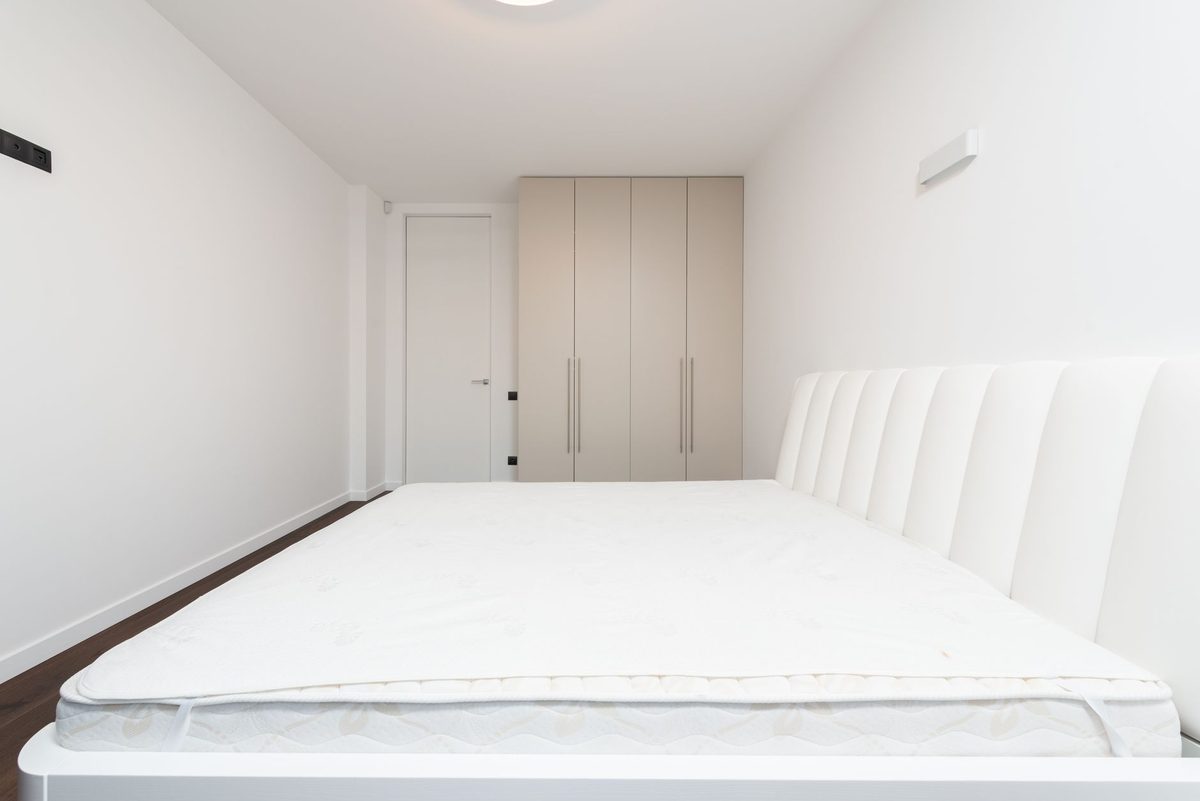
4. Vacuum again and encase
After the baking soda is vacuumed up, do a final pass with the vacuum to pick up any remaining dust. Then fit a mattress encasement that zips around the whole mattress, not just a fitted protector that covers the top. A full encasement traps any mites that remain inside and prevents new ones from entering. It also creates a barrier against sweat and skin oils going forward.
The encasement itself should be washed every couple of months. When you wash it, you have a natural opportunity to vacuum the mattress again.
A Comparison of Cleaning Methods and Their Risks
Not every method sold as a mattress cleaner is safe for the mattress. The table below compares common approaches against the central rule of keeping the interior dry.
| Method | What It Does | Moisture Risk | Best Use |
|---|---|---|---|
| Vacuuming | Removes dust, skin cells and mites | None | Routine maintenance |
| Baking soda absorption | Lifts light odours and shallow moisture | None | After stain treatment, or monthly |
| Spot cleaning with a damp cloth | Lifts a visible stain | Low, if dried quickly | Targeted stain removal |
| Enzyme spray on cloth | Breaks down organic stains | Low | Protein-based stains |
| Steam cleaning | Introduces hot water vapour deep into layers | High | Not recommended for home use |
| Shampoo extraction | Forces water and detergent into the mattress | Very high | Not recommended |
| UV vacuum or wand | Claims to kill mites on the surface | Low, but limited depth | Supplementary, not a replacement for vacuuming |
What to Do About Dust Mites Without Chemicals
Dust mites are a problem of accumulation, not infection. The most effective approach is mechanical and environmental. Vacuuming removes the food and the mites themselves. An allergen-proof encasement traps any remaining mites inside, where they eventually die and can no longer contribute to the airborne allergen load. Reducing indoor humidity is the third leg of this stool. An ENERGY STAR rated dehumidifier that keeps the bedroom air dry works with your vacuuming and covers to make the environment hostile to mites without any chemical intervention.
Why the Interior Must Stay Dry: The Mould Mechanism
Understanding why moisture is so dangerous inside a mattress helps you evaluate every cleaning tip. The US EPA guidance on mold explains that mould requires moisture, a food source and the right temperature. A mattress provides the food—cotton, foam, skin cells—and the warmth. The only variable you control is moisture. When liquid sinks past the ticking, it stays in the padding because the ticking itself slows evaporation. The dark, still air inside the mattress is perfect for mould growth. Once mould begins, it digests the mattress materials and releases spores that can cause respiratory irritation. This is why the method above treats moisture as a threat to be eliminated at every step.
A Note on Drying and the Process of Polymerisation
The word polymerisation refers to a chemical reaction in which small molecules link into long chains. It is not directly involved in cleaning a mattress, but it appears in a useful analogy from cookware. Lodge, the cast-iron cookware company, describes how a layer of oil polymerises onto a pan to form a hard, non-stick surface. The process requires heat and time, and the oil transforms into something stable and bonded to the surface. When you clean a mattress, you are not polymerising anything, but the concept of a surface treatment that bonds and becomes stable is similar to what an encasement does: it forms a stable, cleanable barrier that stays in place. The mattress itself remains unchanged underneath, protected from moisture and contamination. This analogy helps explain why a protector is not an optional extra but the central piece of the long-term cleaning strategy.
Long-Term Care: The Protector and the Routine
A mattress protector is the difference between a mattress that needs deep cleaning every season and one that stays clean for years. A good protector is a breathable, water-resistant layer that zips around the whole mattress. It should be washed every two months. When you strip the bed, leave the mattress bare for an hour with the window open so that moisture from the night’s sleep can evaporate.
Rotate the mattress head-to-foot every few months if the manufacturer allows it. Some modern mattresses are designed with a specific top layer and should not be flipped, but most can be rotated. This evens out compression and wear.
If someone in the household has asthma or allergies, vacuum the mattress more often and wash the encasement more frequently. A vacuum with a HEPA filter is worth the investment because it keeps the fine particles from being exhausted back into the room.
The best way to clean a mattress, in the end, is to clean it gently and then to keep it clean through barriers and dry air. A mattress that is never wetted down will not grow mould, and a mattress without mould will last until the materials themselves wear out from compression, not from contamination.
For more in this series, see our other home & kitchen guides.
Frequently asked questions
How often should I clean my mattress?
A light clean—vacuuming the surface and airing the mattress—is useful every month or two. A deeper clean that tackles any visible stains and refreshes the fabric can be done twice a year, or whenever bedding is changed for the season. The rhythm matters less than the method: every cleaning step should leave the mattress dry enough to sleep on that night. If a cleaning method leaves the surface damp for more than a couple of hours, it is too wet.
Can I use a steam cleaner on a mattress?
Steam introduces moisture that penetrates beyond the surface ticking and into the padding and support layers below. In a home setting, it is extremely difficult to dry those interior layers thoroughly before mould spores—which are always present in household dust—begin to colonise. A hot-water extraction machine is even riskier. Spot-cleaning with a barely-damp cloth is safer. If steam has been used, place the mattress upright in a well-ventilated room with a fan directed at it until completely dry.
What kills dust mites in a mattress?
Dust mites do not need killing with chemicals. They need to be removed and denied their preferred conditions. A vacuum with a sealed HEPA filter pulls mites and their waste from the surface. Encasing the mattress in a tightly woven, allergen-barrier cover traps any that remain and stops new ones from entering. Mites thrive in humidity, so keeping the bedroom air dry and the mattress uncovered for a while each morning reduces their numbers. Washing bedding in hot water (the temperature you control) also helps.
How do I get urine out of a mattress?
Speed is the most important factor. Blot up as much liquid as possible with a thick stack of dry towels, pressing firmly without scrubbing. Once the area is damp to the touch rather than wet, apply a paste of baking soda and a small amount of water, or a commercial enzyme-based cleaner designed for organic stains. Use only enough to cover the stain. Let it dry completely, then vacuum the residue. Avoid pouring liquid directly onto the mattress; it will spread the contamination into the deeper layers.
Does baking soda really clean a mattress?
Baking soda is useful for absorbing light odours and drawing out very shallow moisture, but it is not a cleaner in the sense of breaking down proteins or oils. It works best as a deodorising step after a stain has been treated and the area is dry. Sprinkling it across the entire surface, leaving it for a few hours, and then vacuuming thoroughly can freshen a mattress between deeper cleans. It will not remove set-in stains or kill dust mites.