The Best Way to Clean a Microwave in Five Minutes
Everyone reaches for the sponge first, which is why it takes twenty minutes. Let water do the work and the same job takes five — including the smell and the grease on the ceiling.
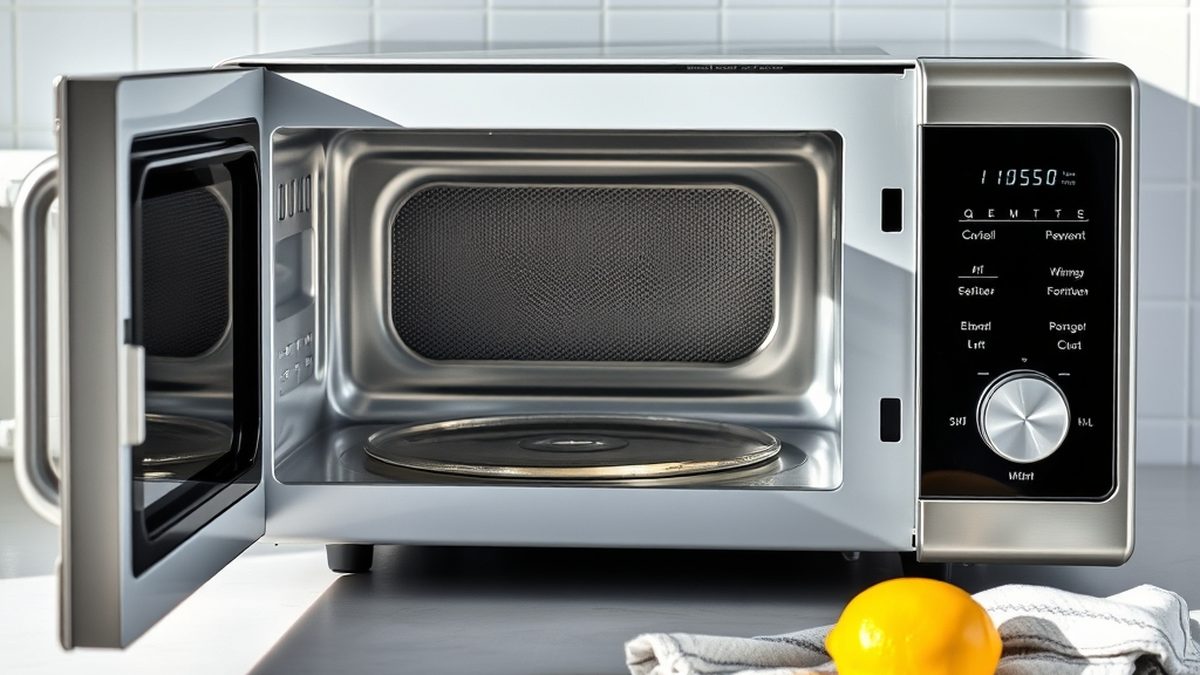
Illustration generated by Nexulab
- Steam is the whole method. Boiling water inside the microwave softens dried food so it wipes off without scrubbing.
- Never use abrasive pads or scouring powder inside. They scratch the interior coating, and scratches trap food and worsen every future clean.
- The ceiling holds more grease than the floor, and almost nobody wipes it.
- Lingering smells are usually the vent filter or a spill under the turntable plate, not the cavity itself.
- Nothing metallic goes in, not even a foil-edged sponge. Ever.
The best way to clean a microwave is to stop cleaning it with your arm and let physics do it instead.
Almost everyone opens the door, sees the dried splatter, and reaches for a sponge. Twenty minutes of scrubbing later, there is still a ring of something welded to the ceiling. The method below takes about five minutes, most of which you spend doing something else.
Why scrubbing loses
Food that gets microwaved onto a surface does not sit there as a smear. The moisture cooks out of it and what remains is a hardened, concentrated crust bonded to the coating.
Rubbing at that crust with a dry-ish sponge attacks it mechanically, from one side, with the weakest tool you have. It works eventually, and it takes forever.
Steam attacks it from every direction at once, and it re-hydrates it. Water vapour condenses on every internal surface, soaks into the dried food, and swells it back apart. What was welded on becomes something that wipes away with a cloth.
That is the whole trick, and everything below is a variation on it.
The five-minute method
Fill a microwave-safe bowl with about a cup of water. Add either half a lemon squeezed in with the halves dropped in too, or a couple of tablespoons of white vinegar. Either works; the lemon smells better.
Heat it until it boils and the window fogs up. Three to five minutes depending on your microwave’s power. You want visible steam and condensation on the glass, which is your signal that every surface inside is now wet.
Leave the door closed for another three minutes. This is the step people skip and it is where the work happens. The steam is softening everything while you do nothing.
Open it carefully. The bowl is genuinely hot and so is the steam that comes out. Use a cloth or an oven glove to lift the bowl out.
Wipe. A damp cloth or a soft sponge. Start with the ceiling, because that is where grease collects and where it will drip onto surfaces you have already done. Then the sides, the back, the floor, and the inside of the door.
Take out the turntable and the roller ring and wash them in the sink with washing-up liquid. Wipe the recess underneath, which collects spills that never evaporate.
Leave the door open for half an hour so the interior dries fully.
What never goes inside
Short list, and each item is on it for a reason.
Anything metallic. No foil, no metal scourers, no sponges with a metallic scrubbing layer, no dishes with metallic trim. This is the one rule with immediate consequences: metal in a microwave arcs, and arcing damages the unit and can start a fire.
Abrasive pads and scouring powder. The interior is coated. Scratch that coating and food lodges in the scratches, every future clean gets harder, and on some units the damage eventually reaches the metal underneath.
Bleach. It can attack the interior finish, and any residue you fail to rinse gets heated in a small sealed box that you then put food into.
Oven cleaner. Far too caustic for a coated interior, and formulated for a completely different surface.
Steam plus washing-up liquid handles everything a domestic microwave will ever accumulate.
The three problems steam alone will not fix
A smell that survives the clean. The cavity is rarely the culprit. Check two places: the recess under the turntable, where a spill can sit unnoticed for weeks, and — if your microwave is mounted over a hob — the grease filter underneath. That filter collects cooking fumes from the hob below and is genuinely disgusting on most units. It usually slides out and can be washed in hot soapy water or, on some models, in the dishwasher.
A burnt-on ring that steam softened but did not release. Make a paste of bicarbonate of soda and a little water, spread it on that spot, leave it fifteen minutes, then wipe. Mildly abrasive but far softer than the coating, so it lifts residue without scratching.
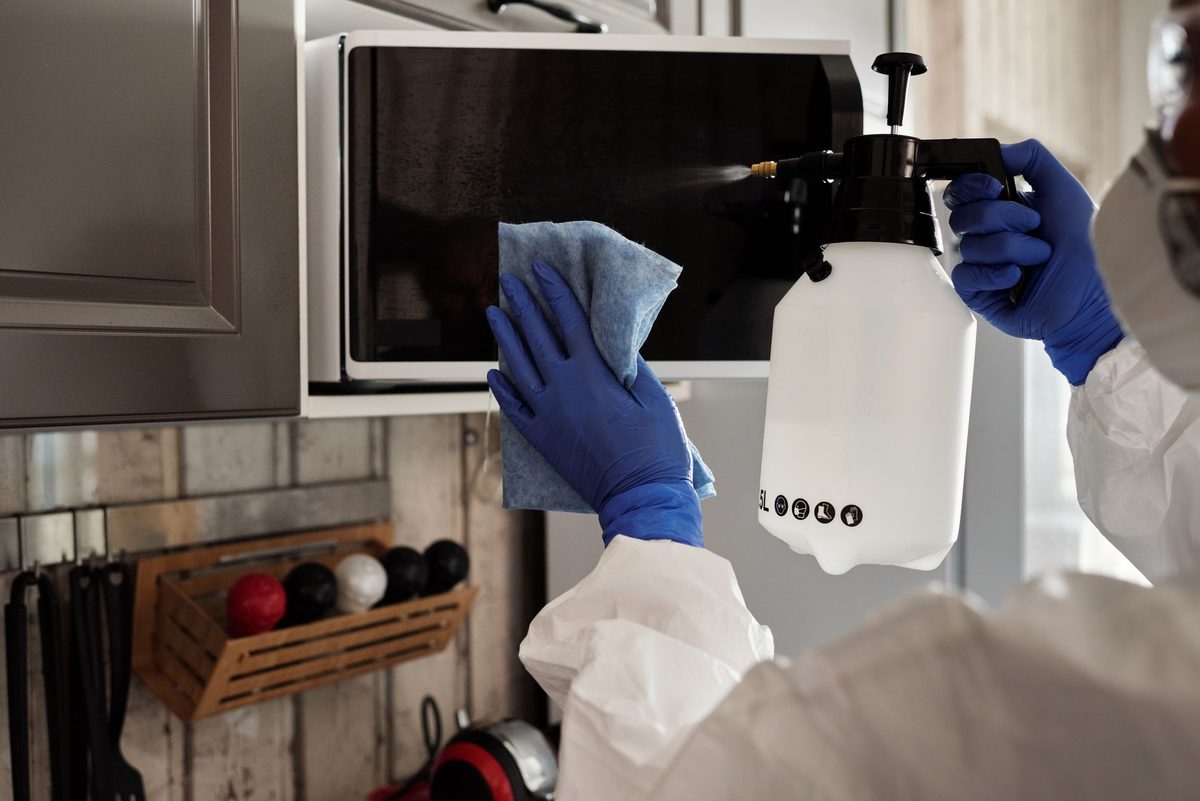
A greasy film on the outside. The door handle and the control panel accumulate more than the inside does. Washing-up liquid on a cloth, wrung out well — never spray liquid directly onto a control panel, because it runs behind the buttons and into the electronics.
Method comparison
| Method | Time | Effort | Best for |
|---|---|---|---|
| Steam with lemon or vinegar | 5 min | Minimal | Almost everything |
| Steam plus bicarbonate paste | 20 min | Low | Burnt-on spots that survived |
| Dry scrubbing | 20 min+ | High | Nothing — this is the method to abandon |
The habit that makes this unnecessary
Cover your food. A plate on top, a vented lid, or a sheet of kitchen paper. Almost every splatter you are cleaning came from an uncovered bowl of sauce.
And when something does erupt, wipe it while the microwave is still warm. Fresh spatter comes off with one pass of a cloth. The same spatter, cooked through five more reheats, is the crust this entire article exists to remove.
For more in this series, see our other home & kitchen guides.
Frequently asked questions
How do you clean a microwave with vinegar?
Mix roughly equal parts water and white vinegar in a microwave-safe bowl, about a cup in total, and heat it until it boils and the window fogs — usually three to five minutes. Leave the door shut for another few minutes so the steam keeps working, then wipe everything down. The vinegar adds mild acidity that helps with mineral film and odour, but the steam is what does the actual loosening.
How do you get a burnt smell out of a microwave?
Steam it first with lemon or vinegar, then wipe. If the smell persists, the source is usually elsewhere: the removable turntable and the recess under it, or the grease filter if your unit is mounted over a hob. Both trap residue that the cavity clean never touches. Leaving the door open for a few hours afterwards clears what remains.
Can you use bleach in a microwave?
Avoid it. Bleach can damage the interior coating on some units, and heating any residue you fail to rinse away releases fumes into a small enclosed space you then cook food in. Steam plus washing-up liquid handles everything a domestic microwave accumulates. If you want a disinfectant step, wipe with diluted white vinegar and then plain water.
Why should you not use abrasive cleaners inside a microwave?
The interior is coated, and scouring pads or powders scratch that coating. Scratches are not just cosmetic: food lodges in them, they are harder to clean every subsequent time, and on some units damage to the interior surface can eventually expose the metal beneath. A soft cloth and steam do the job without any of that risk.
How often should you clean a microwave?
Wipe visible splatter as it happens — thirty seconds while it is fresh saves the whole procedure later. Beyond that, a steam clean every couple of weeks suits most households. If you regularly heat sauces or reheat uncovered food, make it weekly, and start covering dishes with a plate or a vented lid.