The Best Way to Clean a Washing Machine
A machine that washes everything else cannot wash itself. The smell has a specific cause, and once you know what it is, the fix stops being guesswork.
Illustration generated by Nexulab
- The smell is biofilm: a living layer of bacteria, mould and detergent residue growing where water sits and air does not circulate.
- Front-loaders and top-loaders are different problems. The rubber door gasket is the main culprit on a front-loader and does not exist on most top-loaders.
- Using too much detergent causes the problem rather than preventing it. Excess surfactant never rinses out and becomes food for the biofilm.
- Leave the door ajar after every wash. This single habit prevents more odour than any cleaning product.
- Never mix bleach with vinegar or with any other cleaner. The combination can release chlorine gas.
The best way to clean a washing machine starts with understanding what you are cleaning off, because the answer is not dirt. It is a living thing.
Inside a machine that smells, there is a layer called biofilm: a colony of bacteria and mould held together in a slimy matrix, growing on a food supply of undissolved detergent, fabric softener and body oils, in a place that stays damp and dark between uses. Biofilm is physically tough and slightly water-repellent, which is exactly why running an empty hot cycle with nothing in it achieves so little.
Two consequences follow, and they shape the whole method.
You need something that kills biological growth, not just something that dissolves grease. This is why disinfecting matters more than scrubbing.
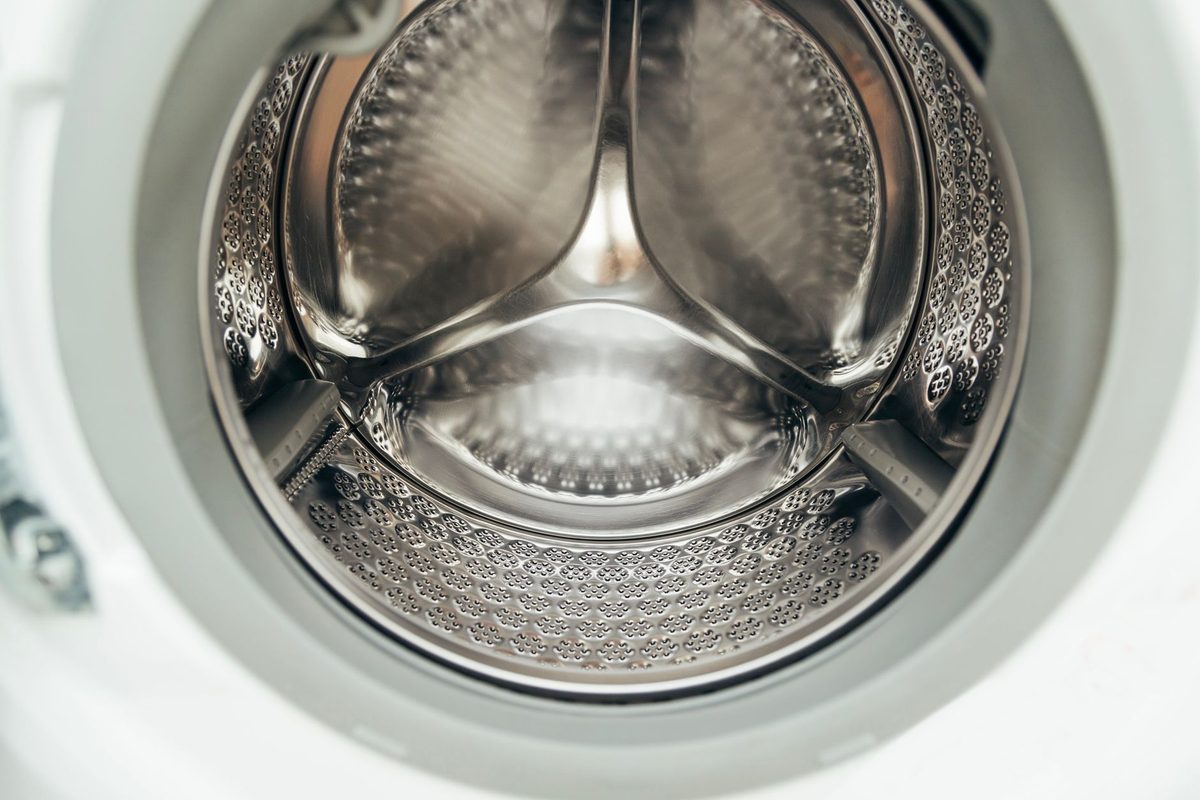
You need to reach where it lives. On a front-loader, that is almost never the drum. It is the gasket, the detergent drawer and the drain filter — three places most people never open.
Front-loader or top-loader: not the same problem
Front-loaders seal with a large flexible rubber gasket around the door, full of folds that trap water. They use little water, so detergent is less diluted and rinses less completely. They are also airtight when closed. This combination — damp, enclosed, well fed — is close to ideal for mould, and it is why front-loaders developed a reputation for smelling.
Top-loaders mostly have no door gasket, and traditional agitator models use far more water, which rinses residue away more effectively. Their weak points are different: residue under the rim, around the agitator base, and in the dispenser cups. Newer high-efficiency top-loaders sit in between, using less water and behaving more like front-loaders.
Work out which you have before starting, because half of the following does not apply to you.
The monthly maintenance cycle
Empty the machine completely. Cleaning with a load inside accomplishes nothing and puts bleach on your clothes.
Choose one disinfectant and use it alone. Either about half a cup of chlorine bleach, or a purpose-made washing machine cleaner following its instructions. Check your manual first — a few manufacturers advise against bleach because of the seal material they use.
Do not add vinegar in the same cycle. Not because it is useless, but because mixing chlorine bleach with an acid can release chlorine gas. If you also want to tackle mineral scale, run a separate cycle with vinegar on another day.
Run the hottest, longest cycle the machine offers. Many machines now have a dedicated drum-clean or tub-clean programme, which typically runs hotter and longer than a normal wash. Use it if you have it.
Run a second rinse afterwards to clear whatever the first cycle loosened.
The three places that actually hold the smell
This is the part that decides whether the smell comes back.
The door gasket (front-loaders). Pull the folds of rubber back gently with your fingers and look inside. Expect to find grey or black deposits, lint, and sometimes small objects. Wipe it with a cloth dampened in diluted bleach or a proprietary cleaner, working right around the circumference and into every fold. Then dry it with a separate cloth. Drying is not optional — leaving it wet undoes the work.
The detergent drawer. On most machines it pulls fully out, and the housing behind it is worse than the drawer. Wash the drawer in hot water with a brush; use the brush and a cloth on the housing, especially the underside where the water jets sit.
The drain filter. Usually behind a small hatch at the bottom front on front-loaders. Put a shallow tray and towels down first, because water will come out. Unscrew the cap, let it drain, remove the filter and rinse the lint and debris away. A blocked filter holds standing water permanently, which is its own smell, and it also makes the machine drain slowly — a symptom people usually blame on the pump.
Why your detergent is making it worse
This surprises people, so it is worth being direct: using more detergent than the machine needs is one of the main causes of the problem you are trying to fix.
Modern machines, and high-efficiency ones in particular, use very little water. Surfactant that has nothing to bind to does not simply vanish — it stays behind as residue, and residue is the food supply for the biofilm. Fabric softener is worse, because it is designed to leave a coating.
Three habits that cost nothing:
- Use the amount for your load size and water hardness, not a full cap by reflex
- Use detergent formulated for a high-efficiency machine if you have one
- Skip fabric softener, or use it rarely
The habit that replaces most cleaning
Leave the door ajar after every wash, and pull the detergent drawer out an inch.
Biofilm needs moisture. An open door lets the drum and gasket dry, and dry surfaces do not support the growth. This one habit prevents more odour than any product, costs nothing, and takes a second.
If you have small children or pets, a machine door that latches shut is a safety consideration — in that case, wipe the gasket dry after each wash instead.
Damp rooms make it harder
If the machine lives in a room that stays humid, the drum never fully dries between loads and everything above becomes less effective. Ventilation matters here: an extractor fan, an open window, or simply not drying laundry in the same closed room. The US EPA guidance on mold makes the general point that controlling moisture is the only reliable way to control mould, and a laundry room is no exception.
While you are looking at the machine, its efficiency label is worth a glance too — ENERGY STAR certified models use less water and electricity per load, which over a machine’s life is a larger number than most people expect.
If the smell still will not go
Three things worth checking before assuming the machine is finished.
Run two or three consecutive hot cycles. Established biofilm is stubborn and sometimes needs repetition rather than a stronger chemical.
Check the drain hose is not kinked or too low. A hose that allows dirty water to sit in it will produce a smell no amount of drum cleaning touches.
Consider whether you only wash cold. Cold washing is good for clothes and for your bill, but it never reaches a temperature that discourages growth. Running one hot cycle a week, even with just towels, changes the environment inside the machine.
For more in this series, see our other home & kitchen guides.
Frequently asked questions
Why does my washing machine smell even though I clean it?
Almost always because the source is somewhere you are not cleaning. On a front-loader, biofilm hides in the folds of the door gasket and inside the detergent drawer housing, not in the drum. On any machine, a partially blocked drain filter holds standing water and lint. Cleaning the drum while ignoring those two places treats the symptom and leaves the cause.
Is vinegar or bleach better for cleaning a washing machine?
They do different jobs. Bleach kills the biological growth causing the smell. Vinegar is a mild acid that helps with mineral scale and light residue but is a weak disinfectant. Use one or the other in separate cycles, never together and never in the same load — combining them can produce chlorine gas. Check your manual first, because some manufacturers advise against bleach entirely.
How often should I clean my washing machine?
A maintenance cycle once a month suits most households, and the gasket deserves a quick wipe weekly if you have a front-loader. Increase the frequency if you wash mostly in cold water, use liquid detergent or fabric softener, or run several loads a day — all three accelerate residue build-up.
Can I use dishwasher tablets to clean my washing machine?
People do, and it often works because the tablets contain enzymes and bleaching agents. But they are formulated for a different machine with different materials and water volumes, and manufacturers do not test for it. If you want a product rather than plain bleach, a purpose-made washing machine cleaner is the safer choice for the seals.
What is the black stuff in my washing machine gasket?
Mould, growing on a mixture of trapped moisture, lint and detergent residue. It is the most common cause of laundry that comes out smelling worse than it went in. It wipes off with a bleach solution and a cloth, but it comes straight back unless you dry the gasket and leave the door open between washes.