Best Way to Clean an Air Fryer Without Ruining It
A sticky residue that won't shift, a smell that fills the kitchen, smoke from nowhere — it all comes back to one thing: how baked-on grease forms and how to remove it without wrecking the machine.
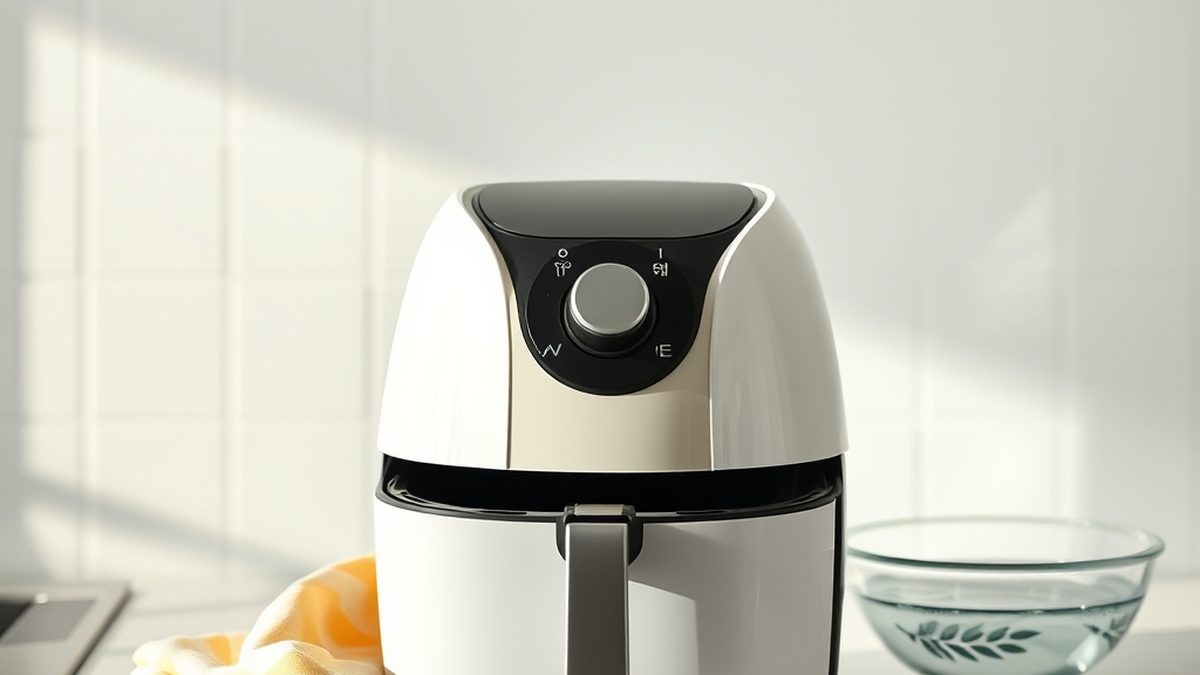
Illustration generated by Nexulab
- The best way to clean an air fryer daily is a wipe with hot, soapy water on the basket and tray while the coating is still warm and the grease is soft.
- Baked-on polymerised oil requires a baking-soda paste or a steam-cleaning shortcut that loosens the hardened layer without scraping.
- Never submerge the base unit; water entering the fan or electronics will destroy the appliance.
- A lingering smell or sudden smoke usually means oil has accumulated on the heating element above the basket.
- Abrasive sponges, steel wool, and oven cleaners strip the non-stick surface and should be avoided entirely.
The chore is small but the stakes are high. An air fryer is a small convection oven, and like any oven, it collects a fine mist of fat that drifts upward from the food, settles on every surface, and then bakes hard with each subsequent use. The cooking temperatures — commonly between 350°F and 400°F — are high enough to break down the grease into a tough, plastic-like film that ordinary wiping cannot touch. Understanding that film is the key to cleaning without damage.
The chemistry of baked-on grease
Cooking oil is a liquid until you heat it. In the presence of oxygen and a metal surface, the oil molecules cross-link into a solid polymer. This is exactly the process Lodge uses to season cast iron, and the same polymerization that creates a durable non-stick patina on a skillet. On an air-fryer basket, however, you do not want that layer. It traps carbonised food particles, it smokes, and it makes the non-stick coating underneath less effective. The grease is now a varnish, and varnish needs more than a quick wipe.
The important point is that the polymer layer is hydrophobic: water beads on it. That is why a short soak does little. To break the bond, you need something that can penetrate and lift the film, or you need to soften it with heat, or both. The method below uses both.
The daily routine that stops the problem before it starts
Cleaning while the machine is still warm makes the difference. Cold grease is hard; warm grease is a viscous liquid that lifts away with ease. You do not need anything elaborate.
Unplug the unit and let it cool until it is warm to the touch, not hot. You want the basket and the drawer to be comfortable to handle. If you wait until they are stone cold, the grease will have set.
Fill the sink with very hot water and a few drops of dish soap. The water should be hot enough that you cannot hold your hand in it for more than a moment. Soap works by lowering the surface tension of water and emulsifying fats, but it needs heat to do its job on a polymerised film.
Take out the basket and the pan or drawer. Most air fryers have a basket that lifts out and a pan or drawer beneath it that catches crumbs and drippings. Remove both. The base unit stays on the counter.
Wipe the interior of the base with a damp, soapy cloth. Grease mist settles on the upper walls and the heating element. Run the cloth over the metal ceiling and the sides, taking care not to force water into the fan vents. A small amount of soap on the cloth is enough; you are removing a fine film, not a thick layer.
Soak the basket and pan for ten minutes. This softens the remaining grease. After soaking, scrub with a non-abrasive sponge. A soft sponge with a slightly textured side is safe; steel wool, scouring pads, and anything labelled “heavy-duty” are not. The non-stick coating is a thin layer of a fluoropolymer, and once it is scratched, food will stick and the metal underneath can corrode.
Rinse thoroughly and dry with a cloth. Leave no soap residue. Soap tastes unpleasant and can affect the flavour of the next batch of food. Towel-dry, then reassemble.
The deep clean for baked-on residue that will not budge
Eventually, the daily wipe will not be enough. The basket will develop a brown, slightly tacky layer that looks like a stain but feels like a film. This is the polymerized grease. The best way to clean an air fryer basket in this state is a baking soda paste.
Make a paste of baking soda and water. Use about three parts baking soda to one part water. The paste should be thick enough to cling to a vertical surface. Baking soda is a mild alkali; it saponifies the fats in the grease, turning them into a soap-like substance that can be rinsed away.
Spread the paste over the affected area. Cover the film completely. For a basket with a mesh bottom, work the paste into the mesh gently with your finger.
Let it sit for at least thirty minutes. The paste will dry and crust over. This is normal. The drying action pulls the softened grease into the paste.
Scrub with a soft brush or a non-abrasive sponge. A soft-bristled brush, like a vegetable brush, can help for the mesh. Do not press hard; let the chemistry do the work.
Rinse and check. If the film persists, repeat the paste, but this time add a few drops of white vinegar to the paste. The vinegar and baking soda will foam, creating a mild abrasive action that is still safe for the coating. The foam helps lift the polymer from the surface.
For a drawer or pan with a thick layer of grease, a different approach works better: fill the drawer with hot water and a dishwasher tablet. The tablet contains enzymes and mild bleaches that break down baked-on grease over the course of a soak. Leave the drawer for an hour, then pour out the water and wipe clean. This method should not be used on the basket if the basket has a non-stick coating, because the dishwasher tablet can be too alkaline for prolonged contact.
The one thing you must never, ever do
The base of an air fryer contains the fan, the heating element, and the electronics. Water that enters the base can cause a short circuit, can rust the fan bearing, and can create a mould problem that is difficult to resolve. The US EPA guidance on mold makes clear that moisture in a dark, warm enclosure is an ideal environment for mold growth, and once mold is established inside an appliance, it is nearly impossible to remove completely.
Never immerse the base in water. Do not run water over it. Do not fill it with water to soak. Do not put it in the dishwasher.
To clean the inside of the base, turn the unit upside down over a sink or a bin. Use a dry brush to dislodge any loose food particles that have fallen through the basket. Then wipe the interior with a cloth that is damp but not wet, using a little dish soap. Rinse the cloth, wring it out thoroughly, and wipe again to remove the soap. Leave the base upside down to air-dry for at least an hour before using it.
When the smell and smoke will not go away
A smell that lingers or smoke that appears when the air fryer is running is almost always a sign that grease has accumulated on the heating element. The element sits above the basket, exposed to the full plume of cooking fats. Over time, the grease builds up into a layer that smokes every time the element heats up.
Unplug the air fryer and let it cool completely. The heating element will be hot for a while after cooking. Wait until it is room temperature.
Turn the unit upside down. Most air fryers have a heating element that is visible from the bottom of the base, above where the basket sits. Look for a coil or a metal plate with a dark, shiny residue.
Wipe the element gently with a damp, soapy cloth. Do not scrub. The element is delicate. A few passes with a soapy cloth should remove the loose grease. If the grease is hardened, use a paste of baking soda on the cloth, not directly on the element, and wipe carefully.
Dry the element with a soft cloth. Then leave the unit to air-dry for an hour. Any moisture left on the element will cause a burst of steam and a crackling noise when you next use it, which is alarming but not dangerous.
Run the air fryer empty at 400°F for ten minutes. This burns off any remaining residue and the smell should be gone. Do this with the windows open, because the burning-off process will produce a small amount of smoke.
If the smell persists, check the fan area. A small amount of grease can be drawn into the fan housing. Cleaning the fan requires a more involved disassembly, and for most air fryers, that is a job for a repair service. The limit of what you can safely do at home is the heating element and the accessible interior.
The tools that help and the ones that harm
The right tools make the job faster and safer. The wrong tools can ruin a basket in a single scrub.
| Safe to use | Avoid entirely |
|---|---|
| Soft sponge | Steel wool |
| Microfibre cloth | Scouring pad (green or blue) |
| Soft-bristle brush | Metal scraper or putty knife |
| Baking soda | Oven cleaner spray |
| White vinegar | Bleach |
| Dish soap (mild) | Abrasive cream cleaner |
| Dishwasher tablet (soak only, on non-coated metal) | Dishwasher (for the base unit) |
The non-stick coating on an air-fryer basket is a thin layer of a material similar to PTFE. It works by being so smooth that nothing can grip it. A scratch breaks that smoothness, and once the coating is broken, oil and food can get underneath and lift the coating in sheets. A basket with a damaged coating is not safe to use, because the coating can flake into food. The basket must be replaced.
How to stop the grease building up in the first place
The best way to clean an air fryer is to clean it less often, and that means stopping the grease from baking on. A few habits reduce the cleaning burden considerably.
Use a parchment liner or a reusable silicone liner. A liner catches drips and prevents direct contact between the food and the basket. The basket still gets a film from the hot air circulation, but the thick baked-on layer does not form. Choose a liner with holes to allow the air to circulate; the air fryer works by convection, and blocking the airflow changes the cooking result.
Add a small amount of water to the drawer for fatty foods. When cooking chicken thighs, sausages, or anything that renders a lot of fat, pour a tablespoon of water into the drawer below the basket. The water catches the fat drips, keeps them from smoking, and makes the drawer much easier to clean afterwards. The water evaporates during cooking and does not affect the food.
Wipe the basket while it is still warm. Even if you do not do a full clean, a quick wipe with a paper towel after every use removes the bulk of the grease before it polymerizes. This alone extends the time between deep cleans dramatically.
Do not overfill the basket. Food that is packed too tightly will steam rather than crisp, and the steam carries more grease into the top of the unit. Leave space between pieces for the air to circulate.
The limits of what cleaning can fix
A clean air fryer is not a restored air fryer. If the non-stick coating is already flaking, cleaning will not repair it. The basket must be replaced, if the manufacturer sells a replacement, or the unit must be retired. Cooking on a damaged non-stick surface is not safe.
If the smell is coming from inside the fan housing and persists after cleaning the element, the fan itself may need cleaning. This is not a user-serviceable part in most models. The cost of a repair can approach the cost of a new unit.
If the air fryer is used daily and cleaned irregularly, the polymerized layer will eventually become so thick that no amount of baking soda can shift it without damaging the coating. At that point, the basket is a consumable part. The best way to clean an air fryer is to prevent the polymer from forming in the first place.
General health and safety note
The cleaning methods described here are general guidance for a kitchen appliance. If you or anyone in your household has a respiratory condition, a sensitivity to cleaning products, or a compromised immune system, consult a professional before using any chemical or before attempting to clean an appliance that shows signs of mold growth. The US EPA provides comprehensive guidance on mold and moisture control that should be followed for any suspected mold inside an appliance.
For more in this series, see our other home & kitchen guides.
Frequently asked questions
Can you put air fryer parts in the dishwasher?
Many baskets and trays are labelled dishwasher-safe, but the high heat and harsh detergents can dull a non-stick coating over time. Hand-washing with a soft sponge and warm soapy water is gentler and extends the life of the surface. If you do use the dishwasher, place the parts on the top rack, away from the heating element, and skip the heated-dry cycle.
Why does my air fryer smell like burning plastic?
A burning plastic smell during the first few uses is often the off-gassing of manufacturing oils and is normal. If the smell persists, it is usually old grease that has baked onto the heating element. Unplug the unit, let it cool, turn it upside down and check the element. Wipe it gently with a damp cloth and a little mild detergent, then run the air fryer empty at a high temperature for ten minutes to clear any residue.
How do I get rid of the smoke when my air fryer is on?
Smoke usually comes from fat or food particles burning on the heating element or in the bottom of the basket. To prevent it, add a tablespoon of water to the drawer beneath the basket when cooking fatty foods; the water catches drips and stops them from scorching. After cooking, clean the basket and the base cavity thoroughly. If smoke still appears, the element itself needs a careful wipe-down once the unit is cold and unplugged.
Can I use oven cleaner on my air fryer?
Oven cleaner is far too caustic for the non-stick surfaces inside an air fryer. It will strip the coating, leave a chemical residue that can transfer to food, and is difficult to rinse out of the small vents and corners. Stick to dish soap, baking soda, and white vinegar. If a baked-on deposit seems to demand something stronger, a long soak in hot soapy water is safer and usually just as effective.
How often should I clean my air fryer?
The basket and the pan beneath it should be cleaned after every use, even if the food did not leave visible crumbs, because a thin film of grease builds up and hardens with each cycle. A deeper clean of the heating element and the interior walls of the base can be done every five to ten uses, or sooner if you notice a smell or smoke. Regular cleaning also keeps the machine energy-efficient, a point the ENERGY STAR programme reinforces for all kitchen appliances.