The Best Way to Clean an Oven, Whatever State It Is In
There are three real methods and they suit three different levels of grime. Picking the wrong one means either wasted effort or a repair bill — and one of them has risks the manual mentions quietly.
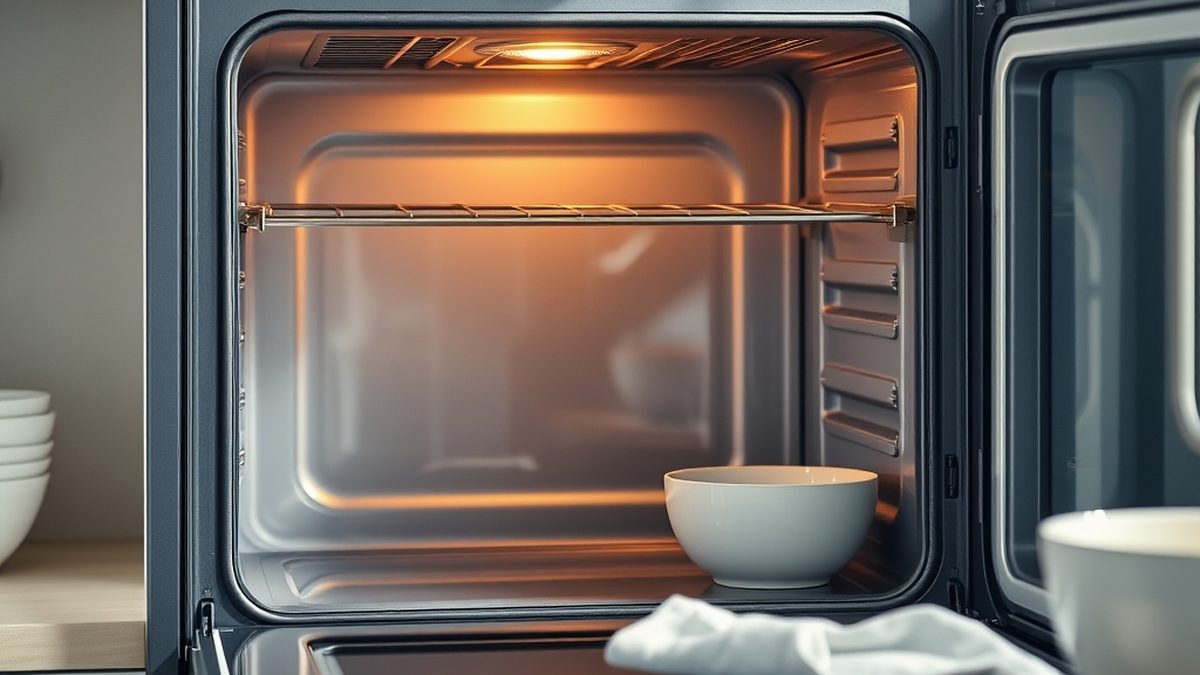
Illustration generated by Nexulab
- Baked-on oven grime is polymerised fat, not grease. That is why wiping does nothing and why every method below relies on softening it first.
- The self-cleaning cycle works but runs extremely hot, produces fumes, and is a known cause of blown thermal fuses and failed control boards.
- For moderate grime, a bicarbonate paste left overnight does most of the work while you sleep and costs almost nothing.
- Never spray cleaner on the heating elements, the fan, or the bare oven light. Never mix cleaning products.
- Wipe spills while the oven is still warm and you will rarely need any of these methods again.
The best way to clean an oven is not one method — it is three, and choosing wrongly means either scrubbing for an hour to no effect or risking a repair bill.
Which one you need depends on what is actually in there. So before the methods, thirty seconds on what you are removing, because that explains why the obvious approach fails.
Why wiping does nothing
The brown crust on the floor of your oven is not grease. It used to be.
Fat that has been heated repeatedly past its smoke point undergoes the same polymerization that gives cast iron its non-stick coating: the molecules cross-link into a hard, varnish-like polymer bonded to the surface. That is a solid film, not an oily deposit.
Two consequences follow.
Detergent cannot dissolve it. Washing-up liquid emulsifies fats, and this is no longer a fat in that sense. You can scrub with soapy water indefinitely and remove almost nothing.
It has to be softened before it will move. Every method below is really a way of breaking that bond — with heat, with strong alkali, or with time. The scrubbing is the last five per cent.
Method 1: the self-cleaning cycle
If your oven has one, it is the least physical effort and the most risk.
How it works. The pyrolytic cycle locks the door and heats the cavity far beyond any cooking temperature, holding it there for hours until residue reduces to a light grey ash you sweep out afterwards.
Where it goes wrong. That heat has to go somewhere, and it stresses parts that were never meant to sit at those temperatures. Blown thermal fuses and failed control boards after a self-clean are a well-known failure pattern, particularly on older ovens. It is common enough that some technicians advise against ever using it on an appliance past a certain age.
It also produces smoke and fumes. Ventilate properly, open windows, and move birds out of the house entirely — birds are exceptionally sensitive to fumes from overheated surfaces.
If you use it: take out every rack and accessory that is not explicitly rated for the cycle, wipe out loose debris first so there is less to burn, run it when you are home and awake, and never leave the house while it runs. The National Fire Protection Association publishes general kitchen fire guidance worth knowing before you run any appliance unattended.
Best for: heavy build-up, in a relatively new oven, when you have an afternoon and can ventilate.
Method 2: the overnight bicarbonate paste
This is the one I would reach for in most situations. It is slow, cheap, and almost impossible to get wrong.
Mix a spreadable paste of bicarbonate of soda and water — roughly half a cup of bicarb with enough water to reach the texture of thick yoghurt.
Spread it over the interior, avoiding the heating elements, the fan, and the oven light. Get it onto the door glass and the floor, which is where the worst of it lives. It will turn brown as it makes contact; that is normal.
Leave it overnight. Twelve hours is not excessive. This is the part that does the work, and the reason it beats scrubbing: you are letting an alkali sit on a polymer for hours instead of applying force for minutes.
In the morning, scrape and wipe. A plastic scraper lifts most of it. A damp cloth takes the rest. Where residue clings, a spray of white vinegar produces a fizz that helps neutralise the remaining alkali and makes the final wipe easier.
Best for: moderate grime, ovens without a self-cleaning function, and anyone who would rather not have caustic chemicals in the kitchen.
Method 3: chemical oven cleaner
Fastest, harshest, and the one with the most ways to cause harm.
Commercial oven cleaners are strongly caustic. They work quickly on exactly the polymer described above, which is why they are effective — and why they are equally effective on skin.
Non-negotiables: gloves, eye protection, windows open, and never in a small unventilated room. Read the label and follow its contact time rather than improvising.
Never mix it with anything else. Not with vinegar, not with bleach, not with another cleaner. Combining household chemicals is a routine cause of poisoning incidents, and no cleaning result justifies it.
Check your manual first. Many manufacturers explicitly forbid chemical cleaners in pyrolytic ovens because they attack the special enamel. Using one can void a warranty and damage the surface permanently.
Best for: severe, long-neglected build-up where the paste has already failed, in an oven whose manual permits it.
Comparison
| Effort | Time | Risk | Cost | |
|---|---|---|---|---|
| Self-cleaning cycle | Lowest | 2-4 hours plus cooling | Component failure, fumes | Electricity |
| Bicarbonate paste | Moderate | Overnight plus 20 min | Almost none | Pennies |
| Chemical cleaner | Low | 30 min to a few hours | Chemical burns, enamel damage | Price of the product |
The parts people forget
The racks. Take them out and soak them in the bath — line it with an old towel first so the enamel does not get scratched — in hot water with washing-up liquid, for a few hours. They come clean with far less effort out of the oven than in it.
The door glass. Grease that has crept between the panes cannot be reached from the surface. Some doors come apart for this; check your manual, because forcing one cracks the glass.
The fan and elements. Wipe around them, never soak them, and keep paste and spray off them entirely.
The seal. The rubber gasket around the door degrades with harsh chemicals. Clean it with soapy water only. A failed seal means heat escapes and your oven cooks unevenly, which is a bigger problem than a dirty one.
What actually keeps it clean
None of the above, if you build one habit: wipe spills while the oven is still warm.
A fresh spill is soft. It comes away with a damp cloth in seconds. The same spill, having been baked through five more cooking sessions, is the polymer we spent this article discussing. Everything here exists because that first wipe did not happen.
A baking tray on the shelf below anything likely to bubble over costs nothing and catches most of it before it reaches the oven floor. And while you are thinking about the appliance, a look at its efficiency rating is worthwhile — ENERGY STAR certified models use meaningfully less electricity over their lifetime, which adds up faster than most people assume.
For more in this series, see our other home & kitchen guides.
Frequently asked questions
Is the self-cleaning function safe to use?
It works, but it is not risk-free. The pyrolytic cycle heats the cavity far above normal cooking temperatures to reduce residue to ash, and that heat stresses components. Blown thermal fuses, failed control boards and damaged door seals are well-documented outcomes, usually on older ovens. It also produces smoke and fumes. If you use it, ventilate thoroughly, remove everything from the oven first, and never leave the house while it runs.
Does baking soda and vinegar actually clean an oven?
Bicarbonate of soda does the work; the vinegar is mostly theatre. The paste is mildly abrasive and alkaline, which softens baked-on fat given enough contact time — that is why it needs to sit overnight rather than being scrubbed straight away. Spraying vinegar on it afterwards creates fizzing that looks impressive and neutralises the alkalinity, which mainly helps with the final wipe-down rather than the cleaning itself.
How do I clean oven glass that has gone brown between the panes?
That discolouration is grease that has crept between the glass panels, so cleaning the surface will not touch it. On many ovens the door can be lifted off its hinges and partly disassembled to reach the inner faces — check your manual for the exact procedure, because forcing it cracks the glass. If the door is not designed to come apart, this is a job for a technician rather than a stronger cleaner.
Can I use oven cleaner on a self-cleaning oven?
Most manufacturers advise against it. Pyrolytic ovens have a special enamel coating designed to withstand the cleaning cycle, and caustic chemical cleaners can damage it. Check your manual before applying anything stronger than soapy water. If the manual says no, the bicarbonate paste is the safe alternative.
How often should I clean my oven?
A quick wipe of spills while the oven is still warm, after any messy cook, prevents nearly all of the problem. Beyond that, a proper clean every three to six months suits most households, more often if you roast frequently or cook at high temperatures. The interval matters less than catching spills early, because a fresh spill wipes away in seconds and a baked one takes a night of soaking.