How to Clean a Cast Iron Skillet Without Ruining It
Almost everything people repeat about cast iron is either outdated or invented. Here is what actually damages a pan, what does not, and the two-minute routine that keeps one alive for decades.
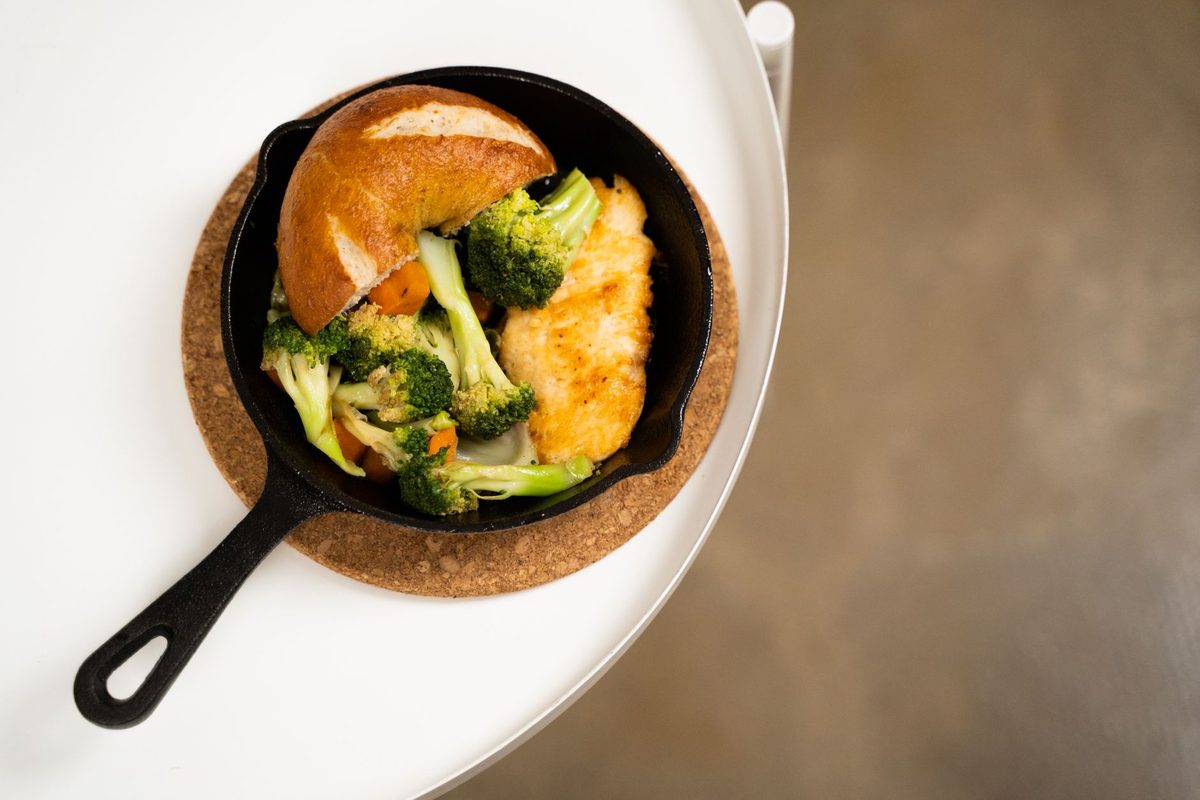
Photo by Cats Coming via Pexels
- Modern dish soap does not strip seasoning. The old warning dates from when soap was made with lye.
- The real enemies are prolonged soaking, the dishwasher, and putting the pan away damp.
- Clean while the pan is still warm, dry it on the burner, and wipe on a thin film of oil. Two minutes, every time.
- Rust is not fatal. Scrub it back to bare metal and re-season — the pan is recoverable almost every time.
Ask ten people how to clean a cast iron skillet and you will get ten answers, most of them wrong. There is more folklore attached to cast iron than to any other object in a kitchen, and most of it survives because the pans are forgiving enough that bad advice rarely produces an obvious disaster. A pan treated badly does not crack. It just slowly gets worse, and the owner assumes that is normal.
It is not normal. A well-kept skillet gets better every year. Here is the actual method, and the reasoning behind each step, because the reasoning is what lets you improvise when your situation does not match the instructions. We explain the mechanism rather than just the steps on purpose — it is part of how we write.
What seasoning actually is
This determines everything else, so it is worth thirty seconds.
Seasoning is not a layer of grease sitting on the metal. When you heat a very thin film of oil past its smoke point, the fat molecules break down and cross-link into a hard, plasticky polymer that bonds to the iron itself — the same polymerization process that turns drying oils into a solid film. That polymer is what makes the surface slick and what keeps water away from the bare metal.
Two consequences follow directly.
Detergent cannot dissolve it. Dish soap emulsifies fats. Polymerised oil is no longer a fat in that sense — it is a solid film. This is why the no-soap rule is obsolete: it was true when household soap was lye-based and chemically aggressive, and it stopped being true generations ago. Lodge, the largest cast iron manufacturer in the United States, says the same thing in its own care instructions.
Water is the real threat, and only through time. A brief rinse does nothing. Twenty minutes in the sink lets water work through microscopic gaps in the film and reach the iron, and iron plus water plus oxygen produces rust. Everything in the routine below exists to keep water contact short.
The everyday routine
This takes about two minutes and should happen after every use.
1. Clean it while it is still warm. Not scorching — warm enough to handle safely. Warm residue lifts off with almost no effort; the same residue, cold and set, requires scrubbing that you would rather avoid.
2. Rinse with hot water and scrub. Use a stiff nylon brush, a plastic pan scraper, or chainmail. A drop of dish soap is fine. What you are removing is food debris, not the seasoning underneath it.
3. For stuck-on food, deglaze instead of scrubbing harder. Put the pan back on the heat, pour in a shallow layer of water, and let it come to a simmer for a minute. Whatever is welded to the surface will lift. Scrape it loose with a wooden spoon or a pan scraper and pour it out. This is faster and gentler than force.
4. For stubborn patches, use coarse salt. A tablespoon of kosher salt and a folded paper towel or half a potato gives you an abrasive that is harder than food residue but softer than the seasoning. Scour, then rinse.
5. Dry it on the stove, not on a rack. This step is the one people skip and the one that matters most. Towel-dry the pan, then set it on a burner over medium heat for a minute or two until every trace of moisture has evaporated. Air-drying leaves a film of water in places you cannot see.
6. Wipe on a very thin coat of oil. With the pan still warm, add a few drops of neutral oil and spread it over the entire cooking surface with a paper towel. Then take a clean, dry paper towel and wipe it back off as though you had made a mistake. The pan should look dry, with a faint sheen — not glossy. Any oil you can see is too much oil, and it will cure sticky.
7. Store it uncovered, or with a paper towel inside. Trapped humidity under a lid causes rust. If you stack pans, put a paper towel between them.
What genuinely damages cast iron
Worth being clear about, since it is a short list:
- Soaking. Leaving the pan in the sink, even for half an hour, even in clean water.
- The dishwasher. Long water contact, harsh detergent, and a wet pan at the end.
- Storing it damp. Rust can start overnight.
- Rapid temperature shock. Plunging a screaming-hot pan into cold water can, in rare cases, warp or crack it. Let it cool a little first.
- Long simmers of acidic food in a poorly seasoned pan. Tomato sauce or wine reductions can eat into weak seasoning and pick up a metallic taste. A well-established pan handles a quick acidic sauce without trouble.
Notably absent: soap, metal utensils, and cooking on high heat. Metal spatulas are fine — many people consider them beneficial, since they keep the surface even. High heat is what cast iron is for.
Removing rust and starting over
A rusty pan found in a garage is not scrap. Cast iron is thick, and the rust is almost always superficial.
Scrub back to bare metal. Steel wool or coarse sandpaper, with soap and water, working until the orange is gone and you are looking at uniform grey iron. This takes real effort on a badly rusted pan and it is normal to remove the old seasoning entirely along with the rust.
For heavy rust across the whole pan, a bath in a one-to-one mixture of white vinegar and water will loosen it — but check every fifteen minutes and never leave it more than an hour. Vinegar does not stop at the rust; given time it will attack the iron beneath.
Wash, dry immediately, dry again on the burner. Bare iron with no seasoning will begin rusting within minutes of being wet. Move straight from rinsing to drying.
Season it. Wipe the entire pan — inside, outside, handle — with a thin coat of neutral oil, then wipe it back off until it looks dry. Place it upside down in an oven at roughly 450–500°F (230–260°C) with a sheet of foil on the rack below, and bake for one hour. Turn the oven off and let the pan cool inside it.
Repeat two or three times. Each round builds another thin layer. Three thin layers beat one thick one every time, and the difference is not subtle: a thick coat cures into a sticky, uneven varnish that eventually flakes. Serious Eats has tested the competing seasoning methods repeatedly and lands in the same place: thin coats, high heat, repeated.
Open a window. This process produces smoke, and that is expected rather than a sign of error.
What a healthy pan looks like
Even, satin black. Not glossy, not patchy, not tacky to the touch. An egg fried in a little fat should release with a nudge.
If yours is grey and dull in the centre, the seasoning has worn thin in the hot spot — cook a few fatty things in it and it will rebuild on its own. If it is sticky, you used too much oil. If it flakes, an over-thick layer is shedding; scrub the loose material off and rebuild thin.
None of these states are failures. A cast iron skillet is one of the few kitchen objects that repairs completely, no matter how badly it has been treated. That is most of the reason people keep them for fifty years.
The same principle — understand the mechanism, then the maintenance follows — runs through our other home and kitchen guides.
Frequently asked questions
Can you really use soap on cast iron?
Yes. Seasoning is polymerised oil bonded to the metal, not a loose grease coating, and ordinary dish detergent will not dissolve it. The rule against soap comes from an era when household soap contained lye, which genuinely would strip it. What you should avoid is leaving the pan to soak in soapy water, because that is water exposure, not soap exposure.
Why is my cast iron sticky after seasoning?
Too much oil. A thick layer cannot fully polymerise and cures into a tacky varnish instead of a hard film. The fix is to wipe the pan until it looks dry rather than oiled, then heat it. If it is already sticky, scrub the tacky layer off with hot water and a stiff brush and re-season with a much thinner coat.
Is it safe to cook in a rusty cast iron pan?
Cook in it only after removing the rust. Small amounts of iron oxide are not considered toxic, but rust means the seasoning has failed and bare iron is exposed, so food will stick and metallic flavours can transfer. Scrub it back to grey metal, wash, dry thoroughly and re-season before the next use.
Can I put cast iron in the dishwasher?
No. A dishwasher combines prolonged water contact, high heat and aggressive detergents, then leaves the pan wet at the end of the cycle. That combination strips seasoning and starts rust within hours. If it has already happened, the pan is not ruined — strip and re-season it.
What oil is best for seasoning cast iron?
Any neutral oil with a reasonably high smoke point works: grapeseed, canola, sunflower or refined vegetable oil. Flaxseed oil produces a very hard initial finish but has a reputation for flaking off in sheets with heavy use. Applying the oil thinly matters considerably more than which oil you choose.