Why Does My Dog Lick Me? The Honest Answer
It is not simply 'kisses', and it is not simply salt on your skin. Licking is a whole channel of communication, and reading it properly tells you when to enjoy it and when to pay attention.
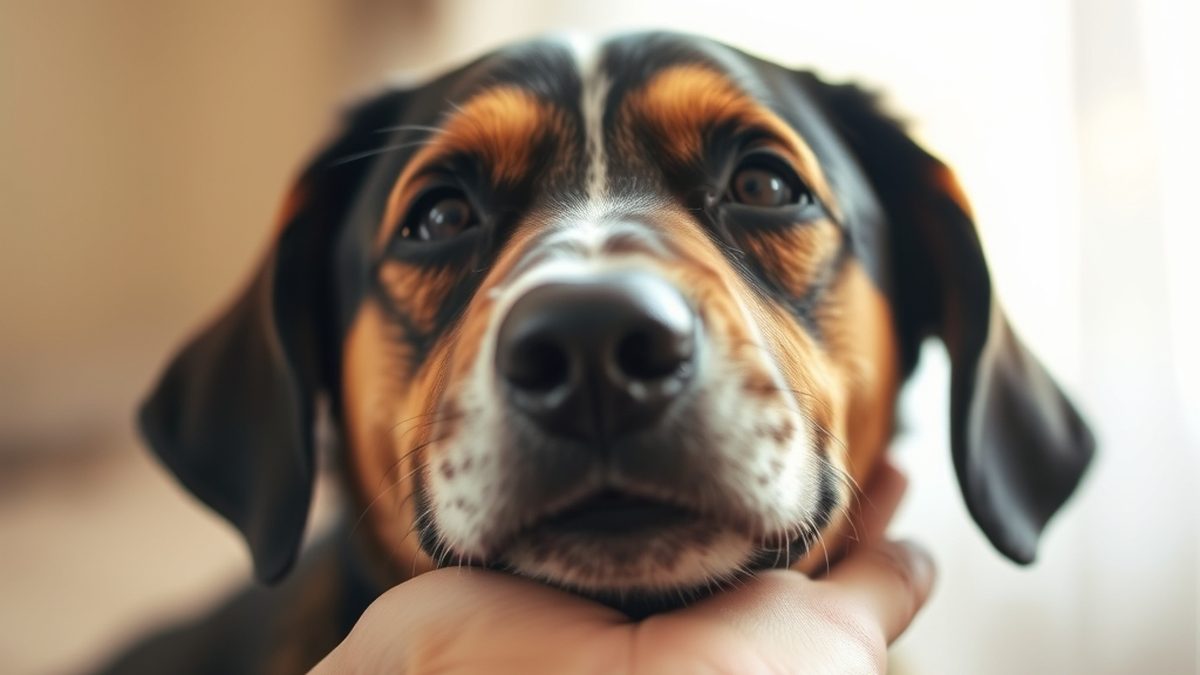
Illustration generated by Nexulab
- Licking is normal social behaviour in dogs, rooted in how puppies communicate with adults from birth.
- Most licking is a mix of affection, attention-seeking and simple interest in the taste and smell of your skin.
- You are almost certainly reinforcing it. Dogs repeat what gets a reaction, and any reaction counts.
- Sudden, obsessive licking of you, of objects, or of themselves is a different behaviour and can signal pain, nausea or anxiety.
- Healthy dog saliva on intact skin is low risk for most people, but not on open wounds and not for anyone immunocompromised.
Ask why does my dog lick me and you will get two confident answers: they are kissing you, or they like the salt on your skin. Both contain a grain of something and neither is the explanation.
Licking is not one behaviour with one meaning. It is a channel your dog communicates through, and the same action carries different messages depending on context. Learning to read the context is more useful than settling on a single translation.
This is general information, not veterinary advice. A sudden or obsessive change in licking can indicate pain, nausea or anxiety, and that needs a vet who can examine your dog.
Where the behaviour comes from
It starts before the dog can see.
A mother licks her newborn puppies to clean and stimulate them. Puppies later lick around an adult’s mouth — a behaviour inherited from wild canids, where it prompted adults to bring food. So from the first days of life, licking is bound up with care, closeness and getting a response.
Adult dogs keep it as social behaviour: bonding, greeting, and appeasement — a signal that says I am not a threat, we are fine.
That last one matters and is widely misread. A dog licking your hand when you come home upset, or when voices are raised, may not be affectionate so much as managing the situation. Same action, quite different message.
The four things going on, usually at once
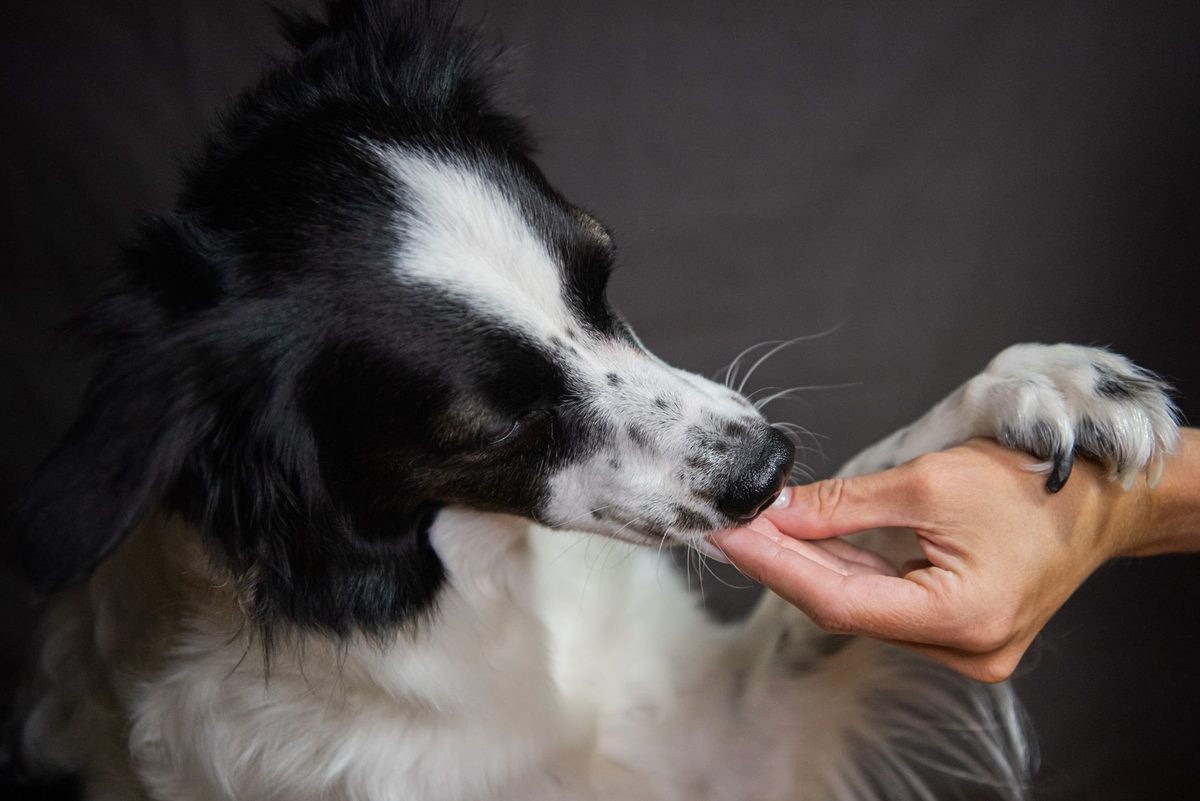
Affection and bonding. Real, and the closest thing to the popular interpretation. Dogs lick the members of their group. You qualify.
Attention. This is the one owners underestimate. Your dog licks you, you look at them, speak to them, push them away, laugh. Every one of those is a response. Behaviour that reliably produces a response gets repeated. Most persistent licking is a habit the owner trained without meaning to.
Taste and information. Your skin carries salt, sweat, skin cells, lotion, and traces of everything you have touched. A dog investigating your hands is reading your day. Hands and feet get the most attention because they carry the most information.
Comfort behaviour. Repetitive licking releases tension. Some dogs lick when unsettled the way some people bite their nails — self-soothing rather than communication.
When it stops being ordinary
The behaviour is not the signal. A change in the behaviour is the signal.
Worth paying attention to:
- A sudden increase with no change in circumstances
- Compulsive licking that is hard to interrupt, where the dog seems unable to stop
- Licking surfaces — floors, walls, furniture — obsessively. This one is specifically associated with nausea and gastrointestinal discomfort in dogs, and is worth mentioning to a vet.
- Licking one spot on themselves until the fur thins or the skin breaks. That is usually pain, allergy or anxiety, and it needs investigating.
- Licking plus other changes — appetite, energy, restlessness, hiding
The general principle that veterinary bodies including the American Veterinary Medical Association apply to behaviour is the useful one here: a behaviour that changes suddenly, without an obvious cause, deserves a look. The ASPCA dog care resources cover the behavioural side; veterinary teaching hospitals such as Cornell University College of Veterinary Medicine publish accessible material on the medical causes behind compulsive behaviours.
A calm dog that licks your hand while you watch television is not on this list.
Is it hygienic?
The honest answer is: mostly fine, with limits.
Dog mouths carry bacteria, and dogs investigate things with their mouths that you would rather not consider. For a healthy adult with intact skin, ordinary licking is low risk.
Where the caution applies:
- Open wounds, broken skin, or fresh scratches — do not let them lick these, yours or their own
- Mouth and eyes — avoid
- Anyone immunocompromised, pregnant, very young or elderly — be more careful
- Wash afterwards if it was your hands and you are about to eat
This is a comfort decision more than a medical prohibition. Plenty of people are perfectly happy being licked and are fine.
How to reduce it, if you want to
The mistake is punishment. Licking is frequently appeasement, and punishing a dog for signalling I mean no harm increases their anxiety, which usually increases the licking. You end up reinforcing what you meant to stop.
What works:
Remove the reward completely. When it starts, turn away. No eye contact, no talking, no pushing them off. Withdraw entirely for a few seconds, then turn back and engage calmly if they have stopped. You are teaching that licking ends attention rather than producing it.
Reward the alternative. Notice when your dog approaches and settles beside you without licking, and reward that. Behaviour you reward is behaviour you get.
Give the mouth another job. A chew or a food puzzle occupies the same drive.
Check the timing. If it clusters around your arrival home, departures, or moments of household tension, you are probably looking at anxiety rather than habit — and that responds to different handling, sometimes with a vet or behaviourist involved.
Be consistent across the household. If one person laughs and lets it happen, the behaviour survives everyone else’s training.
The short version
A dog that licks you calmly and in moderation is a dog behaving normally, saying something between hello, I like you, pay attention to me and what have you been touching.
A dog whose licking changed suddenly, or who cannot stop, is telling you something else — and that one is worth a phone call to the vet rather than a search engine.
For more in this series, see our other pets guides.
Frequently asked questions
Is it OK to let my dog lick my face?
For a healthy adult with intact skin it is low risk, though not zero — dog mouths carry bacteria, and dogs investigate things you would rather not think about. Avoid letting them lick your mouth, eyes, or any broken skin. Anyone immunocompromised, pregnant, very young or elderly should be more cautious, and washing afterwards is sensible. It is a personal comfort decision more than a medical rule.
Why does my dog lick me so much all of a sudden?
A change in intensity matters more than the behaviour itself. Sudden excessive licking can accompany nausea, pain, or anxiety, and dogs sometimes lick more when something feels wrong. Consider what else changed — a new routine, a house move, a new pet, a diet change. If it appeared abruptly with no obvious trigger, or comes with other signs like loss of appetite or restlessness, have a vet check them.
Does dog licking mean love?
Partly, but it is not a clean translation of a human gesture. Licking begins as a puppy behaviour for care and feeding, and it persists into adulthood as social bonding and appeasement. So affection is genuinely part of it. But so is taste, attention-seeking and habit. Treating every lick as a kiss reads more into it than the behaviour carries.
How do I stop my dog from licking me?
Stop rewarding it, which is harder than it sounds because pushing them away, laughing and saying no are all reactions. Turn away and withdraw attention completely for a few seconds, then re-engage calmly when they stop. Redirect to something incompatible — a chew, a toy, a trained sit — and reward that instead. Never punish it; licking is often appeasement, and punishing appeasement raises anxiety and can increase the behaviour.
Why does my dog lick my feet and hands specifically?
Those are the parts of you carrying the most information. Hands touch everything you have handled all day, and feet accumulate sweat, skin cells and scent from wherever you have walked. A dog investigating your hands and feet is reading where you have been, in the way most natural to them. It is curiosity as much as affection.