Free Alternatives to CapCut That Actually Hold Up
CapCut makes quick edits easy, but its free tier keeps tightening. These alternatives split into two clear camps: fast vertical edits for social media, and full timeline editors you can grow into. None of them will surprise you with a watermark.
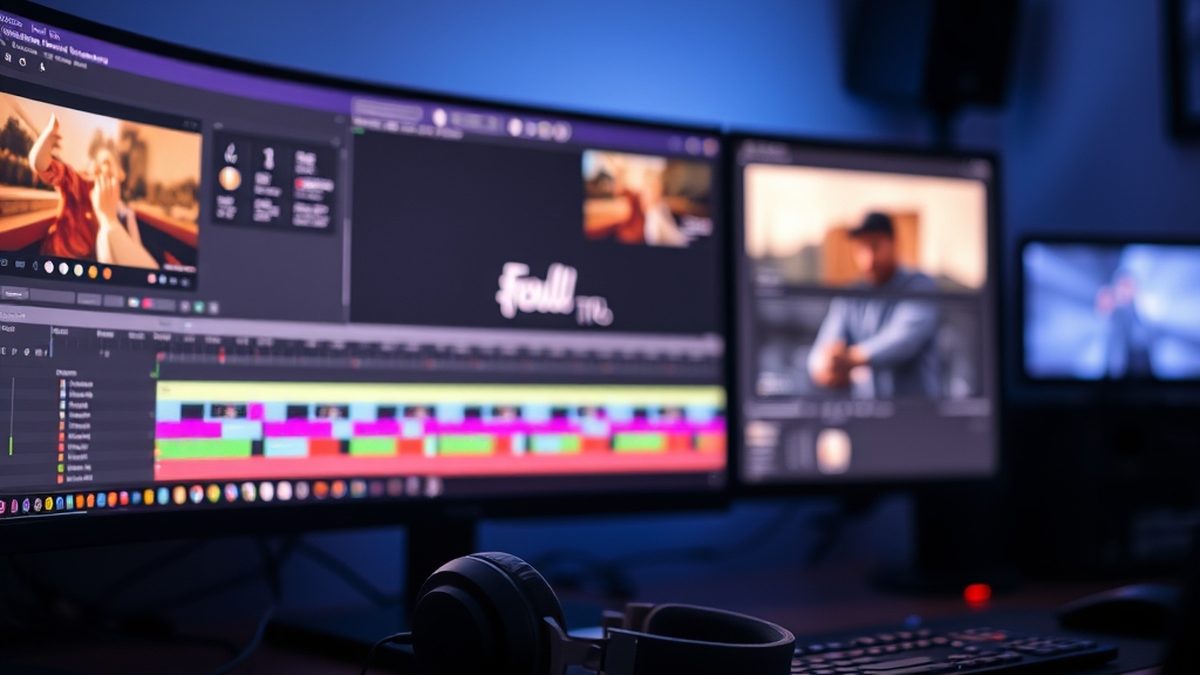
Illustration generated by Nexulab
- For fast social edits, a lightweight mobile app or web-based editor will match CapCut's speed without a watermark.
- Desktop free tiers from established editors are far more capable than most people expect, often supporting 4K and multi-track timelines.
- DaVinci Resolve is the most complete free alternative, but it demands a modern dedicated GPU.
- Shotcut and Kdenlive offer full timeline editing with no resolution limits and no watermarks, ever.
- If you only need quick trims and text overlays, you do not need to buy anything—several open-source tools handle this perfectly.
The search for free alternatives to CapCut usually starts with a frustration: a watermark, a feature locked behind a subscription, or an app that suddenly feels sluggish on an older phone. The good news is that free editing tools have matured to the point where several of them outperform CapCut’s free tier in key areas, particularly when you move to a desktop. The trade-off is that you need to choose based on the kind of editing you actually do.
A fast vertical edit for social media and a real timeline project with multiple audio tracks are different tasks, and no single tool serves both perfectly without compromise. This guide splits the options into those two camps, explains what you give up with each, and is clear about watermarks and hardware requirements.
Quick Vertical Edits for Social Media
CapCut built its reputation on mobile-first, vertical video editing with trending effects. If that is your main workflow, a desktop editor can feel heavy and slow. Several free alternatives keep the same rapid, template-driven approach.
Mobile Apps That Stay Free
The mobile editing space is crowded with apps that offer a free tier, but the definition of free varies. Some lock export resolution behind a paywall; others add a watermark; a few genuinely let you produce polished short-form video without paying.
- InShot: A straightforward editor with a free version that exports without a watermark if you watch an ad. The timeline is simple, and it handles vertical aspect ratios natively. The limit is that advanced effects and some transitions require a purchase.
- YouCut: Built specifically as a no-watermark editor. The free tier gives you basic trimming, merging, and background music. It lacks the effects library of CapCut, but for quick cuts it is direct and honest.
- VN Video Editor: The free version includes multi-track timelines, keyframe animation, and no watermark. It is available on both mobile and desktop, which makes it an unusual bridge between the two worlds. The free tier is genuinely capable, though some advanced effects are paid.
Each of these apps keeps the fast, vertical workflow. The main limitation is that their free tiers restrict some transitions, effects, or export quality, but none of them force a watermark onto your exported video.
When Mobile is Not Enough
Mobile apps are excellent for quick edits, but they share a common bottleneck: the touch interface makes precise trimming and multi-track work slower than it should be. If you find yourself fighting the timeline, it is worth looking at desktop tools.
Full Timeline Editing Without the Watermark
The most surprising thing about desktop free editors is how much they give away. Several professional-grade tools have free versions that are genuinely complete, with no watermark and no time limit. The catch is almost always hardware, not software.
DaVinci Resolve: The Professional Standard
DaVinci Resolve is the most capable free alternative to CapCut, and the gap is not small. It is a full video editing, colour grading, and audio post-production suite. The free version includes the same editing tools as the paid Studio version, with only a few advanced features locked away.
What you get for free: - Unlimited timeline resolution up to 4K - The full Cut, Edit, Fusion, Fairlight, and Color pages - Collaborative workflows - No watermark on export
What is not free: - Resolutions above 4K - Some noise reduction and temporal tracking filters - Advanced lens correction and some Fusion effects
Hardware requirement: This is the critical point. DaVinci Resolve needs a dedicated graphics card with at least 4GB of video memory to run smoothly. An older integrated GPU will struggle, and an underpowered machine will drop frames during playback. If your computer meets the spec, this is the closest you will get to a professional edit suite without paying.
Shotcut: Open Source and Reliable
Shotcut is a cross-platform open-source editor that has been quietly improving for years. It does not have the polish of Resolve, but it also does not have the hardware demands.
Strengths: - No watermark, no resolution limit, no export restrictions - Native timeline editing with a wide format support - Runs on older Windows, macOS, and Linux machines - A straightforward interface that does not hide features
Limits: - The interface feels dated and can be unintuitive for newcomers - Hardware acceleration is less efficient than in Resolve, so complex projects can slow down - The effects library is functional but not as extensive
Shotcut works well for anyone who edits a few times a month and does not want to learn a professional workflow. It is also one of the few editors where you can set a vertical aspect ratio, edit, and export without any hidden catch.
Kdenlive: The Editor That Grows With You
Kdenlive is another open-source project, originally built for Linux but now available on Windows and macOS. It feels like a bridge between Shotcut’s simplicity and Resolve’s depth.
What makes it different: - A multi-track timeline with proxy editing built in - A good library of transitions and effects, including community templates - Configurable keyboard shortcuts and a customisable interface - Active development with regular updates
Where it falls short: - The Windows version can be less stable than the Linux original - Export rendering can be slower than Shotcut for similar projects - Some effects require manual keyframing that CapCut automates
Kdenlive is a strong choice for someone who edits regularly and wants to move beyond basic cuts. The proxy editing feature is especially useful if your computer is older, because it lets you edit with lower-resolution copies of your footage and then render at full quality.
OpenShot: The Beginner’s Desktop Editor
OpenShot takes a different approach. It is designed to be immediately understandable, with a drag-and-drop interface that mirrors what you expect from a mobile app. The trade-off is performance.
- Good for: Simple projects, quick trims, and learning the basics of timeline editing
- Not good for: Complex multi-track edits or 4K playback
OpenShot does not add a watermark and does not limit resolution. The limitation is that it can become sluggish with larger projects because of how it handles video caching. If you need a free editor for occasional use and want to avoid learning any new concepts, OpenShot is the gentle start.
What Free Tiers Actually Restrict
Every free alternative to CapCut has limits, but they are not always the ones you expect. Understanding the mechanism of each restriction helps you choose before you invest time in a project.
Watermarks
The most visible restriction, and the one that drives people away from CapCut’s free tier. Among the tools mentioned here: - DaVinci Resolve, Shotcut, Kdenlive, and OpenShot never watermark exports. - Mobile apps like Canva and InShot may watermark or require an ad view per export.
Export Resolution
CapCut’s free tier limits export resolution on some platforms. Desktop open-source editors have no resolution cap. DaVinci Resolve caps at 4K in the free version. For most social media content, this is irrelevant, but if you need to deliver in a higher format, check the spec before starting.
Hardware Requirements
This is the hidden cost of free desktop editing. A tool may be free in price, but it demands a computer with enough RAM, a modern processor, and a dedicated GPU. DaVinci Resolve is the most demanding. Shotcut and Kdenlive run on older hardware, but they will still slow down with 4K footage unless you use proxy editing.
Effects and Templates
CapCut’s library of built-in effects and transitions is large and regularly updated. Open-source editors have smaller built-in libraries, though Kdenlive and Shotcut both support community templates. DaVinci Resolve includes the Fusion page for building custom effects, but that is a professional compositing tool, not a quick drag-and-drop system.
| Feature | DaVinci Resolve | Shotcut | Kdenlive | OpenShot |
|---|---|---|---|---|
| Watermark | No | No | No | No |
| Max free resolution | 4K | Unlimited | Unlimited | Unlimited |
| Hardware demand | High | Low | Medium | Low |
| Effect library | Professional | Basic | Good | Basic |
| Vertical video support | Yes | Yes | Yes | Yes |
| Proxy editing | Yes | No | Yes | No |
The Audio Side: Editing Sound Separately
CapCut bundles basic audio editing inside the video timeline. When you switch to a desktop editor, you gain the ability to separate your audio workflow entirely. That is an advantage, not a problem.
Audacity is a free, open-source audio editor that has been the standard for quick audio tasks for years. It handles trimming, noise reduction, leveling, and multi-track mixing. Using it alongside a video editor means you edit your sound in a dedicated tool, then bring the exported file back into the video timeline.
The workflow looks like this: 1. Export audio from your video editor as a WAV or MP3 2. Open it in Audacity and apply noise reduction, compression, and EQ 3. Export the cleaned audio as a high-quality file 4. Replace the original audio track in your video editor
This separation is more work than CapCut’s built-in tools, but the result is noticeably cleaner audio. It also means you are not limited by the basic audio filters inside a video editor.
When You Do Not Need to Buy Anything
The honest answer for many people is that they do not need to spend money on video editing software. If your work involves: - Trimming clips to length - Adding a single background music track - Exporting in a standard aspect ratio - Applying basic colour adjustments
Then Shotcut, Kdenlive, or even OpenShot will serve you indefinitely without a watermark or resolution cap. The only reason to consider a paid tool is if you need a specific effect library, faster rendering on older hardware, or a mobile workflow that matches CapCut’s speed.
Moving Beyond Video Editing
Video projects often need more than an editor. You might need a bitmap editor for thumbnails, a vector design tool for lower thirds, or an office suite for planning scripts. The free software ecosystem around video is deep.
GIMP is a capable image editor for thumbnails and still graphics. It handles layers, masks, and colour correction well. Krita, while built for digital painting, also works for compositing still images with a more intuitive brush engine. Photopea is a browser-based tool that reads and writes Photoshop files, which makes it convenient when you need to edit a template quickly without installing anything.
For vector work, Penpot is an open-source design tool that runs in the browser. It is useful for creating lower thirds, title cards, and graphic overlays that you can export as PNGs and bring into your video editor.
On the office side, LibreOffice and ONLYOFFICE are both free suites that handle documents and spreadsheets. They are not directly part of a video workflow, but when you need to write a script or manage a shot list, they are reliable and offline.
For photo processing that goes beyond simple edits, darktable and RawTherapee are open-source raw photo editors. They are useful if you shoot stills for thumbnails or reference images and need fine control over colour and exposure.
None of these tools replace a video editor, but they fill the gaps that a single app like CapCut cannot cover. A thumbnail made in GIMP, a lower third designed in Penpot, and a script written in LibreOffice combine into a workflow that costs nothing.
Choosing Based on Your Actual Work
The decision comes down to two questions.
Do you edit primarily on a phone? If yes, stick with a mobile app like Canva or InShot that keeps the fast, vertical workflow. The trade-off is that you will hit a paywall on some effects or export settings, but the core editing remains free.
Do you have a computer that can handle it? If yes, install DaVinci Resolve and spend a week learning the interface. It is the most capable free editor available, and the skills transfer to paid professional work. If your computer is older, install Shotcut or Kdenlive and enable proxy editing. You will get clean exports with no watermark and no resolution limit.
There is no single free alternative to CapCut that matches its combination of mobile speed and effects library. But there are several that exceed it in specific areas, and understanding which area matters to you is the whole decision.
For more in this series, see our other software & tools guides.
Frequently asked questions
What is the best free alternative to CapCut with no watermark?
DaVinci Resolve, Shotcut, and Kdenlive all export without watermarks at full resolution. DaVinci Resolve offers a professional colour and editing suite entirely free, though it needs a capable computer. Shotcut and Kdenlive are lighter open-source editors that also never watermark your exports, making them reliable choices regardless of your hardware.
Can I edit vertical videos for TikTok with a free CapCut alternative?
Yes. Several free editors support vertical aspect ratios. Shotcut and Kdenlive let you set a 9:16 canvas and export at full quality. Mobile apps like YouCut and InShot offer quick vertical editing with basic effects, though their free tiers sometimes include ads or limit export resolution. Check the export settings before committing to a project.
Is DaVinci Resolve really free, and what are its limits?
DaVinci Resolve has a genuinely free version that includes most editing, colour grading, and audio tools. The limits are mainly around advanced collaborative features, some noise reduction filters, and resolutions above 4K. For most independent creators, the free version is complete enough to finish professional work without any watermark or time limit.
What free video editor works on an older computer?
Shotcut and OpenShot are designed to run on modest hardware. They do not require a dedicated graphics card and can handle HD editing on older laptops. Using proxy editing—lower-resolution copies of your footage—will make the experience smoother. Kdenlive also offers proxy generation and runs well on mid-range machines.
Can I get CapCut-style effects and transitions in a free editor?
CapCut bundles many trendy effects and transitions that are not always built into desktop editors. However, Kdenlive and Shotcut include a solid library of transitions and allow you to install community-made templates. DaVinci Resolve includes a Fusion page for building custom effects, though the learning curve is steeper. For quick, pre-built effects, mobile apps remain closer to CapCut’s style.