The Best Free Alternatives to Figma
Figma changed how interface design is done, and its free tier is generous. The tools that compete with it are not imitations — some of them solve the same problem differently, and one of them is open source in a way Figma is not.
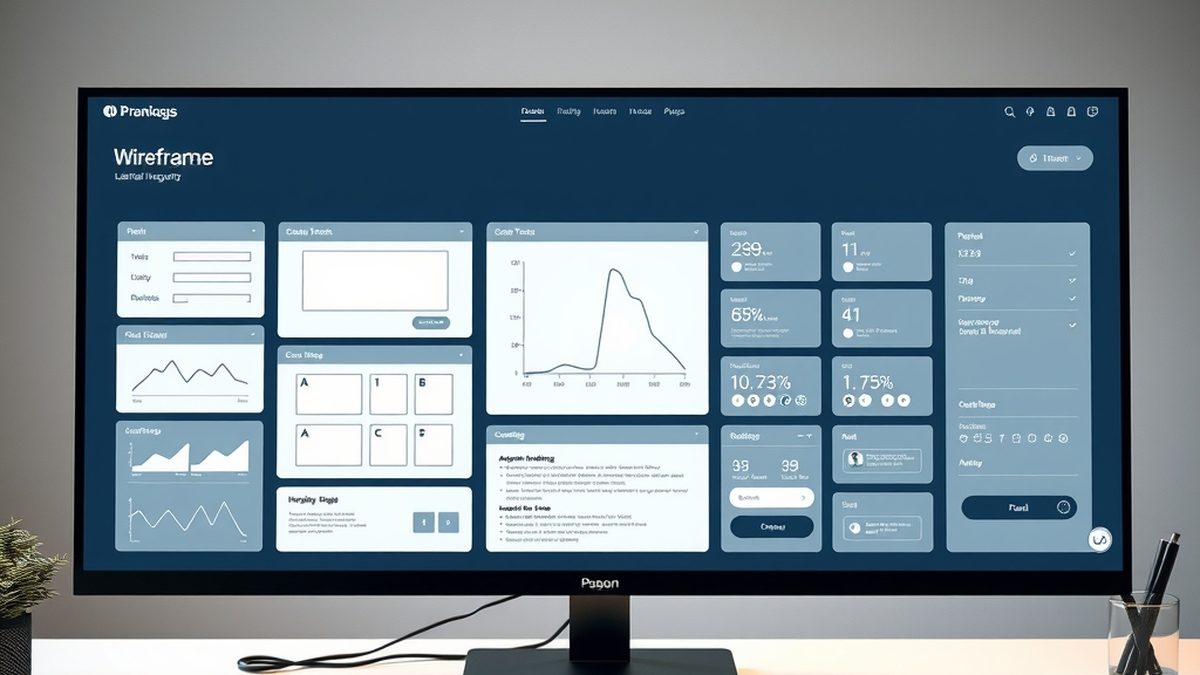
Illustration generated by Nexulab. Inline photo by Ofspace LLC via Pexels
- Penpot is the strongest open-source alternative to Figma and works entirely in the browser, with no installation and no account lock-in.
- For solo designers and small teams, the real question is not features but where your files live: Figma keeps them in its cloud, while Penpot lets you self-host.
- Prototyping, design tokens and developer handoff are where the gap between free tools and Figma is smallest.
- Real-time multiplayer collaboration with many simultaneous editors is the one area where the free alternatives genuinely fall behind.
- Switching tools costs time in muscle memory, not missing features. The file format is the real lock-in, not the software.
The best free alternatives to Figma sit in an unusual position. Figma’s own free tier is generous, and it has become the default tool for interface design, which means most people are not leaving because they cannot afford it. They are leaving because they want their files outside a proprietary cloud, or because the paid tier is required for something their team now needs, or because they simply want software they can control.
The useful question is not which tool wins overall. It is which job you actually do — because free alternatives to Figma split cleanly by job, and picking by reputation leads people to the wrong one.
For interface design: Penpot
Penpot is the answer for most people, and it deserves better than the “free alternative” framing. It is a mature, open-source design tool built specifically for interface and product design, with frames, auto-layout, components, variants, design tokens, and a developer handoff view that generates inspectable specs.
The thing that makes Penpot different is that it speaks open standards. It uses SVG for graphics and CSS for styles, which means a Penpot file is not a locked container — it is made of the same building blocks the browser already understands. That has practical consequences: a developer can read the styles you defined without a special viewer, and your design work is not trapped in a format that only one company can open.
Two honest caveats. The first is collaboration at scale: Penpot supports real-time editing, but with many simultaneous editors it is less polished than Figma. The second is the ecosystem: Figma’s plugin marketplace and community file library are vastly larger. If your workflow depends on specific plugins, check whether an equivalent exists before you switch.
For quick sketches and vector work: Inkscape
Inkscape is not a UI design tool, and it does not pretend to be one. But for the drawing that happens before a screen exists — icons, logos, illustrations, simple wireframes sketched as shapes — it is a serious vector editor with a deep path toolset.
It belongs on this list because interface design is not only about frames and components. At some point you need to draw something from scratch, and Inkscape does that well — it is the same tool we recommend as the best free alternative to Adobe Illustrator for pure vector work. It also exports clean SVG, which drops directly into Penpot or into a codebase.
The honest limit is interaction. Inkscape has no prototyping, no design tokens and no developer handoff. It is a drawing tool, and treating it as a Figma replacement for full interface work will frustrate you. Use it for the drawing part, and hand the result to a design tool for the interface part.
The comparison: which job, which tool
| Job | Best free tool | Why |
|---|---|---|
| Interface design | Penpot | Frames, auto-layout, components and design tokens, built for UI work |
| Prototyping | Penpot | Basic interactions and clickable flows, enough for most handoffs |
| Icon and logo drawing | Inkscape | Deep vector path toolset, clean SVG output |
| Developer handoff | Penpot | Inspectable specs generated from real CSS and SVG |
| Real-time collaboration | Penpot (self-hosted) | Works, but falls behind Figma with many simultaneous editors |
| Plugin ecosystem | Figma free tier | No free tool matches the marketplace; check your must-have plugins first |
The table matters because it exposes the real trade-off. The free alternatives are strongest where Figma itself is strongest — interface design, prototyping, handoff. They are weakest where Figma has spent years building an ecosystem around the core tool: plugins, community content, and the smoothness of many people editing at once.
Why the file format matters more than the features
The uncomfortable truth about leaving Figma is that the software is not the lock-in — the files are. A design created in Figma lives in Figma’s cloud in a proprietary format. There is no export button that gives you a portable copy of the full file with all its layers, components and comments intact.
This is why open standards matter. When Penpot stores your work as SVG and CSS, the file is portable in a way a Figma file is not. You can read it in a text editor. You can move it to another tool. You are not renting access to your own work.
If you are evaluating free alternatives to Figma and expect them to be drop-in replacements, you will be disappointed. If you are evaluating them as a way to own your design work and stop paying for access to it, the trade is usually worth it. The same logic applies across the design stack — for example, the best free alternatives to Canva follow a similar pattern of strong core tools with a thinner ecosystem.
How to decide
Start with the job, not the tool. If you design interfaces for a living and your team already collaborates in Figma with a library of community assets, the cost of switching is high and the benefit is mostly ideological. The free tier may be enough.
If you are starting a new project, working solo, or building a design system you want to control, Penpot is the strongest place to begin. It runs in the browser, costs nothing, and your work stays portable.
If you simply need to draw vector artwork that will eventually become part of a screen, Inkscape is the right tool, and it complements either of the others.
The honest bottom line: free alternatives to Figma do not match it feature-for-feature, and they do not need to. They win on the jobs they are designed for, and they win on the one thing Figma cannot offer — a file you actually own.
Frequently asked questions
Is Penpot as good as Figma?
For designing interfaces, building components, creating design systems and prototyping basic interactions, it is genuinely comparable. Penpot uses open standards — SVG for graphics and CSS for styles — which means your design files are readable outside the tool. Where it falls behind is polish and scale: real-time multiplayer with many editors at once is less smooth, and some advanced prototyping features are missing. For solo work and small teams, most people would not hit a wall.
Can free tools open Figma files?
Mostly not. Figma's file format is proprietary and lives in Figma's cloud, so there is no clean way to export a .fig file and open it in another tool. The practical path is to export assets as SVG, and to export design tokens or styles separately. If you are migrating, plan for the export before you cancel anything, because the files themselves are the real lock-in.
What is the best free tool for UI design?
Penpot, for almost everyone. It handles frames, auto-layout, components, variants, design tokens and developer handoff, which is the core of UI work. Because it runs in the browser and is open source, there is no cost and no dependency on a single vendor. For quick sketches or simple vector layouts, Inkscape can also work, but it is a drawing tool rather than a UI tool.
Is there a free alternative to Figma that runs in the browser?
Yes — Penpot is browser-first and requires no installation. You can use the hosted version at penpot.app or run your own instance. That matters for two reasons: your work stays portable, and you can keep your design data on infrastructure you control, which Figma does not allow on its free tier.
Do I lose anything by leaving Figma?
Three things, honestly. The ecosystem: plugins, community files and templates are far larger in Figma. Real-time collaboration is smoother when many people edit the same file at once. And the familiarity, if you have used Figma for years, the shortcuts and workflow are muscle memory you will rebuild. If none of those describe your work, the subscription is buying you convenience, not capability.