The Best Free Alternatives to Google Photos
Google Photos stopped being free at the point when most people had already uploaded their entire life to it. The search for alternatives is not about features — most of the contenders have enough — but about who holds the only copy of your library.
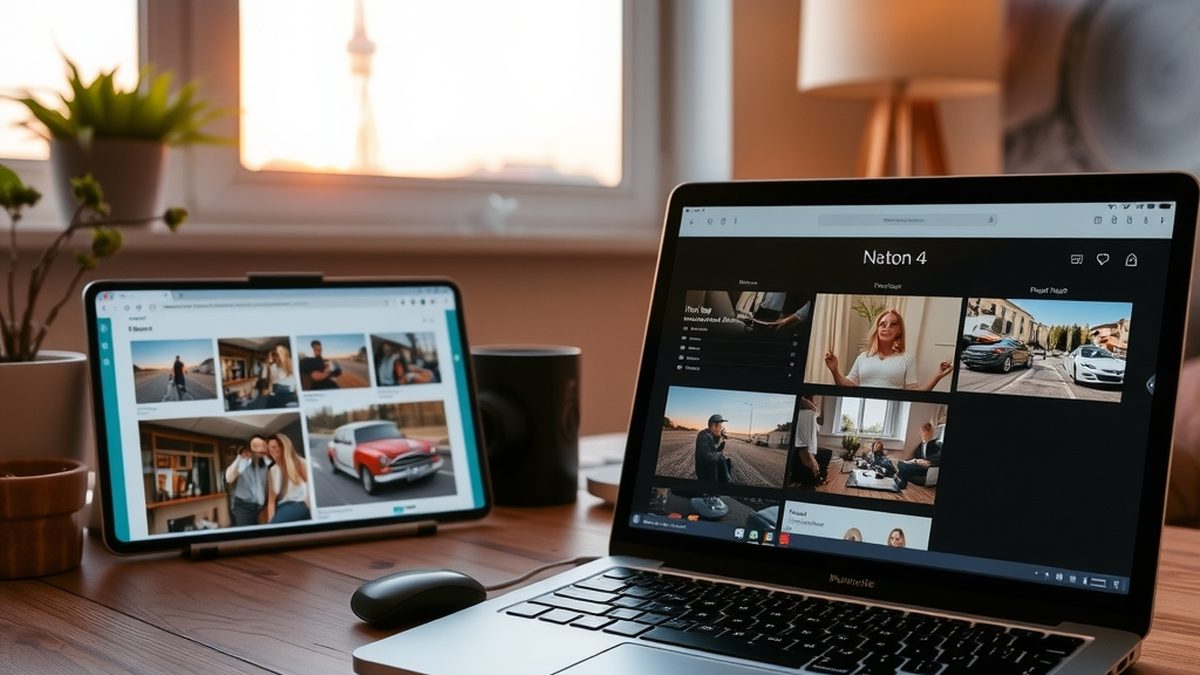
Illustration generated by Nexulab. Inline photo by Lisa Fotios via Pexels
- Immich is the closest functional match to Google Photos: mobile app with automatic backup, timeline view, face recognition and search, all self-hosted.
- PhotoPrism focuses on AI-powered organization — it tags objects, faces and locations from your files and makes your library searchable without uploading it to anyone.
- Piwigo is the best choice when sharing is the main job: albums, permissions, comments, and a public or private gallery that you control.
- No free alternative matches the convenience of Google Photos' search-by-text — Immich comes closest, but the gap is real and narrowing.
- The migration itself is the hardest part: Google Takeout can export your library, but the metadata lives in separate JSON files and reassembling it takes work.
The search for free alternatives to Google Photos starts with a number: fifteen gigabytes. That is the shared cap across Gmail, Drive and Photos, and once it fills up the service stops accepting new uploads. Most people find themselves shopping for alternatives not because they want to leave, but because the cap arrived and Google is now asking for money.
The practical options range from a near-clone you host yourself to desktop applications that organize local files. None of them match Google Photos feature-for-feature, and they do not need to. What they offer instead is a library that lives on storage you control.
Immich: the closest functional match
Immich is the answer if what you want is Google Photos on your own machine. It has a mobile app that backs up photos from your phone automatically, a web interface with a timeline view, face recognition, object detection, search, albums and sharing. The resemblance is deliberate, and the development pace is fast.
Immich is self-hosted, which means you need somewhere to run it — a home server, a NAS that supports Docker, or a virtual private server. The installation is straightforward if you are comfortable with Docker Compose, and the documentation walks through the initial setup clearly.
Once running, the experience is close enough to Google Photos that non-technical family members can use it without friction. The mobile app uploads photos in the background, the timeline shows everything chronologically, and the search box finds faces, places and objects.
The difference is ownership. Your photos live on a disk you control, the face recognition runs locally on your hardware, and no company builds a profile from your library. If Immich stops being developed tomorrow, your files are still in a folder on your drive, organized and readable — the same principle that makes Obsidian a resilient choice for people moving their notes off a proprietary platform.
What it suits: people who want Google Photos without Google, and who have somewhere to run a Docker container.
PhotoPrism: AI organization without the cloud
PhotoPrism approaches the problem from the other direction: it does not replace the phone backup pipeline, but it organizes a folder of photos so well that you can find anything in seconds.
Point PhotoPrism at a directory of photos — whether they arrived from a camera, a phone backup tool, or a Google Takeout export — and it indexes them with machine learning. It tags faces, detects objects and scenes, reads GPS coordinates and estimates locations, classifies colors, and builds a searchable library. A search for “dog beach sunset” returns photos that match those terms without anyone having tagged them manually.
The indexing is computationally intensive. A library of tens of thousands of photos will take hours or days on modest hardware to process fully, though the software can run in the background and incremental updates are fast once the initial pass is done.
PhotoPrism is also self-hosted, and it works best alongside another tool for getting photos off your phone. The combination of a sync tool like Syncthing — which we cover in detail in our guide to free alternatives to Dropbox — to move files from phone to server, and PhotoPrism to organize them, replicates most of what Google Photos does.
What it suits: people who already have a folder full of photos and want to find things in it without uploading to a cloud service.
Piwigo: when sharing is the job
Piwigo is the best free alternative when the main thing you do in Google Photos is share albums with other people.
It runs on a web server — any PHP hosting will do, and many NAS devices support it natively — and gives you a gallery that you can make public, private, or shared with specific users. Albums can have permissions, descriptions, tags and comments. The interface is clean and family members access it through a browser, so there is nothing to install on their devices.
Piwigo is weaker on the mobile side: there is a community app that allows uploading from a phone, but the experience is not as smooth as Google Photos or Immich. For a library that lives on a server and is accessed through a browser by multiple people, it is the strongest option in the free landscape.
What it suits: shared family galleries, club archives, and anyone who wants a photo library that serves as a website more than a personal backup.
digiKam: the desktop powerhouse
digiKam is a desktop application for Linux, Windows and macOS that rivals commercial photo managers in capability. It reads raw files from almost any camera, handles metadata including EXIF, IPTC and XMP, and includes face recognition, geolocation, and a powerful search system.
The interface is closer to Adobe Lightroom than to Google Photos: it is built for photographers who want to process, tag and organize large libraries on local storage. The learning curve is steeper than the other tools on this list, and what you gain in control you pay for in setup time.
digiKam has no cloud component and no mobile app. It is a desktop tool for a library that lives on a local drive or a network share. If your photos never leave a folder on your computer, digiKam makes that folder searchable and browsable in ways the file system cannot match.
What it suits: photographers and people with large local libraries who want desktop-level control.
The comparison: which tool, which job
| Job | Best free tool | Why |
|---|---|---|
| Drop-in Google Photos replacement | Immich | Mobile backup, timeline, face search, shared albums, all self-hosted |
| AI search on local files | PhotoPrism | Machine learning tagging of faces, objects, colors and places, no upload needed |
| Shared family galleries | Piwigo | Albums with permissions, browser access, no app to install for viewers |
| Desktop photo management | digiKam | Local library, raw support, metadata editing, face recognition, powerful search |
| Mobile auto-backup (without hosting) | None | Every tool on this list requires hosting or local storage; no free cloud alternative matches Google Photos’ mobile backup pipeline |
| Privacy and data ownership | Immich or PhotoPrism | Both run on your hardware and keep your files where they are |
The table exposes the real trade: the free alternatives are strongest on ownership and weakest on convenience. Google Photos charges for the convenience, and the alternatives demand that you provide the infrastructure instead.
A note about Flickr
Flickr is sometimes mentioned as a Google Photos alternative, and it fits a narrow use case. It offers a thousand photos for free and is built around public sharing and community rather than private backup. For a photographer who wants to show work publicly, it works well. For a family photo library, it does not — the free tier is too small, the interface is built for discovery rather than privacy, and the service has changed hands several times.
What is genuinely hard to replace
Two features of Google Photos have no free equivalent that matches them.
The first is search-by-text. Google Photos can find “birthday cake with candles from last December” because it runs enormous models on Google’s infrastructure. Immich has object detection and semantic search that are improving rapidly, and the gap is narrowing with each release. For now, Immich gets you most of the way there for common queries, and the difference matters mostly for the kind of vague, natural-language search that Google excels at.
The second is the seamless mobile backup pipeline. Google Photos is pre-installed on most Android phones and uploads photos in the background without configuration. Every free alternative requires setup: Immich needs a server and an app, PhotoPrism needs a sync tool, Piwigo needs a browser, and digiKam needs the photos to already be on the computer. The setup is a one-time cost, but it is real.
How to migrate without losing metadata
Google Takeout exports your entire photo library, but the export is not self-contained. Photos arrive as files — JPG, HEIC, PNG, whatever they were uploaded as — and the metadata that Google Photos added arrives as separate JSON files.
Dates, albums, descriptions and face tags are in the JSON, not embedded in the photos. Reassembling them into the files so that another tool can read them requires a third-party script, and the results are better for dates and albums than for face tags.
The practical approach is to export in batches, merge the metadata with a community tool, and import into your chosen alternative. Test the pipeline on a small album before committing to the whole library. Most people who migrate report that the process takes a weekend and that the hard part is volume, not complexity.
The honest bottom line
Free alternatives to Google Photos work well once they are set up. The setup requires either a server or a tolerance for managing files locally, and the migration from Google Photos requires patience.
If you have somewhere to run Docker and you want the closest experience to what you are leaving, Immich is the answer. If you already have a folder of photos and want to search it intelligently, PhotoPrism does that. If sharing is the main job, Piwigo handles it. If you are a photographer with a local library, digiKam has been doing exactly that for years.
The trade is straightforward: an afternoon of setup and a weekend of migration in exchange for a photo library that you own.
Frequently asked questions
What is the best free alternative to Google Photos?
Immich, if you want something that works like Google Photos and you have somewhere to run it — a home server, a NAS, or a VPS. It has a mobile app that backs up photos automatically, a web interface with timeline and search, face and object recognition, and shared albums. It is actively developed and the resemblance to Google Photos is deliberate.
Can I keep my photos on my own storage and still have AI search?
Yes. PhotoPrism does exactly that: it reads photos from a folder you point it at, indexes them with machine learning to tag faces, objects, colors and locations, and gives you a searchable web interface. Your files stay where they are and are never uploaded to a third party. The trade-off is that you need to run PhotoPrism yourself, and the initial indexing can take hours for a large library.
How do I get my photos out of Google Photos?
Google Takeout exports your entire library, but the export is not clean. Photos come as files, while dates, albums and face tags arrive as separate JSON metadata. Several community tools exist to merge the metadata back into the files, and the process works for dates and albums more reliably than for face tags. Expect to spend a weekend on a large library and test the reassembly on a small batch before committing to the whole thing.
Is there a free alternative to Google Photos that family members can use?
Piwigo is the best fit for shared family galleries. You can create albums, set permissions for different users, allow comments, and make some albums public while keeping others private. It runs on a web server and users access it through a browser, so there is no app to install on family members' phones. Uploading can be done through the web interface or by FTP.
Why are people leaving Google Photos?
The free unlimited tier ended in 2021, and uploads since then count against the shared 15 GB that covers Gmail and Drive as well. Beyond the storage limit, some people are uncomfortable with a single company holding their entire photo library — including face and object data extracted by machine learning — without a practical way to leave. The combination of a cap that fills up and a service that is hard to exit drives the search for alternatives.