How to Clean a Coffee Maker, and Why Your Coffee Tastes Wrong
There are two separate things fouling a coffee maker, they taste different, and they need opposite treatments. Most people only ever deal with one of them.
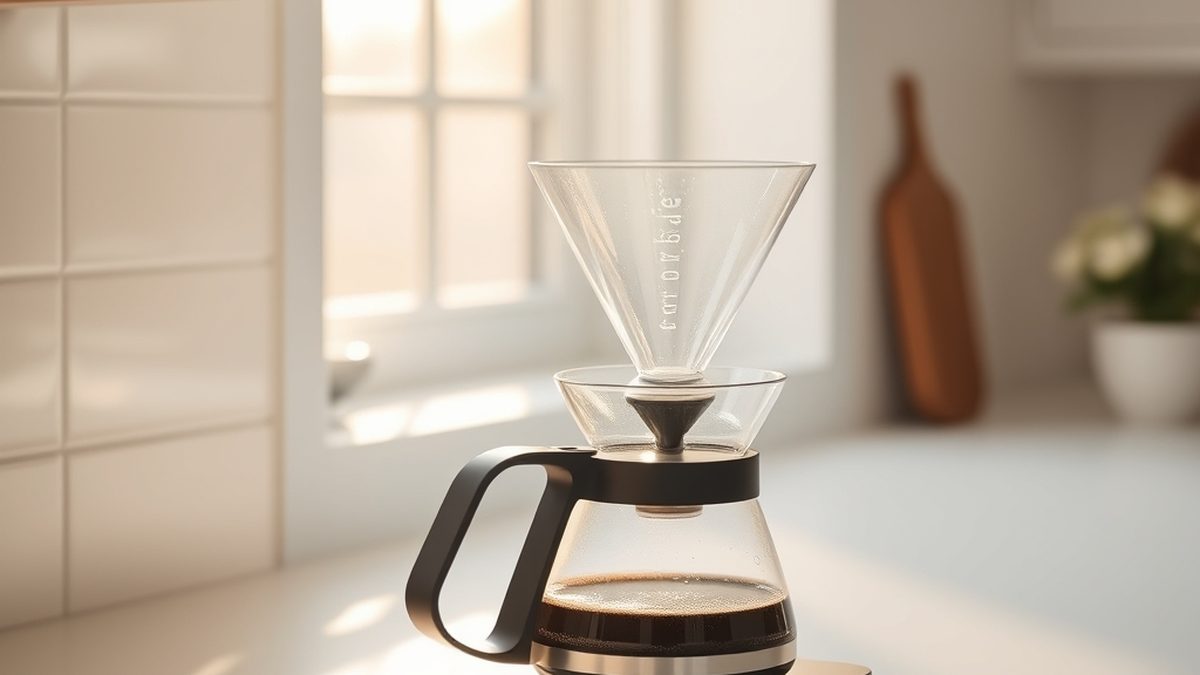
Illustration generated by Nexulab
- Two different problems foul a coffee maker: mineral scale inside the water path, and rancid coffee oils on every surface the coffee touches.
- Scale needs an acid — vinegar or citric acid. Oils need detergent and hot water. Neither fixes the other.
- Slower brewing and a louder machine are the usual signs of scale, not of a machine wearing out.
- The reservoir lid and the water tank matter, because a warm damp enclosed space grows things.
- Descale monthly in a hard-water area and the machine keeps working like new for years.
Coffee that tastes wrong from a machine that seems to work is one of those problems people solve by changing beans. Then by changing grind. Then by buying a different machine, which briefly fixes it — confirming, apparently, that the old one was worn out.
The old machine was dirty, in two distinct ways that taste different and need opposite treatments. Almost everyone deals with one and ignores the other.
The two problems
Mineral scale builds up inside the water path — the tank, the tubing, the heating element. It comes from dissolved calcium and magnesium in tap water, the same hard water that furs up a kettle. Scale is alkaline, so an acid dissolves it.
Coffee oils coat everything the coffee touches — the basket, the spray head, the carafe, the lid. Coffee is oily, and those oils oxidise over time into something stale and bitter. Oils need detergent and hot water.
Vinegar does nothing to coffee oils. Washing up liquid does nothing to scale. This is why partial cleaning produces partial results, and why people conclude that cleaning a coffee maker does not help much.
They taste different, too, which helps you diagnose:
- Scale shows up as slow brewing, a louder machine, and coffee that tastes flat or thin — often not hot enough either
- Oils show up as bitterness and a stale, slightly sour edge that survives changing beans
Weekly: the oils
This is the one that changes the taste immediately, and it takes four minutes.
Take out every removable part. Basket, permanent filter, carafe, lid, and the drip tray if there is one.
Wash them in hot water with detergent. Properly — a cloth or a soft brush, not a rinse. Pay attention to the carafe lid, which has crevices nobody looks into and which spends its life over hot coffee.
Look at the spray head. The part above the basket that the water comes through. It collects both oil and scale, and it is easy to miss because it faces downward. Scrub it with a toothbrush, and clear any blocked holes with a cocktail stick.
Wipe the warming plate if the machine has one, once it is cold. Spilled coffee bakes onto it.
Do not put a glass carafe in the dishwasher unless the manufacturer says it is safe — some are, some are not, and a dishwasher also leaves a film on glass in hard-water areas that affects taste.
If the carafe is stained brown inside, a paste of bicarbonate of soda and a little water lifts it without scratching.
Monthly: the scale
This is the one that keeps the machine working.
1. Mix the solution. Equal parts white vinegar and water, enough to fill the reservoir. Or citric acid powder dissolved in water, which rinses out with far less smell and is what most commercial descalers are based on.
2. Start a brew cycle with no coffee and no filter in the basket.
3. Stop it halfway and wait. Switch the machine off when roughly half has passed through, and leave it thirty to sixty minutes. This is the step that does the work — the acid needs contact time with the heating element and the tubing, and a solution that flows straight through barely touches them.
4. Finish the cycle. Switch it back on and let the rest run through.
5. Discard everything and rinse. Then run two or three full cycles of clean water. Vinegar in coffee is unmistakable and unforgiving, so this is not the place to save five minutes.
6. Wash the removable parts while you are at it.
Frequency: monthly in a hard-water area, every two or three months in a soft one. The real signal is brew time — if it takes noticeably longer than when the machine was new, scale is already restricting flow.
The reservoir, which people forget
A water tank is a warm, damp, enclosed space. That is a description of somewhere things grow.
Empty it after brewing rather than leaving water standing.
Leave the lid open so it dries out between uses.
Wipe it out weekly with a cloth and detergent, then rinse.
Use fresh water each time. Water left overnight tastes of the tank, and the tank tastes of yesterday.
If a machine smells stale even after descaling, the reservoir and its lid are usually the reason.
Pod machines and espresso machines
Different mechanisms, same two principles.
Pod machines still need descaling — they heat water, so they scale. Most have a descaling mode in the manual, and most owners have never used it. The needle that pierces the pod also clogs and is worth checking. There is less oil to deal with, because the coffee is enclosed.
Espresso machines have far more of the oil problem, because the coffee contacts the group head and basket under pressure. Backflushing with a blind filter and a dedicated espresso machine cleaner is the standard routine, and the portafilter basket and shower screen need regular attention. Descaling still applies to the boiler.
Follow the manufacturer’s descaling instructions for either. Vinegar is not recommended for all machines — some manufacturers specifically warn against it because of seals and aluminium components — and a machine that costs several hundred is worth reading the manual for.
What water you use changes how often you do this
If you are descaling constantly, the water is the cause.
Filtered water reduces mineral content and therefore scale. A jug filter is enough.
Bottled water works but is expensive and not obviously better than a filter.
Distilled water is not the answer. It has essentially no minerals, and coffee extraction actually benefits from some mineral content — water with nothing in it makes flat coffee. Some manufacturers also advise against it.
The practical middle is filtered tap water: less scale, still tastes of something. The same mineral problem shows up in a shower head, and it is solved the same way.
The short version
Weekly: wash every removable part with detergent and hot water, including the carafe lid and the spray head. This fixes bitterness.
Monthly: descale with vinegar or citric acid, pausing halfway for contact time, then rinse two or three times. This fixes slow brewing and flat taste.
Daily: empty the reservoir and leave the lid open.
Two different problems, two different products, and the reason most coffee makers get replaced years before they need to be.
For more in this series, see our other home & kitchen guides.
Frequently asked questions
How do I descale a coffee maker with vinegar?
Fill the reservoir with a mixture of roughly equal parts white vinegar and water, run about half a brew cycle, then switch off and let it stand for thirty to sixty minutes so the acid sits in the heating element and tubing. Complete the cycle, discard the liquid, then run two or three full cycles of clean water to flush the taste out. Vinegar residue in coffee is unmistakable, so do not skip the rinses.
Can I use citric acid instead of vinegar?
Yes, and many people prefer it because it rinses out with far less smell. Citric acid powder dissolved in water works on the same principle — mineral scale is alkaline, so an acid dissolves it. It is what most commercial descaling products are based on. Use it the same way and rinse thoroughly regardless.
Why does my coffee taste bitter even with fresh beans?
Most often rancid coffee oils rather than the beans. Coffee is oily, those oils coat the basket, the carafe and the spray head, and over weeks they oxidise into something genuinely unpleasant that transfers into every cup. Detergent and hot water remove them; descaling does not, because oils are not mineral deposits. If fresh beans taste bitter, wash the parts before blaming the roast.
How often should I clean a coffee maker?
Rinse the removable parts after every use, wash them properly with detergent weekly, and descale monthly in a hard-water area or every two to three months in a soft-water area. The honest signal for descaling is timing: if the brew is taking noticeably longer than it did when the machine was new, scale is already restricting the flow.
Is it safe to leave water in the reservoir?
Better not to. Standing water in a warm enclosed tank encourages microbial growth and mineral deposits, and it is one reason a machine can smell stale even after cleaning. Empty the reservoir after brewing, leave the lid open so it dries, and refill with fresh water each time.