How to Clean a Shower Head, Including the Ones That Do Not Come Off
Pressure that fades over months is almost never the plumbing. It is mineral scale closing the holes one by one, and it dissolves overnight in something you already own.
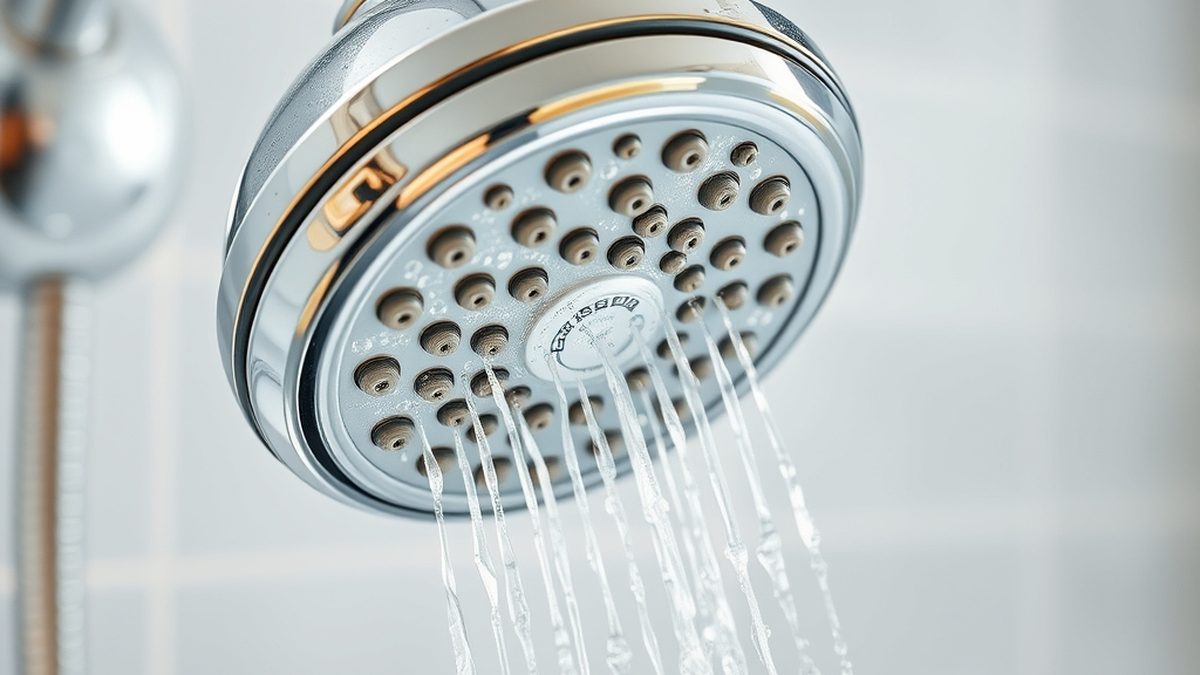
Illustration generated by Nexulab
- Falling pressure is usually limescale inside the nozzles, not a problem with your water supply or pipes.
- White vinegar dissolves mineral scale because the deposits are alkaline and vinegar is a mild acid. No special product is needed.
- A shower head that does not unscrew can be soaked in place with a bag and an elastic band.
- Vinegar can damage some finishes and rubber seals. Check the material before a long soak, and rinse thoroughly.
- If you live in a hard-water area, doing this every few months prevents the problem instead of fixing it.
Shower pressure rarely fails suddenly. It fades, over months, until one day you notice that one jet fires sideways at the wall and the rest feel thin.
Almost nobody suspects the shower head. People blame the building, the water supply, the plumbing. Then they buy a new shower head, which works, which appears to confirm the diagnosis.
It was never the plumbing. It was mineral deposits closing the holes, and the old head would have worked just as well after a night in a bowl.
Why it happens
Tap water carries dissolved calcium and magnesium. How much depends on where you live — this is what hard water means.
When that water evaporates, the minerals stay behind as a hard, chalky deposit. A shower head is the ideal place for this: constantly wet, constantly drying, with dozens of small openings where a little scale goes a long way.
The deposits build inside the nozzles, not just on the surface. Which is why wiping the face does nothing, and why a soak does everything.
Two consequences worth knowing.
Scale is alkaline, so an acid dissolves it. White vinegar is a mild acid and is the standard household answer. Citric acid powder works too, and slightly faster.
Detergent does nothing. Soap emulsifies oils. Mineral scale is not an oil. This is why bathroom sprays leave the shower head shining and still blocked.
The basic method: unscrew and soak
If the head detaches, this takes two minutes of work and a few hours of waiting.
1. Unscrew it by hand. Most heads come off the arm with a firm twist. If it resists, wrap the joint in a cloth and use a wrench gently — the cloth stops the jaws marking the finish.
2. Submerge it in white vinegar. A bowl or a jug, enough to cover the face completely. Undiluted is fine.
3. Leave it. An hour for light scale, overnight for a head that has never been cleaned.
4. Brush the face. An old toothbrush clears the softened deposits from around each nozzle. If the head has rubber nozzles, rub them with your thumb — they flex, and the scale cracks off.
5. Rinse thoroughly, inside and out. You want no vinegar left in contact with the seals.
6. Reattach. Check the rubber washer inside the connector. If it is flattened or cracked, replace it — they cost almost nothing and a worn one drips.
7. Run hot water for a minute to flush anything loose out through the nozzles.
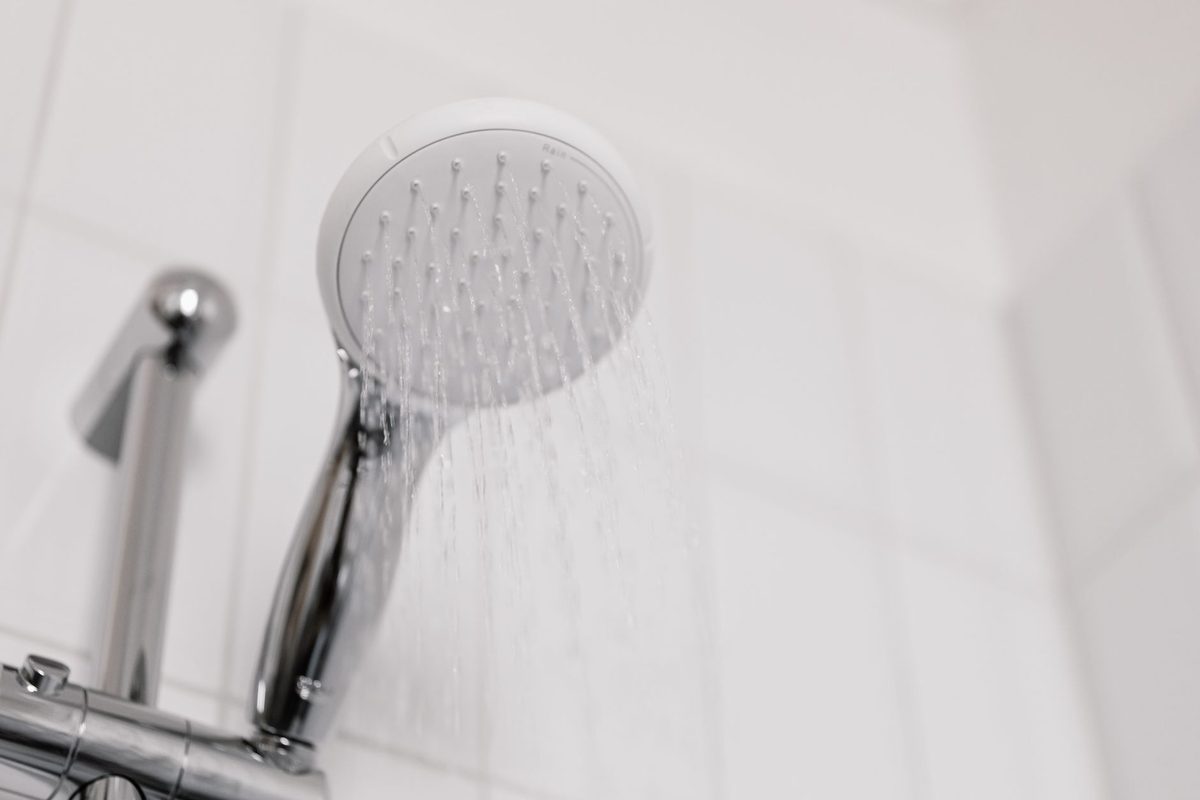
The bag method: for heads that will not come off
Plenty of shower heads are fixed, awkwardly angled, or attached with a joint you would rather not disturb. You can soak them in place.
1. Fill a sturdy plastic bag with white vinegar — a freezer bag holds up better than a carrier bag.
2. Lift it around the head until the entire face is submerged. Do this over the shower tray, because some will spill.
3. Secure it to the neck with an elastic band, a hair tie, or tape. The bag hangs from the shower arm rather than being held.
4. Leave it a few hours, or overnight.
5. Remove the bag carefully, run hot water for a minute, then brush the face.
It works as well as removing the head. The only real disadvantage is that you cannot see or clean the inside.
What vinegar can damage
Worth reading before you leave something soaking for eight hours.
Specialist finishes. Brushed nickel, oil-rubbed bronze, gold-tone and various coated finishes can dull or discolour with prolonged acid contact. Chrome and stainless steel are generally fine. If you do not know what yours is, limit the soak to thirty minutes and rinse well.
Rubber seals. Extended acid exposure hardens rubber over time. This is not a reason to avoid the method, but it is a reason to rinse properly and not soak monthly out of enthusiasm.
Natural stone, if you are also cleaning surrounding surfaces. Vinegar etches marble and travertine. Keep it off them entirely.
And never mix vinegar with bleach. That combination releases chlorine gas. Pick one, use it alone, ventilate.
If the pressure is still poor
If a proper soak did not change anything, the shower head was not the problem. Check in this order.
The flow restrictor. Many heads contain a small plastic insert limiting flow. It can clog. It can also be removed on some models — though it exists for water conservation, and removing it raises your usage.
The filter screen. Where the head meets the arm there is often a fine mesh washer that catches grit. It blocks, and it is easy to miss because it is hidden inside the connector.
The valve or mixer. If pressure is poor at every outlet in the house, or hot is weak while cold is fine, the problem is upstream and worth a plumber.
A partially closed isolation valve, especially if the problem started right after work was done on the plumbing.
Preventing it instead
If you live somewhere with hard water, this is a recurring job rather than a one-off repair.
Soak every three months and it never gets bad enough to notice.
Wipe the face dry after showering if you are the sort of person who will actually do it. Deposits form as water evaporates, so removing the water removes the mechanism.
The same acid-versus-alkaline logic applies to a washing machine that smells, where scale and residue collect in the door seal instead.
Silicone-nozzle heads let you rub scale off with a thumb in passing, which makes maintenance close to effortless. Worth considering when you next replace one.
None of this requires a product with a brand name. A bottle of white vinegar, a bag, and an elastic band handle a problem most people solve by buying new hardware.
For more in this series, see our other home & kitchen guides.
Frequently asked questions
How do I clean a shower head without taking it off?
Fill a strong plastic bag with white vinegar, raise it around the shower head so the whole face is submerged, and secure it to the neck with an elastic band or tape. Leave it for a few hours, or overnight for heavy scale. Remove the bag, run hot water for a minute to flush loosened deposits, then brush the face with an old toothbrush to clear anything remaining.
Can I use vinegar on a chrome shower head?
Chrome generally tolerates a vinegar soak, and it is the standard method. Where you should be more careful is with brushed nickel, oil-rubbed bronze, gold-tone and other coated or specialist finishes, which can dull or discolour with prolonged acid contact. If you are unsure, limit the soak to thirty minutes, rinse thoroughly, and dry with a soft cloth.
Why is my shower pressure suddenly low?
Sudden loss of pressure across the whole house points to the supply or a valve rather than the shower head. A gradual decline over months, affecting only that shower, is almost always scale in the nozzles. Look at the face while it runs: if some holes spray sideways or not at all, that is blockage rather than pressure.
Does bleach clean limescale?
No, and it is the wrong tool. Bleach kills organisms and lifts stains but does nothing to mineral deposits, which need an acid to dissolve. It also should never be mixed with vinegar or any acid, because that combination releases chlorine gas. Use vinegar or citric acid for scale, and keep bleach out of the process entirely.
How often should I clean my shower head?
In a hard-water area, every three months keeps scale from establishing. In a soft-water area, once or twice a year is usually enough. The honest trigger is the spray pattern — the moment individual jets start misfiring, the deposits are already forming and a soak is easier now than later.