How to Clean a Dishwasher That Has Stopped Cleaning Properly
A dishwasher that has stopped cleaning is almost never broken. There is a part at the bottom that most owners have never removed, and it explains nearly every complaint.
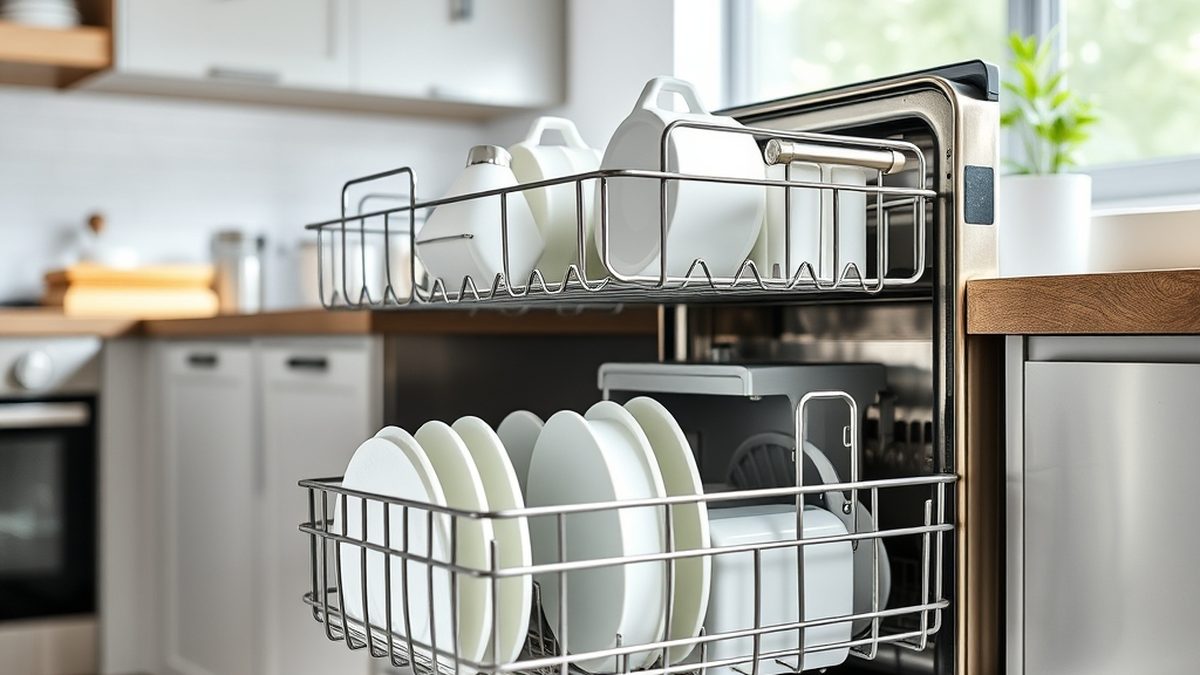
Illustration generated by Nexulab
- The filter at the base of the tub is the first thing to check and the part most owners have never touched.
- Grit on supposedly clean dishes almost always means food is being recirculated rather than drained.
- Blocked spray-arm holes cause patchy results — some items spotless, others untouched in the same load.
- Run the cleaning cycle empty and hot, after the manual work, not instead of it.
- Pre-rinsing plates is largely unnecessary, but scraping solids off is what keeps the filter clear.
A dishwasher that has stopped cleaning properly is one of the most common household complaints and one of the least often diagnosed. People start running longer cycles. They buy stronger tablets. They add a rinse aid, then two. Eventually they conclude the machine is old and start pricing replacements.
The machine is usually fine. There is a component at the bottom of the tub that most owners have never removed, and it accounts for the majority of these complaints.
How a dishwasher actually works
Worth thirty seconds, because it makes the rest obvious.
A dishwasher does not fill with water and slosh it about. It sprays a relatively small amount of water at high pressure, collects it at the base, pumps it through a filter, and sprays it again. The same water circulates many times during a cycle.
Two consequences follow directly.
If the filter is blocked, the machine recirculates food. The debris that should have been trapped comes back up through the spray arms and lands on your dishes. Which is exactly what “grit on clean plates” is.
If the spray-arm holes are blocked, the water does not reach everything. This is why results go patchy — the glasses come out spotless and the bowls on the same rack come out dirty.
Nearly every dishwasher complaint traces to one of those two things.
Start with the filter
If you do nothing else on this page, do this.
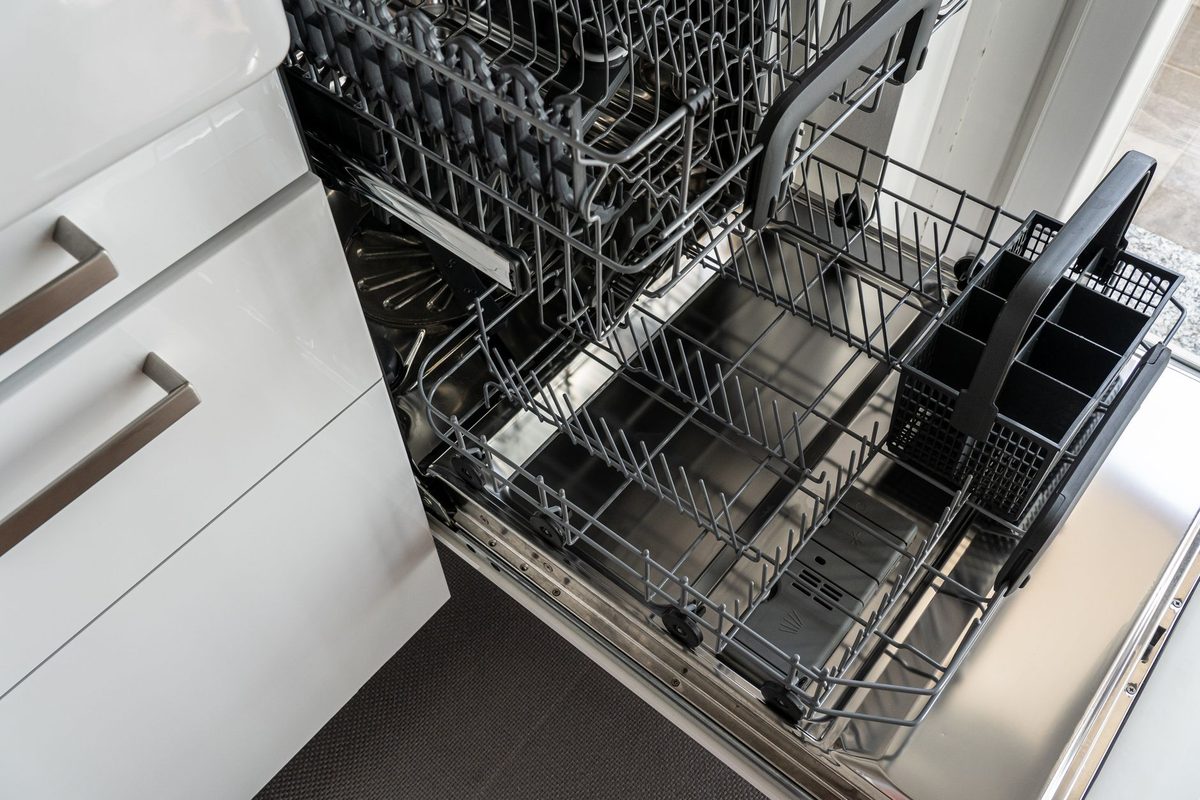
1. Pull out the lower rack.
2. Find the filter at the base of the tub. Most are a cylindrical part you twist a quarter turn anticlockwise and lift out. Underneath there is usually a flat mesh plate that also lifts free. If you cannot see how yours comes apart, the manufacturer’s manual is online — search the model number.
3. Rinse it under a hot tap. Use a soft brush on the mesh. An old toothbrush is ideal.
4. Look in the recess it came out of. Broken glass, fruit stickers, a cherry stone, and a surprising quantity of sludge live down there. Wipe it out with a cloth.
5. Refit it properly. This matters — a filter that is not fully seated lets debris past into the pump. Twist until it locks.
If it has been years, prepare yourself. The state of a neglected dishwasher filter is genuinely unpleasant, and it is also the whole explanation.
How often: monthly is sensible for most households. Weekly if you scrape less carefully or run the machine daily.
Then the spray arms
These are the plastic arms that rotate and spray. There is normally one under the lower rack and one under the upper, sometimes a third at the top.
Spin them by hand. They should turn freely. Resistance means something is jammed.
Check every hole. Hold the arm up to the light. Blocked holes are obvious once you look, and the usual culprits are limescale and small food particles.
Clear them with a cocktail stick or a thin wire. Push from the outside inward, then rinse the arm through under a tap.
Most arms unclip for easier cleaning, usually with a twist or a squeeze of a central clip. Check the manual rather than forcing it.
Patchy cleaning that survives a filter clean is almost always this.
The door seal and the gap beneath the door
Two places that cause smell rather than poor cleaning.
The rubber seal around the door holds moisture, food residue and detergent in its folds. Wipe it with a damp cloth and a little detergent, working into the fold. If it is discoloured, an old toothbrush helps.
The gap under the door — the lip at the very bottom of the opening — collects water and debris and is invisible unless you look for it. Open the door fully and run a cloth along it. Most people have never cleaned this and it is a common source of a persistent smell.
Now the empty hot cycle
Notice this comes fourth, not first. Running a cleaning cycle on a machine with a blocked filter achieves very little, which is why people conclude the products do not work.
With the manual work done:
Run the hottest cycle empty. No dishes, no detergent in the main dispenser if you are using a cleaning product that goes in the tub.
Options that work: a dedicated dishwasher cleaner, or a cup of white vinegar placed upright on the top rack, or a bowl of vinegar in the base. The acid dissolves limescale and helps with odour.
One safety note: never combine vinegar with bleach or any chlorine product. That mixture releases chlorine gas.
On vinegar frequency: occasional use is fine. Using it every month as a substitute for cleaning the filter is treating the symptom, and prolonged acid contact is not kind to rubber seals over years.
Hard water, and why results get worse over time
If you live in a hard-water area, dissolved minerals are steadily depositing inside the machine, on the heating element and in the spray arms. This is the same hard water that furs up a kettle.
Symptoms: cloudy glassware, white film on plastics, a rough grey coating on the element.
Rinse aid helps more than people expect, because it changes how water sheets off surfaces rather than beading and drying in spots.
Dishwasher salt matters if your machine has a softener compartment. Many owners ignore it entirely and then wonder why glasses are cloudy.
Descale periodically with an acid — vinegar or citric acid — as part of the empty cycle above.
Loading, which affects cleaning more than detergent does
Briefly, because it is the other half of the problem.
Scrape, do not rinse. Detergents are formulated to work on some residue. What must come off is solids: bones, peel, rice, stickers, and anything that will block a filter.
Do not nest items. Two bowls stacked shield each other. Water cannot bend.
Keep tall items clear of the spray arms. A baking tray that stops the upper arm rotating ruins the whole load, and this is a common mistake.
Face soiled surfaces toward the centre, where the spray comes from.
Do not overload. A full machine cleans better than two half-loads only if water can still reach everything.
And if the machine also smells, the culprit is often the same as in a washing machine: a rubber seal holding residue where nobody looks.
When it is actually a fault
If a proper clean did not fix it, the things worth checking before calling anyone:
- Standing water in the base after a cycle — a drain or filter-pump problem
- Dishes cold at the end — possibly the heating element, which also affects cleaning because detergent needs heat
- The machine not filling — the inlet valve or the supply tap
- A kinked or blocked drain hose, especially if the problem started after the machine was moved
For choosing a replacement, ENERGY STAR is a reasonable place to compare efficiency ratings — but do the filter first. Most machines condemned as worn out were simply full.
For more in this series, see our other home & kitchen guides.
Frequently asked questions
Why is my dishwasher leaving grit on clean dishes?
Because food debris is being recirculated instead of drained, which almost always means the filter is clogged. Modern dishwashers pump water repeatedly through a filter at the base of the tub; when that filter is blocked, the same particles come back up through the spray arms and land on your dishes. Removing and rinsing it usually fixes the problem completely in about five minutes.
Where is the dishwasher filter?
At the bottom of the tub, under the lower rack. Most designs use a cylindrical part you twist a quarter turn and lift out, often with a flat mesh plate underneath it. Your manual will show the exact arrangement, and manufacturers publish these online if the paperwork is long gone. If you have never removed it, expect it to be worse than you imagine.
Can I use vinegar to clean a dishwasher?
Vinegar helps with limescale and odour, and running a cup of white vinegar through an empty hot cycle is a common approach. Two caveats: it does nothing for a blocked filter, so it fixes the symptom and not the cause, and prolonged acid exposure is not ideal for rubber seals. Occasional use is fine; monthly use as a substitute for cleaning the filter is not.
Do I need to rinse dishes before loading them?
Scrape, do not rinse. Modern detergents rely on some food residue to work against, and heavy pre-rinsing can leave detergent with nothing to do. What matters is removing solids — bones, peel, rice, labels — because those are what block the filter and the spray-arm holes. Scraping takes seconds and prevents the problem this article exists to solve.
Why does my dishwasher smell?
Trapped food is the usual answer, and it accumulates in three places: the filter, the door seal, and the small gap under the door where water and debris collect. Clean all three before considering anything more elaborate. A persistent smell after that can point to a drain hose problem or standing water in the base, which is worth investigating rather than masking.