How to Clean Grout Without Destroying It
The most recommended grout cleaner on the internet is quietly dissolving the thing it is meant to clean. There is a better order to work through.
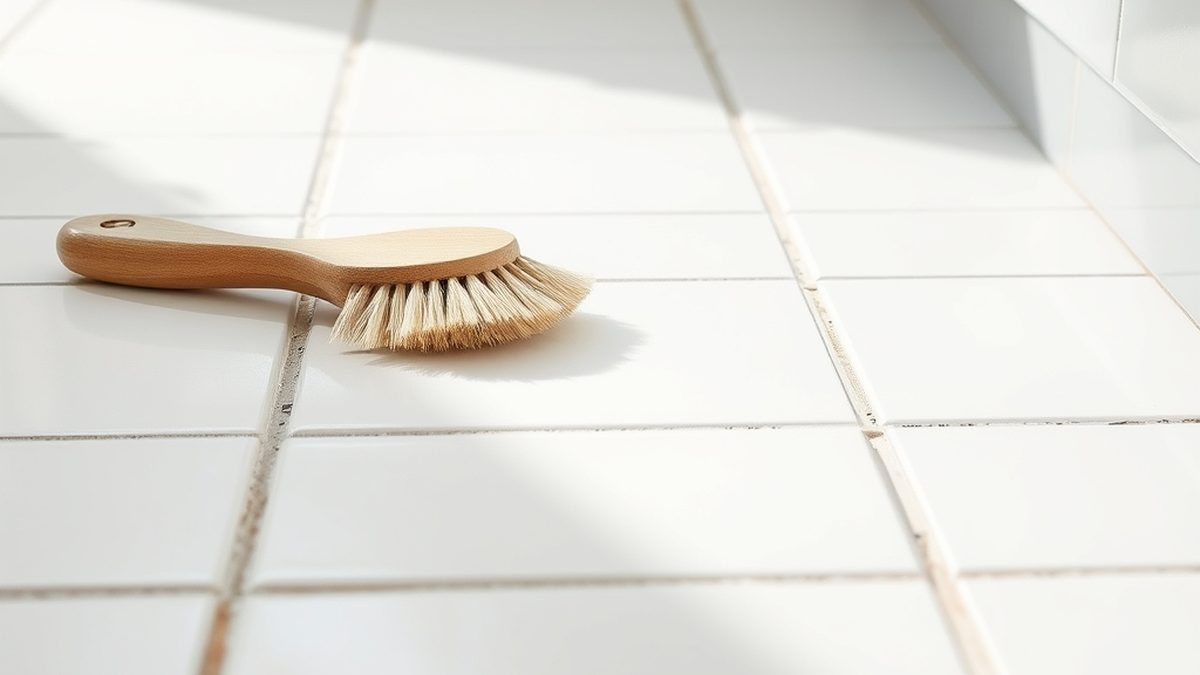
Illustration generated by Nexulab
- Vinegar is acidic and most grout is cement-based. Repeated use erodes the surface and makes it stain faster.
- Work from the gentlest method upward: hot water and a stiff brush, then bicarbonate paste, then oxygen bleach.
- Dark discolouration in a shower is often mould in the surface, not dirt sitting on top of it.
- Never mix bleach with vinegar or any acid. That combination releases chlorine gas.
- Sealing grout after cleaning is what stops the problem returning, and most people skip it.
Grout is the most-cleaned and worst-cleaned surface in a house.
It is porous, it sits below the tile so everything drains into it, and it is pale in exactly the situations where things stain. So it goes grey, then brown, then black in the corners of the shower, and people reach for whatever the internet recommends most.
What the internet recommends most is vinegar, and vinegar is the wrong tool. Not catastrophically — but it makes the problem worse over time while appearing to fix it, which is the most expensive kind of wrong.
Why vinegar is the wrong choice
Most household grout is cement-based. Cement is alkaline, and vinegar is an acid.
An acid on cement does what acids do to cement: it reacts with the surface and dissolves a little of it. One application changes very little. Repeated applications etch the surface, and etched grout is rougher and more porous than it was.
Rougher, more porous grout holds dirt better and stains faster.
So the cycle establishes itself. The grout looks dirty, you clean it with vinegar, it looks better, and it gets dirty faster next time — which feels like the grout deteriorating with age rather than the cleaning method eroding it.
There is one exception worth naming: epoxy grout is not cement-based and is far more resistant. If your grout is epoxy — usually a deliberate choice, and you would probably know — acid is much less of a concern. Most homes do not have it.
Work from gentlest upward
The principle throughout: try the least aggressive method that could work, and escalate only if it does not. Every step up costs you something in grout life.
1. Hot water and a stiff brush
Genuinely try this first. A stiff nylon brush — a grout brush, an old toothbrush for edges, a scrubbing brush for floors — plus hot water removes a surprising amount of what looks like staining but is actually accumulated surface dirt.
Ten minutes of honest scrubbing on a small area tells you whether you have a dirt problem or a staining problem. That is worth knowing before you buy anything.
2. Bicarbonate of soda paste
Mix bicarbonate of soda with a little warm water into a thick paste. Spread it along the grout lines, leave it ten to fifteen minutes, then scrub with a stiff brush and rinse.
Bicarbonate is mildly alkaline and mildly abrasive, which suits cement grout — it works with the material rather than against it. This handles most ordinary household grime.
Do not add vinegar to it. The fizzing looks productive and is chemically pointless: an acid and a base neutralising each other produces water, carbon dioxide and a salt, leaving you with something weaker than either ingredient alone. The reaction is entertaining and the result is worse.
3. Oxygen bleach
This is the workhorse for stained grout, and it is underused.
Oxygen bleach is sodium percarbonate, sold as powdered laundry booster or oxygen stain remover. Mixed with warm water it releases hydrogen peroxide, which lifts organic staining well.
Mix to a paste or a thick solution, apply to the grout, leave fifteen to twenty minutes without letting it dry out, agitate with a stiff brush, rinse thoroughly.
It is not acidic, so it does not etch cement. It has no chlorine fumes. On grey and brown discolouration it usually does the job that vinegar was being asked to do, without the damage.
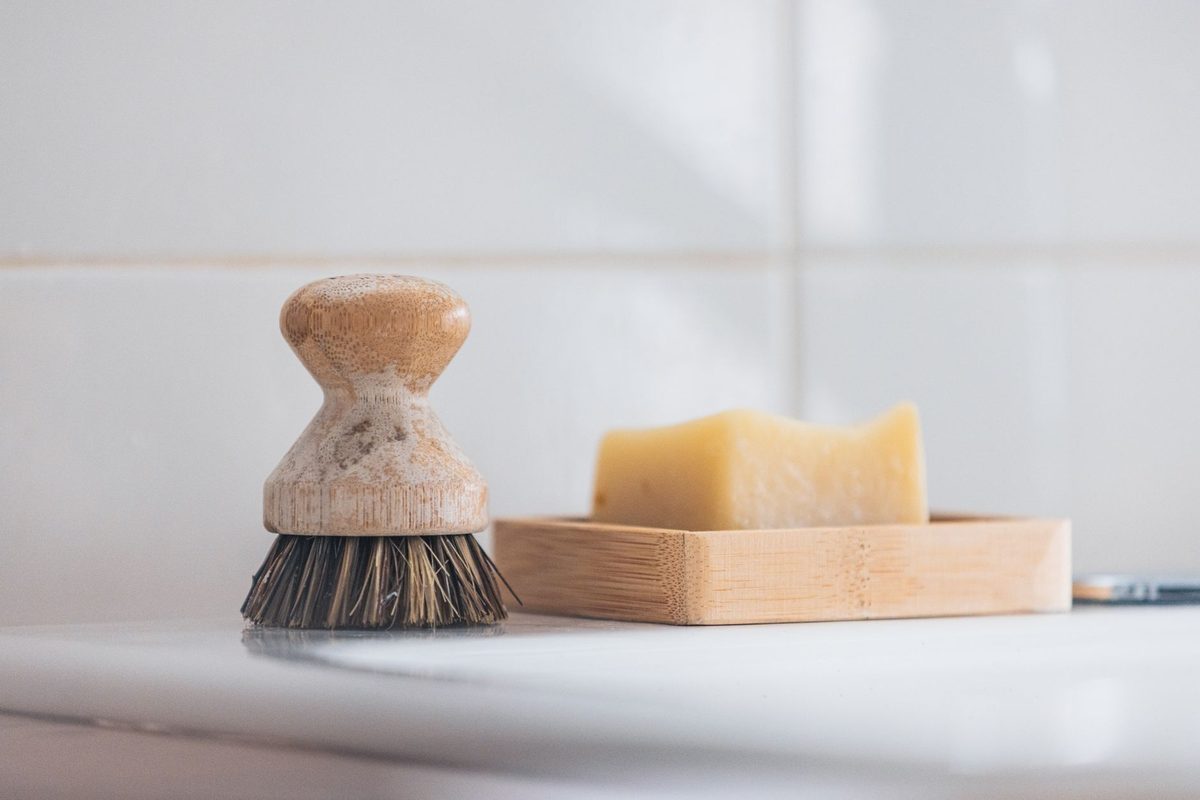
4. Chlorine bleach, for mould only
Black discolouration in a shower is frequently mould growing in the grout, not dirt sitting on it. That is a different problem and it responds to a different treatment.
Diluted chlorine bleach kills mould and lightens the staining it leaves. Apply, leave a few minutes, scrub, rinse well.
Three cautions, all of which matter:
Never mix it with vinegar, ammonia or any acid. That combination releases chlorine gas, which is genuinely dangerous in an enclosed bathroom. Do not use bleach after vinegar without rinsing thoroughly in between, and do not combine cleaning products because two seem better than one.
Ventilate. Open the window, open the door, do not work in a sealed shower cubicle.
It can affect coloured grout. Test somewhere hidden first.
For guidance on mould more generally, the US EPA guidance on mould cleanup is a sound reference — and worth reading if the affected area is large, because extensive mould in a bathroom points to a ventilation problem that cleaning will not solve.
What to avoid entirely
Steel wool and metal brushes. They scratch tile glaze permanently and gouge grout.
Strong acids — hydrochloric, phosphoric, sulfamic products sold for cement removal. They work on scale and they attack grout aggressively. There are specialist situations for these; routine cleaning is not one.
Mixing products. Covered above and worth repeating, because it is the one mistake that can actually hurt you.
A pressure washer indoors, and with care outdoors. Pressure removes grout as readily as it removes dirt.
Vinegar as a routine, for the reason this whole article exists. It has its place — on a shower head, where the deposits are mineral and the surface is chrome — but not on cement.
Cleaning grout that is crumbling. If it is coming out in pieces, it needs replacing, not cleaning. Scrubbing failed grout accelerates the failure and lets water behind the tile, which is a much larger problem than a grey line.
The step nearly everyone skips
Seal the grout after cleaning it.
Cement grout is porous. That porosity is why it stains, and a sealant fills it so liquids sit on the surface long enough to be wiped away.
Wait until it is completely dry — a day is sensible after a thorough wet clean.
Apply a penetrating grout sealer with the small applicator bottle or brush these products come with. Wipe excess off the tile before it dries.
Reapply every year or two in wet areas, less often on floors.
This is the difference between cleaning grout once and cleaning it every month. It costs very little and takes an hour, and it is the reason professionally maintained tile stays clean while identical tile in the next house does not.
The short version
Skip the vinegar. It is acidic, your grout is probably cement, and it makes future cleaning harder.
Start with hot water and a stiff brush. Find out what you are actually dealing with.
Escalate to bicarbonate paste, then to oxygen bleach. Most jobs end here.
Use chlorine bleach only for mould, diluted, ventilated, never mixed.
Then seal it, which is the only step that stops you doing all this again in six weeks.
For more in this series, see our other home & kitchen guides.
Frequently asked questions
Can I use vinegar to clean grout?
You can, and it is worth understanding the cost. Vinegar is a mild acid and most household grout is cement-based, so repeated application etches the surface. Etched grout is rougher, holds dirt more readily, and stains faster — which means the cleaner that worked this month makes next month worse. For an occasional light clean it will not destroy anything, but as a routine it works against you.
Does bleach clean grout?
It lightens stains and kills mould effectively, which makes it useful for discoloured shower grout specifically. The caveats are real: it can affect coloured grout, it does nothing for dirt that is physically embedded, and it must never be combined with vinegar, ammonia or any acid because that releases toxic gas. Dilute it, ventilate the room, and rinse thoroughly.
What is the best thing to clean grout with?
For most jobs, oxygen bleach — sodium percarbonate, sold as powdered laundry booster — mixed into a paste with warm water. It lifts organic staining without the acidity that damages cement grout and without the fumes of chlorine bleach. Leave it fifteen minutes, agitate with a stiff brush, then rinse. Start gentler than this if the grout is only lightly dirty.
Why does my grout go black again so quickly?
Two likely reasons. The discolouration may be mould growing in the porous surface rather than dirt on top of it, in which case cleaning removes the visible part and leaves the rest. Or the grout is unsealed and absorbing everything. Sealing after a thorough clean is the step that breaks the cycle, and it is the one most people never do.
Should I use a steam cleaner on grout?
Steam works well on grout and avoids chemicals entirely, which is a genuine advantage. Two cautions: check that your tile and grout are suitable, because prolonged heat can affect some sealants and damaged grout can be worsened by pressure, and do not use steam on grout that is already crumbling. On sound, sealed grout it is one of the better methods.