How to Clean Windows Without Streaks
Streaks are not a technique problem. They are what happens when cleaner dries before you remove it, or when there was too much of it to begin with.
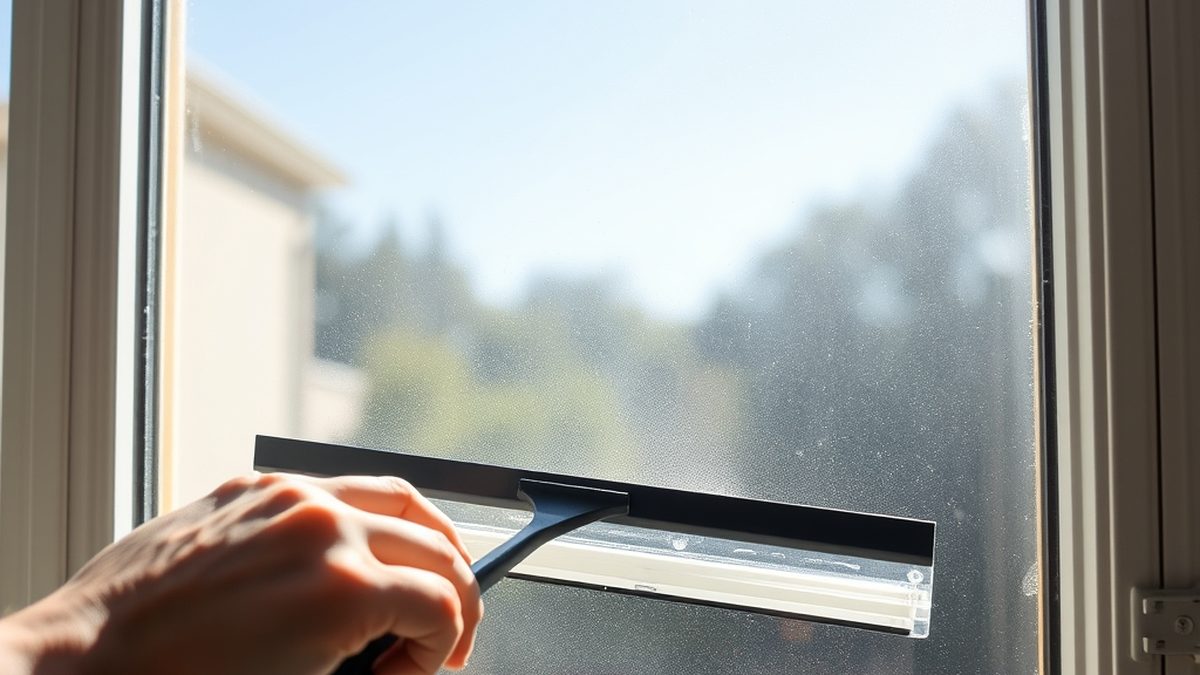
Illustration generated by Nexulab
- Never clean windows in direct sunlight. The cleaner dries before you can remove it, and that is what a streak is.
- Use far less detergent than feels right — a few drops in a bucket. Excess soap is residue waiting to dry.
- A squeegee removes water in one pass. No cloth matches it on a large pane, and the technique takes ten minutes to learn.
- Newspaper works but is messier than its reputation suggests. A flat-weave microfibre cloth is better.
- Clean the frame and sill first, or dirty water runs down onto glass you have already finished.
Cleaning windows is one of those jobs where effort and result are almost unrelated. You can scrub a pane for ten minutes and end up with something worse than when you started, then watch a professional do it in forty seconds and leave nothing behind.
The difference is not skill in any interesting sense. It is understanding what a streak actually is.
What causes streaks
Two things, and both are avoidable.
Cleaner drying before you remove it. A streak is dried cleaning solution. Glass in direct sun is warm, sometimes very warm, and a solution sprayed onto it starts evaporating immediately — leaving behind whatever was dissolved in it. You are not failing to wipe properly; the liquid is gone before your cloth arrives.
Too much detergent. Soap is designed to stay on surfaces long enough to lift dirt. On glass, any that is not removed dries as a film. Most people use several times more than needed, then spend the rest of the job fighting the residue.
Every technique below follows from those two facts.
What you need
Very little, and none of it expensive.
A squeegee, ideally 25 to 35 centimetres wide with a soft rubber blade. This is the one item worth buying properly. A squeegee removes water in a single pass, which no cloth can match on a large pane.
A bucket of cool water with a few drops of washing-up liquid. Not a squirt. A few drops.
A microfibre cloth, flat-weave rather than fluffy. Fluffy cloths shed fibres onto glass.
A second dry cloth for edges and detailing.
A scrubber or sponge for the initial wash, or a soft brush for outdoor windows with heavy dirt.
That is the whole kit. Branded glass sprays are convenient for a single small pane and are the wrong tool for a house — most contain more surfactant than glass needs, which is the residue problem in a bottle.
The method
1. Pick the right time. Overcast day, or the shaded side of the house, or early morning. Never in direct sunlight. If you take one thing from this article, this is it — everything else is a refinement.
2. Clean the frame and sill first. Dirty water running down from a filthy frame onto glass you have just finished is the most annoying way to lose the job. Wipe the frame, the sill and the corners before touching the pane.
3. Wash the glass. Dip the scrubber or sponge in the bucket, wring it out so it is wet but not dripping, and cover the whole pane. Work top to bottom. Give visible marks a second pass now rather than later.
4. Squeegee it off. This is where the streak-free result comes from, and the technique matters more than the tool.
Start at a top corner. Draw the squeegee across the pane horizontally in one steady pass, keeping the blade in contact with the glass throughout. At the end of each pass, wipe the blade with your dry cloth. Then start the next pass slightly overlapping the bottom of the previous one.
The blade must be dry at the start of each pass. A wet blade redistributes water instead of removing it, and that is the second most common cause of streaks.
5. Dry the edges. A little water always collects at the bottom and along the sides. Run the dry cloth around the perimeter.
6. Check from an angle. Look at the pane obliquely rather than straight on. Marks are invisible face-on and obvious at a slant. Any that remain, buff with the dry microfibre.

If the pane is small
Squeegees are awkward on small panes and on windows divided into individual sections.
Use two cloths. One damp with the same weak solution, one completely dry. Wash with the first, dry immediately with the second before evaporation can start. On a small pane you can beat the drying, which is why the method works here and fails on a patio door.
Change the dry cloth when it stops being dry. A damp “dry” cloth leaves streaks reliably.
Newspaper, and the other folk remedies
Newspaper genuinely works — the fibres are absorbent and lint-free, and it was standard practice for decades. It is also messier than its reputation admits: modern inks can transfer to frames and hands, and it disintegrates when wet. A flat-weave microfibre cloth does the same job without the mess. Use newspaper if you have it and like it, but it is not a secret.
Vinegar in the water is a common recommendation and works well on glass, because glass is not damaged by mild acid. Two cautions: keep it off surrounding natural stone, which it etches, and off frames with specialist finishes. It is not necessary — plain water with a trace of detergent is enough — but it is not wrong either.
Cornflour in water appears in old household guides and does work. It is also more faff than a squeegee for a worse result.
Do not use anything abrasive. Glass scratches, and the scratches are permanent and far more visible than any streak.
The marks that are not dirt
Sometimes a window will not come clean because what is on it is not dirt.
Hard water spots are mineral deposits from sprinklers, rain running off a limescaled surface, or a hose. Ordinary cleaning does not touch them because they are minerals, not grime. They need an acid — white vinegar applied and left a few minutes, then rinsed and squeegeed. This is the same hard water chemistry that blocks a shower head. Severe deposits can etch glass permanently, so deal with them before they become established.
Paint and adhesive residue comes off with a plastic scraper, or a razor blade held flat and used only on wet glass. Dry glass and a blade means scratches.
Fine internal condensation between double-glazed panes is a failed seal, not a cleaning problem. No amount of work on either surface will reach it, and the unit needs replacing.
Outside windows, and being sensible about it
Ground-floor outside windows follow the same method with a first pass to remove loose grit — a soft brush or a hose — so you are not grinding dirt into the glass.
Above ground floor, the honest advice: an extension pole with a squeegee head handles a second storey from the ground for most houses. Anything requiring a ladder at height, over a hard surface, or leaning out of a window is worth paying someone for. Professionals do this because it is a skill and because falling is genuinely dangerous.
The short version
Never in direct sun. This causes more streaks than every other factor combined.
A few drops of detergent, not a squirt.
Frame and sill before glass.
Squeegee in overlapping passes, wiping the blade dry every time.
Check at an angle, because that is the only way to see what you missed.
Two rules, one tool, and a job that stops being frustrating.
For more in this series, see our other home & kitchen guides.
Frequently asked questions
Why do my windows still have streaks after cleaning?
Almost always because the cleaner dried before you removed it, or because there was too much detergent in the water. Direct sunlight on glass causes the first — the solution evaporates faster than you can wipe, and the streak is what it leaves behind. The second is subtler: soap that is not fully removed dries as a film. Clean in shade, use a few drops rather than a squirt, and finish with a squeegee.
What is the best homemade window cleaning solution?
Cool water with a few drops of washing-up liquid. That is genuinely it. Adding white vinegar works well on glass and helps with mineral spotting, though it is not necessary and should be kept away from natural stone sills. The most common mistake with homemade solutions is making them too strong, which creates exactly the residue you are trying to avoid.
Is newspaper better than microfibre for windows?
Newspaper works, and it was standard practice for decades because the fibres are absorbent and leave no lint. It is also messier than its reputation suggests — modern inks can transfer to frames and hands, and wet newspaper falls apart. A flat-weave microfibre cloth does the same job more cleanly. Use newspaper if you like it, but it is not a secret technique.
How do I remove hard water spots from glass?
Those are mineral deposits, not dirt, so ordinary cleaning does nothing. They need a mild acid: apply white vinegar, leave it a few minutes, then rinse and squeegee. Repeat if necessary rather than scrubbing harder. Deal with them early, because severe deposits left for years can etch the glass surface permanently and no cleaning will recover that.
Should I clean windows inside or outside first?
Outside first, because it is dirtier and because it tells you which side any remaining marks are on. A useful trick is to squeegee in horizontal passes on one side and vertical on the other; when you spot a streak afterwards, its direction tells you immediately which surface to go back to.