Why Does My Cat Keep Meowing? What Every Sound Is Trying to Tell You
Cats keep most of their vocal repertoire for humans. Adult cats almost never meow at each other — which means every meow directed at you is a behaviour shaped by living with people, and most of the time it can be reshaped.
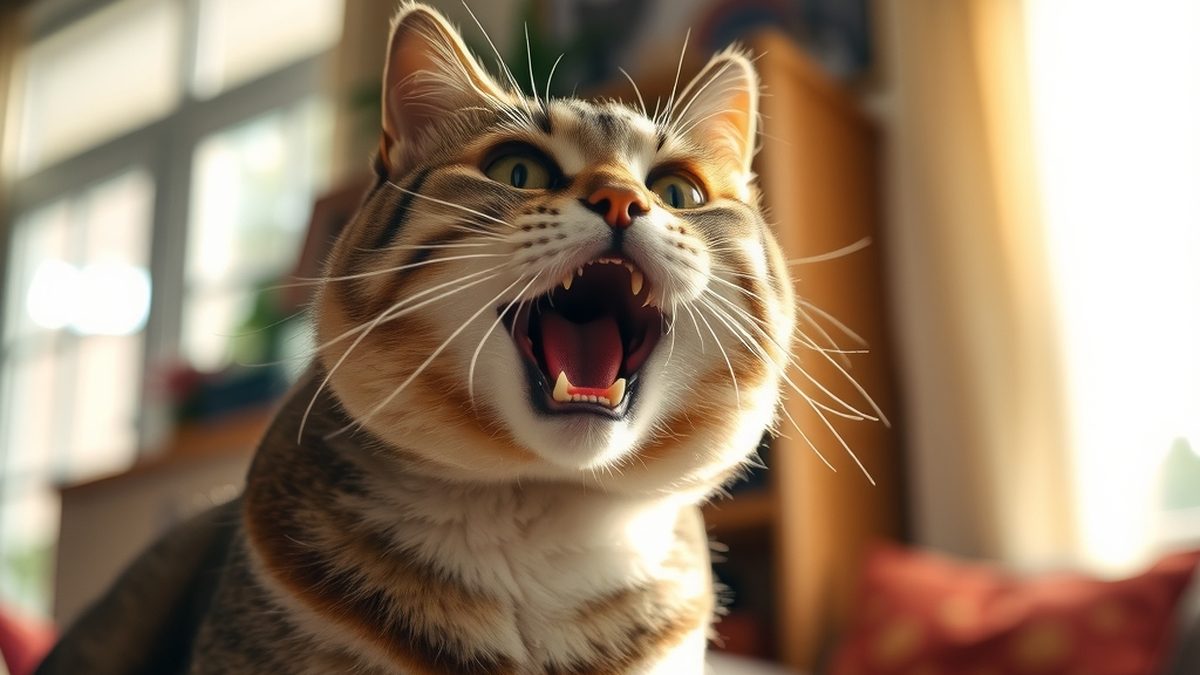
Photo by Eudes cs via Pexels
- Adult cats meow almost exclusively at humans, not at each other. Meowing is a behaviour cats evolved or learned specifically for living with people.
- The most common cause of excessive meowing is learned reinforcement: the cat meowed, you responded, and the behaviour was rewarded. Stopping the reward stops the meowing, but it gets worse before it gets better.
- Medical causes — hyperthyroidism, hypertension, chronic pain, cognitive decline — produce a different quality of vocalisation, often louder and more insistent, and need a veterinarian before any behaviour plan.
- Some breeds, particularly Siamese, Oriental and Bengals, are genetically more vocal. Their baseline is higher, and the goal is not silence but a manageable level of communication.
- Never punish vocalisation. It does not teach the cat what you want, it teaches the cat you are unpredictable, and in an anxious cat it raises the underlying driver of the behaviour.
A cat that meows constantly can make a home feel like a negotiation you never agreed to. The sound follows you from room to room. It starts before dawn. It resumes the moment you sit down. And because meowing sounds like a request — it is directed at you, it varies in pitch and urgency — it is almost impossible to ignore.
That is by design. Meowing is a behaviour cats developed for humans. Adult cats in the wild rarely meow at each other. Kittens meow at their mothers, and as they mature the behaviour fades. But domestic cats keep it, and refine it, because it works on people. The cat that meows and gets fed will meow again. The cat that meows and gets stroked will meow more. The cat whose person talks back, even to say stop, has received attention, and attention is the currency.
Understanding why a cat keeps meowing means understanding what the sound is buying. The answer is not the same for every cat, but the mechanism behind it usually is: the cat meows, something happens in response, and the loop tightens. Breaking the loop is simpler than it feels, but it is never instant.
Why meowing is a human-directed behaviour
Feline communication is mostly silent. Cats speak to each other through posture, scent, facial expression and tail position. They hiss, growl and yowl during conflict or mating, but the soft, varied meow that a house cat uses with its owner is almost entirely absent from cat-to-cat interaction.
Kittens meow to their mothers to signal hunger, cold or distress, and the mother responds. During weaning, as the kitten becomes independent, the mother stops responding, and the meowing naturally fades. Most cats leave the behaviour behind by six months.
Domestic cats do not. They carry the kitten meow into adulthood and direct it at the humans they live with, because humans, unlike other cats, reliably respond. Over thousands of generations of living alongside people, cats that vocalised got more food, more warmth and more protection. The behaviour was selected for, and it is now baked into the domestic cat genome.
The result is a species that treats its owners as surrogate parents. When a cat meows at you, it is using the same vocal register it would have used on its mother. It is not manipulating you in a calculated way — it is expressing a need in the only interspecies language it has, and it has learned that you understand it.
The six reasons a cat meows excessively
Not all meowing is the same. The sound, the timing and the context each point in a different direction.
| Type | What it sounds like | When it happens | What it usually means |
|---|---|---|---|
| Hunger meowing | Insistent, rising in pitch, often paired with circling or leading you to the kitchen | Around meal times, early morning | The cat has learned that meowing precedes food. This is a trained behaviour. |
| Attention meowing | Soft, conversational, often with purring mixed in | When you are present but not engaging | The cat wants interaction. It may settle for a stroke or it may want play. |
| Boredom meowing | Repetitive, almost monotonous, can go on for long stretches | When the house is quiet, when the cat is alone | Understimulation. The cat has energy to burn and no outlet. |
| Greeting meowing | Short, bright, often with tail up and trotting toward you | When you arrive home or enter the room | Social acknowledgement. This is the cat equivalent of hello. |
| Medical meowing | Loud, hoarse, plaintive, often at unusual hours | Any time, especially at night, and often alongside other signs | Pain, hyperthyroidism, hypertension, or cognitive decline. Sudden onset is a red flag. |
| Mating yowling | Long, drawn-out, almost operatic | In unspayed females during heat cycles | A call to potential mates. The only cure is spaying. |
The most useful diagnostic tool is simple: watch what happens immediately after the meowing. If the cat meows and you feed it, and the meowing is mostly around food times, you are looking at learned hunger vocalisation. If the cat meows and you pick it up or stroke it, and the meowing resumes the moment you stop, you are looking at attention-seeking. If the cat meows without any clear trigger and wanders while doing it, the cause is more likely medical or cognitive.
The reinforcement loop that makes it worse
The pattern is straightforward and devastatingly effective. The cat meows. You respond — with food, with a stroke, with eye contact, with a verbal reply. The cat registers the response as a reward. The next time the cat wants that reward, it meows again. Over weeks and months, the meowing becomes more frequent, more insistent and more difficult to ignore.
This is operant conditioning in its simplest form, and the cat is not being manipulative. It is behaving exactly the way any animal behaves when a behaviour produces a reliable outcome. The problem is that the outcome — your response — is under your control, and if you respond inconsistently, the behaviour gets stronger, not weaker.
Intermittent reinforcement is the strongest kind. If you sometimes ignore the meowing and sometimes give in, the cat learns that persistence pays. It will meow longer and louder because past experience has shown that the twentieth meow worked when the first nineteen did not. Consistency is the only way out: either always respond or never respond to a given type of meowing, but never do both.
What you do instead of responding matters as much as the withholding. A cat that meows for attention needs an alternative way to get it — a scheduled play session, a food puzzle, a window perch — so that the need is met without the meowing. Removing the reward without providing an alternative leaves the cat frustrated and does not solve the underlying drive.
If the behaviour feels out of control, it is worth remembering that other attention-seeking behaviours follow the same pattern. A cat that bites during petting is often one whose earlier, quieter signals were ignored. A cat that meows constantly may be one whose subtle requests were missed and has learned that only volume works.
Medical causes to rule out first
Before treating excessive meowing as a behaviour problem, consider that the cat may be trying to tell you something physical.
Hyperthyroidism is the most common medical cause of increased vocalisation in cats over eight years old. The thyroid gland overproduces hormone, raising metabolism, heart rate and activity level. Affected cats are often restless, hungry, losing weight despite eating more, and vocalising loudly at odd hours. A blood test confirms it, and treatment — medication, diet or radioiodine therapy — usually resolves the vocalisation along with the other symptoms.
Hypertension, or high blood pressure, can cause disorientation, retinal damage and headache-like discomfort that leads to crying. It often accompanies hyperthyroidism or kidney disease and is detected with a simple blood pressure measurement at the vet.
Chronic pain from arthritis, dental disease or urinary tract conditions can express itself as meowing because the cat has no other way to communicate discomfort. Arthritis is underdiagnosed in cats because they hide lameness well; sometimes the only outward sign is reduced activity and increased vocalisation when handled.
Cognitive dysfunction syndrome affects roughly a third of cats over eleven and more than half over fifteen. It causes disorientation, altered sleep cycles, reduced social interaction and loud, repetitive vocalisation, especially at night when the house is dark and the cat feels lost.
None of these conditions can be diagnosed at home. A cat whose meowing has increased suddenly or changed in character should see a veterinarian. The behaviour plan follows the diagnosis, not the other way around.
The breed factor
Some cats are louder than others by design. Siamese cats are the most famous example, with a vocal range that includes sounds most domestic cats never make. They are described as conversational by those who love them and relentless by those who do not. The trait is not a flaw: it is a breed characteristic, and it is one of the reasons people choose the breed.
Other notably vocal breeds include the Oriental Shorthair, the Bengal, the Burmese, the Tonkinese and the Sphynx. In all of them, a certain level of meowing is normal and not something to train away. The goal with a vocal breed is not silence but a manageable rhythm: the cat talks, you acknowledge it, the cat settles. Fighting the breed’s nature is a losing proposition and an unfair one.
If you live with a vocal breed and the noise is too much, the single most effective intervention is more interactive play. A tired cat is a quieter cat, and high-energy breeds like Bengals and Orientals need more stimulation than a few minutes with a laser pointer provides. A solid fifteen-minute session with a wand toy twice a day often reduces attention-seeking vocalisation more than any attempt to ignore it.
The nighttime yowling puzzle
A cat that is quiet all day and vocal all night presents a different challenge from one that meows around the clock. Nighttime yowling in a young, healthy cat is usually a mismatch between the cat’s internal clock and the household’s. Cats are crepuscular: they are wired to be most active at dawn and dusk. When the house goes dark and quiet, the cat’s natural rhythm says it is time to hunt, and a bored cat with no outlet will vocalise.
The solution has several parts. A vigorous play session immediately before bed burns off the hunting energy. A meal after the play session mimics the natural sequence of hunt, eat, groom, sleep. And complete non-response to nighttime meowing — no getting up, no feeding, no speaking — teaches the cat that night is not the time for interaction.
In older cats, nighttime yowling is more likely to be cognitive dysfunction than a behaviour problem, and the approach is different. Night lights can reduce disorientation. A heated bed can provide comfort. And a structured nighttime routine, applied consistently, can help even a cognitively declining cat feel more secure. The goal is not to stop the vocalisation entirely — that may not be possible — but to reduce the distress that drives it.
What not to do
Punishing a vocal cat — with a spray bottle, a loud noise, a clap — is counterproductive for several reasons that are well understood in behavioural science.
First, punishment does not teach the cat what you want it to do instead. It only teaches the cat that you are a source of unpleasant experiences, which erodes trust without addressing the need behind the meowing.
Second, punishment can increase the behaviour it is meant to stop. An anxious cat that is punished for vocalising becomes more anxious, and the underlying driver of the vocalisation gets stronger. The cat may stop meowing in your presence and start meowing the moment you leave, or it may transfer the behaviour to another outlet — licking compulsively, hiding, or refusing to eat.
Third, punishment suppresses the warning signals that precede escalation. A cat that learns not to meow has not learned to feel differently. It has learned to stay silent until the need is overwhelming, at which point the behaviour that emerges — biting, scratching, house soiling — is harder to manage than meowing ever was.
The alternative to punishment is redirecting the behaviour before it escalates. If the cat meows for food at four in the afternoon and dinner is at five, the answer is not a reprimand but a puzzle feeder that makes the cat work for a portion of its daily calories, buying you an hour of quiet and the cat an hour of occupation.
When meowing is a call worth answering
Most excessive meowing is learned. It can be unlearned with patience and consistency. But not all of it.
A cat whose meowing has changed suddenly — louder, hoarser, more urgent — deserves a veterinary check before a behaviour plan. A cat that meows while using the litter tray may have a urinary blockage, which is a life-threatening emergency. A cat that meows and pants, or meows and hides, or meows and refuses food, is showing signs that go beyond behaviour and into illness.
The rule is straightforward: if the meowing pattern has shifted abruptly, see a vet. If the meowing has been building gradually over weeks and months and the cat is otherwise well, it is probably learned, and the fix is in your hands. The key to telling them apart is attention to what else has changed — appetite, weight, litter habits, energy, grooming — because a cat in pain almost always shows it somewhere, even if the meowing is the part you hear first.
Frequently asked questions
Why does my cat meow so much all of a sudden?
A sudden increase in vocalisation is more likely to have a medical cause than a behavioural one. Hyperthyroidism, common in cats over eight, raises metabolism and activity and often presents as restlessness and loud meowing, especially at dawn and dusk. Hypertension can cause disorientation that leads to crying. Any source of chronic pain — arthritis, dental disease, a urinary tract issue — can express itself as vocalisation because the cat has no other way to signal distress. A cat whose meowing pattern changes abruptly should see a veterinarian before any behaviour plan is attempted. The ASPCA cat care guidance notes that sudden behavioural changes, including vocalisation, are a frequent first sign of an underlying health problem in cats.
How do I get my cat to stop meowing for food?
The cat meows, you feed it, the meowing worked. That loop is the whole problem. The fix is to never feed in response to meowing: wait for a moment of silence, however brief, and then put the food down. The cat learns that silence gets food and noise does not. If the cat meows on a schedule — every morning at five, every evening at six — switch to an automatic feeder. It removes you from the equation entirely, and the cat stops directing the demand at you. The first few days after you stop responding, the meowing will intensify. That is an extinction burst, not evidence that the plan failed. If you give in during the burst, you have taught the cat to meow louder and longer next time.
Why does my older cat meow so much?
Excessive vocalisation in senior cats has three common drivers, and they can overlap. Cognitive dysfunction syndrome, the feline equivalent of dementia, causes disorientation that often expresses as loud crying, particularly at night when the house is dark and quiet. Sensory decline — hearing loss and reduced vision — makes the world harder to navigate and can lead to calling out for reassurance. And chronic pain from arthritis or dental disease becomes more common with age and more difficult for cats to signal in any way other than vocalising. A veterinarian can assess all three and, in many cases, treat or manage them. The [Cornell Feline Health Center](https://www.vet.cornell.edu/departments-centers-and-institutes/cornell-feline-health-center) has specific guidance on cognitive decline and quality of life in aging cats.
Why does my cat walk around the house meowing?
A cat that wanders from room to room vocalising is usually either bored, anxious, or in cognitive decline. A young, healthy cat that does this during the day when the house is empty is probably understimulated: it has energy and no outlet. More play, particularly interactive play with a wand toy that mimics hunting, often reduces the behaviour within days. An anxious cat — one that has recently moved, lost a companion, or had its routine disrupted — may call out as a form of contact-seeking. The fix is environmental: consistent routine, hiding spaces, and time. An older cat that wanders and cries, especially at night, is more likely dealing with cognitive decline and needs a veterinary assessment rather than a behaviour plan.
Are some cats just more vocal than others?
Yes, and it is partly genetic. Siamese cats are famously talkative and produce a wider range of sounds than most domestic shorthairs. Orientals, Bengals, Burmese and Tonkinese are also in the more vocal category. For these breeds, a certain level of meowing is normal and not something to extinguish. The question is not whether the cat vocalises but whether the vocalisation is excessive relative to its own baseline. A Siamese that has always chatted through the day is probably fine. A Siamese that has suddenly doubled its output or changed the tone of its cries may not be.