Why Does My Dog Keep Licking His Paws? Causes and What to Do
Persistent paw licking is not a personality quirk. It is one of the most reliable early signals that something is not right, and the cause is usually treatable once you know what to look for.
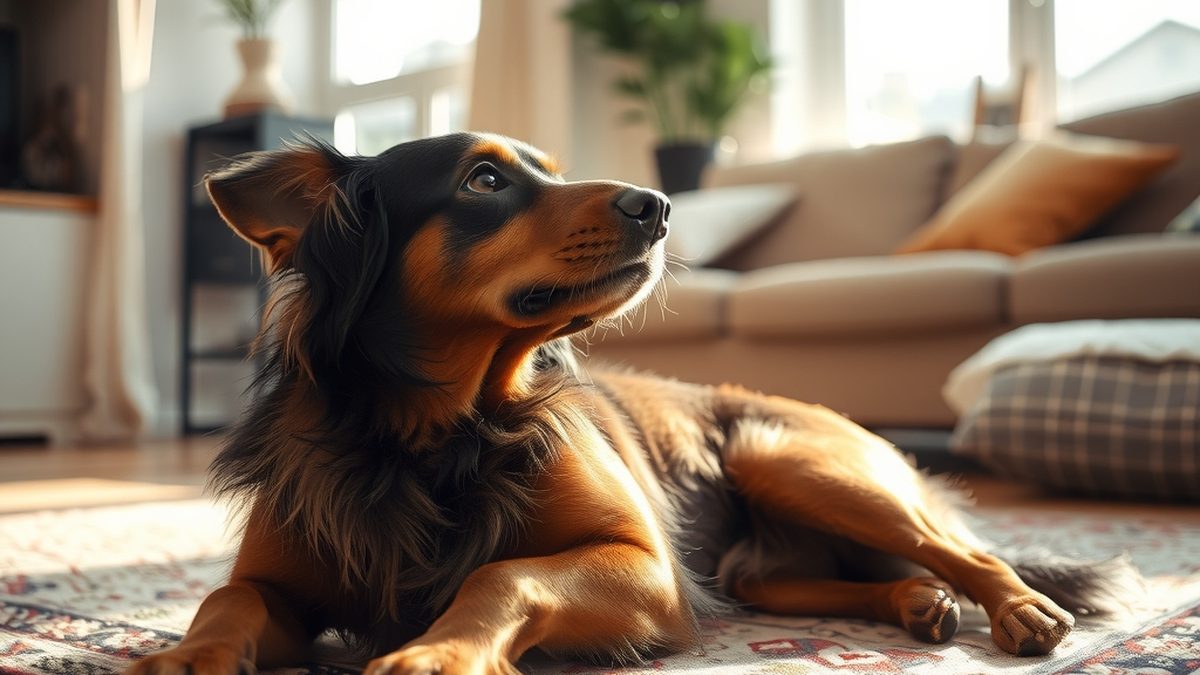
Illustration generated by Nexulab
- Occasional paw licking is normal grooming. Daily, prolonged licking — especially focused on one paw — is a signal worth investigating.
- Allergies are the most common cause by a wide margin, and they usually show up on front paws first.
- A dog that licks only one paw is more likely dealing with a local problem: a foreign body, a nail injury, or joint pain.
- Anxiety and boredom licking tends to be rhythmic, happens at predictable times, and stops when the dog is engaged in something else.
- Brown staining on light fur is from saliva, not dirt, and it tells you the licking has been going on longer than you think.
A dog that keeps licking his paws is not being difficult. He is responding to something — and the something is almost never “just a habit.” The paws touch everything, carry scent glands, and have thin skin with little fur between the pads. That makes them ground zero for irritation, and licking is the only tool the dog has.
This is general information, not veterinary advice. Paw licking that appears suddenly, is focused on one paw, or comes with limping, swelling or bleeding needs a vet who can examine your dog.
How much licking is too much
All dogs groom. A healthy dog licks a paw briefly after a walk, or gives it a few passes before settling down to sleep. That is maintenance, not a problem.
The behaviour shifts into something worth paying attention to when:
- It lasts minutes, not seconds, and repeats through the day.
- The dog interrupts eating, playing or resting to lick.
- The fur between the pads looks permanently damp or stained reddish-brown.
- One paw gets all the attention while the others are left alone.
- You notice a smell that was not there before.
The stain matters. Saliva contains porphyrins — iron-containing compounds — that oxidise to a reddish-brown on light fur. A stain tells you the licking has been going on for days or weeks, not hours, and it happened whether you saw it or not.
The five causes, and how to tell them apart
Allergies
Allergies are the most common reason a dog licks his paws, by a considerable margin. The reaction can come from the environment — pollen, mould, dust mites, grass — or from something in the food, usually a protein source the immune system has decided it does not like.
Environmental allergies tend to be seasonal, though in warm climates the season can stretch most of the year. Food allergies are year-round and do not fluctuate with the weather.
The pattern is distinctive: both front paws, licked until the skin between the pads is pink and the fur is stained. The dog may also rub his face on the carpet or scratch at his ears. If you see that combination, allergies sit at the top of the list.
A foreign body or local injury
A dog that suddenly licks one paw obsessively — the same paw, every time — is more likely dealing with a local problem than a systemic one.
Grass seeds and foxtails are the classic culprits: they have a barbed shape that lets them burrow into the skin between the toes and keep travelling inward, and the entry wound can be too small to see. Other possibilities include a thorn, a splinter, a cracked nail, a small cut, or even a sting.
Check the paw in good light. Spread the toes gently and look between them, on the underside of the pads, and around the nail beds. Not everything is visible — a grass seed that has already migrated under the skin may leave no trace on the surface — so do not rule it out just because you cannot see anything.
Pain
Not all pain is obvious. A dog with early arthritis in a wrist or an elbow may not limp. He may simply lick the paw on that leg, because the discomfort refers downward and the paw is what he can reach.
Other pain sources that produce paw licking: a sprained toe, an ingrown nail, an interdigital cyst, or even referred pain from the neck or spine. The clue is specificity: one paw, one leg, licked in a way that seems focused and deliberate rather than driven by itch.
Anxiety and boredom
Anxiety-driven paw licking has a different rhythm from allergy-driven licking. It is more repetitive, more predictable in timing, and it tends to stop the moment something else grabs the dog’s attention.
A dog who licks his paws when you pick up your keys, when the house is quiet, or when a storm is building may be self-soothing. The behaviour releases endorphins that genuinely calm the dog, which is why it becomes a loop: the licking brings relief, so the dog licks more.
Boredom licking looks similar but lacks the anxious trigger. The dog is understimulated, under-exercised, or left alone for long stretches, and paw licking is something to do. This is one of the few cases where the behaviour can genuinely be called a habit — though breaking it still requires addressing the understimulation, not just stopping the licking.
Parasites and infections
Mites, fleas, and fungal or bacterial infections can all localise on the paws. Demodectic mange often starts on the feet; yeast infections thrive in the warm, moist environment between the pads; and a dog allergic to flea saliva may focus on the feet even when the fleas themselves are elsewhere on the body.
A smell helps here: yeast has a distinctive, slightly sweet, corn-chip odour. If the paw smells different from the rest of the dog, an infection is a strong possibility.
Comparing the causes at a glance
| Cause | Which paw | Timing | Key signs |
|---|---|---|---|
| Environmental allergy | Both front paws, sometimes all four | Seasonal, or after walks | Face rubbing, ear scratching, pink skin |
| Food allergy | Both front paws, often with ear involvement | Year-round, may appear hours after eating | Ear infections, loose stools, facial itching |
| Foreign body | One paw only | Sudden onset, constant | May lick a specific spot, possible swelling |
| Pain (arthritis, injury) | One paw or leg | Gradual onset, worse after activity | May or may not limp, licking is focused |
| Anxiety or boredom | Both front paws typically | Specific times: night, alone, storms | Stops with distraction, rhythmic pattern |
| Yeast or bacterial infection | One or more paws | Unrelenting, worsens over time | Odour, redness, greasy feel between pads |
What you can do at home
Check the paw. In good light, with a calm dog, examine between the pads, around the nails, and on top of the foot. Look for redness, swelling, cuts, thorns, or anything that does not belong. Do not dig or probe — you can push a foreign body deeper — but a visual check costs nothing and sometimes solves the problem immediately.
Wipe the paws after walks. A damp cloth or unscented baby wipe removes pollen and environmental irritants before the dog can lick them off and ingest them. This is one of the simplest interventions and it helps across several of the causes.
Increase exercise and mental stimulation. If the licking happens at predictable low-activity times — evening, when you are working, when the dog is alone — try adding a second walk, a food puzzle, or a short training session to that part of the day. If the licking drops noticeably, boredom was at least part of the picture.
Bathe the paws. A shallow soak in cool water, or an Epsom salt soak if your vet approves it, can soothe irritated skin and help dislodge surface irritants. Dry thoroughly afterwards, especially between the toes — moisture left behind creates the conditions for yeast.
Do not punish or scold. The dog is not being stubborn. He is responding to something real — itch, pain, or anxiety — and punishment adds stress to a dog that may already be anxious. Redirect to something incompatible, like a chew or a short training exercise, and reward the alternative.
When a vet needs to step in
Book an appointment if:
- The licking has gone on for more than a few days with no improvement.
- One paw is swollen, hot to the touch, or has an odour.
- The dog is limping or reluctant to put weight on the paw.
- You see a discharge, an open wound, or a growth between the toes.
- The licking is accompanied by lethargy, loss of appetite, or other systemic signs.
A vet has tools you do not: skin scrapings and cytology can identify mites, yeast and bacteria under a microscope; an elimination diet trial can rule food allergies in or out; and anti-inflammatory or anti-itch medication can break the lick cycle long enough for the skin to heal.
The cycle matters more than people realise. Licking damages the skin barrier, which causes more irritation, which causes more licking. Breaking that cycle with medical help is not overreacting — it is preventing what started as a small problem from becoming a chronic one.
This is the same principle that applies to other forms of persistent licking: the behaviour is communication, and the longer you wait, the more ingrained both the underlying cause and the habit become.
Managing the problem long term
Paw licking that comes from allergies or anxiety tends to be a recurring issue, not a one-time fix. The goal is not to cure it forever but to keep episodes short and far apart.
For allergic dogs, regular paw wiping, keeping indoor allergens low, and working with a vet on a management plan — which may include antihistamines, medicated shampoos, or immunotherapy — keeps the threshold below the point where licking takes over.
For anxious dogs, the work is about building alternative coping behaviours. A dog that learns to settle on a mat, to chew a long-lasting toy, or to go to a safe space when stressed has options other than his paws. This takes time and consistency, but it addresses the root rather than the symptom.
And for any dog, regular paw checks — two minutes once a week — catch problems before they become emergencies. A cracked nail spotted early is a trim; a cracked nail left to split further is a vet visit and antibiotics. The difference is attention.
These long-term behaviour patterns are not unique to paw licking. They overlap with other canine compulsions — a dog eating grass obsessively, for instance, often shares the same underlying drivers of boredom, anxiety or gastrointestinal discomfort that can also manifest as paw-directed behaviour. Reading one helps you read the others.
Frequently asked questions
Is paw licking ever normal?
Yes. A dog that licks a paw for a few seconds after coming in from a walk, or as part of a settling-down routine before sleep, is doing normal grooming. The line between normal and excessive is duration and intensity: licking that goes on for minutes at a time, that interrupts other activities, or that leaves the fur damp and stained, has crossed into something worth investigating.
Why does my dog lick his paws at night?
Nighttime paw licking often points to two unrelated causes. The first is environmental allergies: pollen settles on the paws during the day, and the reaction peaks hours later when the dog is resting. Wiping the paws after the last walk of the day can help. The second is behavioural: a dog alone in a quiet house may lick to self-soothe, and the stillness of night makes the habit more visible to you.
Can I use an anti-lick spray or a cone?
Both stop the licking but neither addresses why it started. A cone or spray is useful as a short-term barrier to let irritated skin heal, but if the underlying cause is not dealt with the licking returns the moment the barrier comes off. They are tools for buying time, not solutions.
What does it mean if my dog licks his paws after eating?
This pattern raises the possibility of a food allergy or sensitivity. The reaction may not be immediate — it can take hours or a day to build — so the timing can be misleading. Other signs to watch for alongside post-meal paw licking are ear infections, loose stools, and itching around the face or anus. A veterinary elimination diet is the only reliable way to confirm food involvement.
How do I know if it is allergies or anxiety?
Context is the best clue. Allergy-driven licking is usually accompanied by other signs of itch: face rubbing, ear scratching, licking other body parts. Anxiety licking tends to be more isolated — just the paws — and happens in specific situations: when left alone, during thunderstorms, or at bedtime. If the behaviour stops the moment you engage the dog in a walk or play, anxiety or boredom moves up the list of suspects.