Why Does My Dog Sleep So Much? What Is Normal and What Is Not
The honest answer surprises most owners: a lot. What matters is not the number of hours but whether it changed.
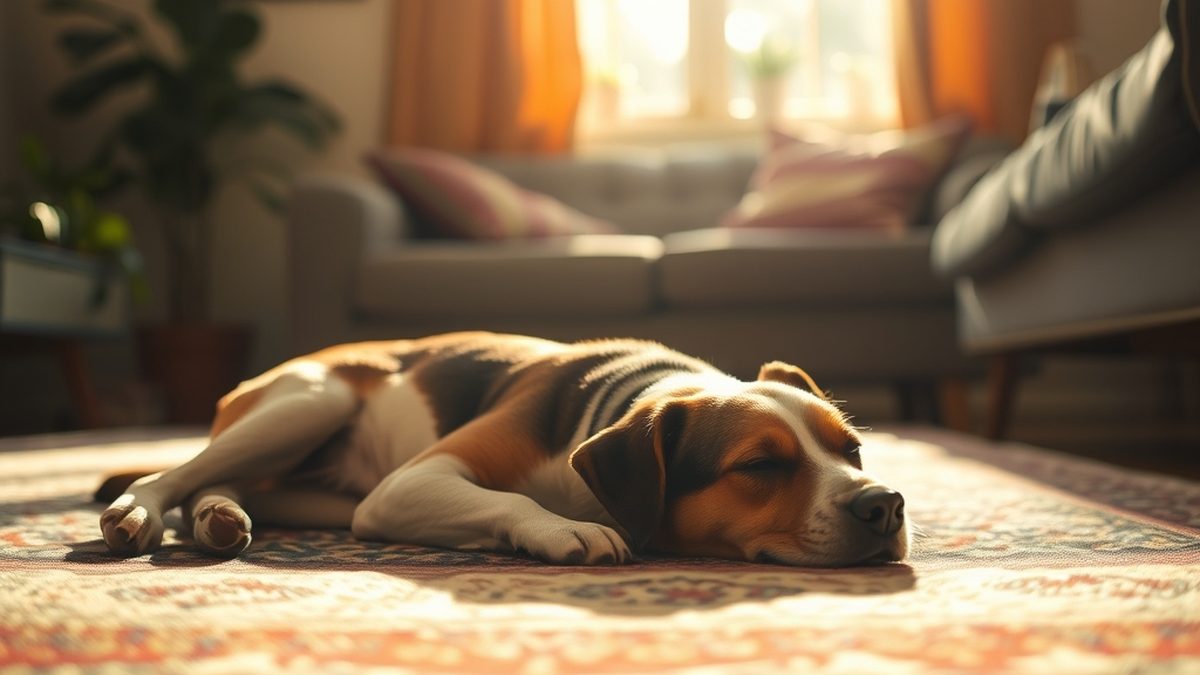
Illustration generated by Nexulab
- Dogs sleep considerably more than adult humans, and it is normal rather than a sign of boredom or illness.
- Puppies and senior dogs sleep the most. A growing puppy needs a great deal of rest and should not be kept awake to play.
- Dog sleep is fragmented — many short bouts through the day and night rather than one long block.
- The signal is change from your own dog's baseline, not the absolute number of hours.
- Sleep that increases alongside appetite changes, difficulty rousing, or reluctance to move deserves a vet.
Most owners who search why does my dog sleep so much are worried, and most of them do not need to be.
Dogs sleep considerably more than people. That is not a symptom of anything, it is how the species works, and it holds even for dogs with full active lives.
The useful question is not how much your dog sleeps. It is whether that changed.
This is general information, not veterinary advice. A noticeable change in sleep, especially alongside appetite, movement or mood, needs a vet who can examine your dog.
How much is normal
More than most people expect, and the range is genuinely wide.
Adult dogs commonly spend well over half the day asleep or dozing, spread across the whole twenty-four hours.
Puppies sleep a great deal more, and it matters — sleep is when growth happens and when the day’s learning consolidates.
Senior dogs return to sleeping more again as energy declines.
Breed and size play a part. Large and giant breeds tend to sleep more than small active terriers, and working-line dogs with a job differ from companion dogs with the same genetics.
The number is less useful than the pattern, which brings us to the point of the article.
Dog sleep is not human sleep
Two differences that explain a lot of what owners find odd.
It is fragmented. Dogs do not consolidate sleep into one long block. They doze, wake, reposition, doze again, in many short bouts across the day and night. A dog waking at 3am, turning around and going back to sleep is behaving normally, not restlessly.
They wake fast. A dog that looks deeply asleep can be alert in a second when something matters. Which is why so much dog sleep is light dozing rather than the deep stuff — an animal that evolved to notice things does not spend all night unconscious.
The practical consequence: a dog sleeping through the day is not necessarily sleeping badly at night. It is distributing the same total differently.
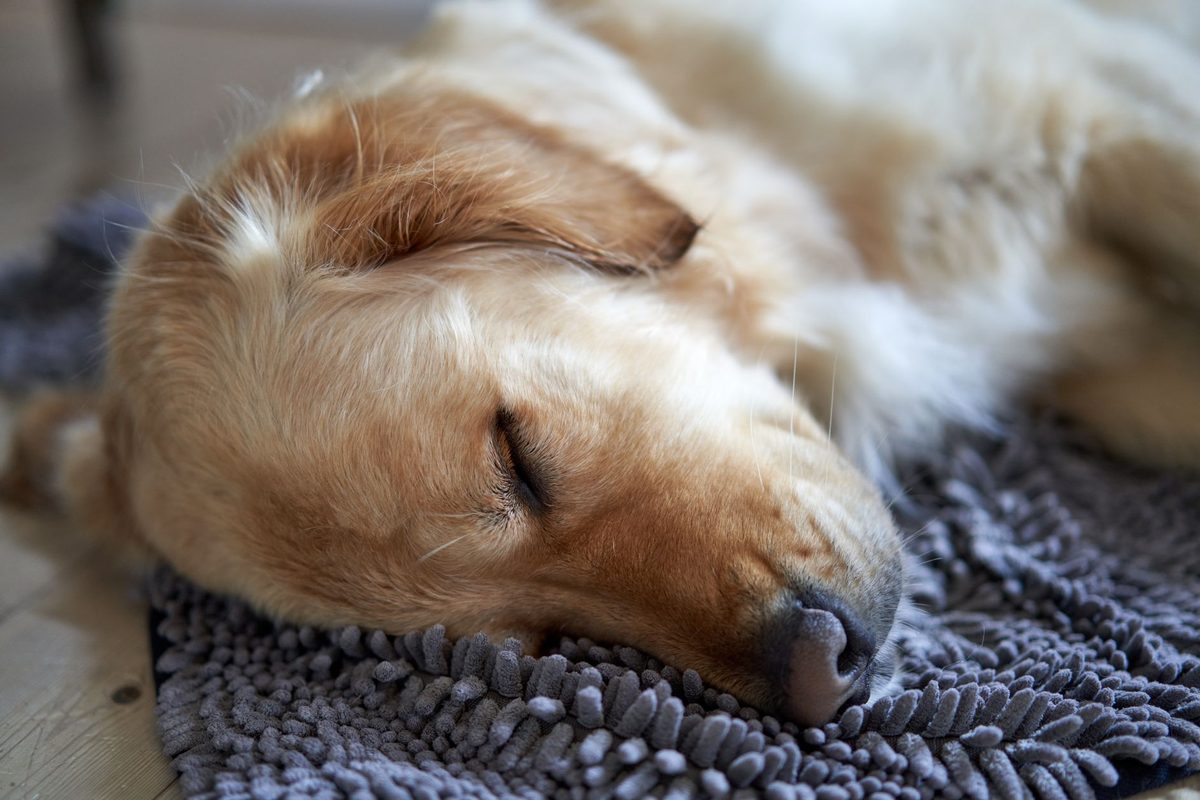
Puppies: let them sleep
This deserves its own section because getting it wrong is common and counterproductive.
Puppies need enormous amounts of sleep, and an overtired puppy does not become sleepy. It becomes frantic — biting harder, unable to settle, ignoring everything it knows.
Owners read that as excess energy and provide more stimulation, which makes it worse. The dog needed a nap.
What helps:
- A quiet place the puppy can go and not be followed, especially with children in the house
- Enforced downtime after play or a walk, in a pen or a crate if that is part of your setup
- Recognising the pattern: mad half-hour in the evening usually means overtired, not underexercised
A puppy that seems to have lost its mind at 8pm most nights is telling you its day has too little rest in it.
When sleep is a symptom
Here is what actually matters. Not the total, but a change from your own dog’s baseline.
Worth a vet:
- A noticeable increase with no change in weather, routine or activity
- Difficulty rousing — a dog that used to lift its head when you walked in and now does not
- Sleeping alongside appetite changes, drinking more or less, or weight change
- Reluctance to move, stiffness on getting up, hesitating at stairs
- Lethargy rather than sleep — flat and disengaged while awake, not just resting
- Sudden onset, especially in a dog that was previously energetic
Common treatable causes include thyroid problems, anaemia, arthritis and pain generally, heart conditions, and infections. Several of them respond well to treatment, which is exactly why “he is just getting old” is an expensive assumption.
The ASPCA covers general dog health, and veterinary teaching hospitals such as Cornell University College of Veterinary Medicine publish accessible material on the conditions behind changes like this.
Older dogs specifically
Some increase in sleeping with age is ordinary. But three things that look like ageing are treatable.
Arthritis. Extremely common in older dogs and frequently missed, because dogs do not limp dramatically — they just move less, sleep more, and stop doing the things that hurt. Pain management makes a visible difference.
Thyroid problems. Low thyroid produces lethargy, weight gain and coat changes, and is straightforward to test for.
Cognitive decline. Often shows as reversed sleep — sleeping more in the day and becoming restless or vocal at night. There are approaches that help.
An older dog that sleeps more deserves a check rather than a shrug. The difference in quality of life when something treatable gets treated is not small.
The boredom question
A dog with nothing to do will sleep through empty hours. That is real, and enrichment helps — food puzzles, sniffing work, short training sessions, something to chew.
But high sleep is not by itself evidence of boredom, because dogs sleep a lot regardless.
The test: offer something genuinely interesting. A bored dog animates instantly — the lead, the food puzzle, the door. A dog that stays flat when the lead comes out is not bored, and that is the version worth a phone call.
The short version
Dogs sleep a lot. Puppies and seniors more. That is normal and needs no intervention.
Learn your own dog’s baseline over a couple of ordinary weeks. That is the measurement that makes everything else readable.
Change is the signal, not the total.
And do not attribute an older dog’s slowdown to age without ruling out the treatable causes — the same principle that applies to a dog that suddenly follows you everywhere. Behaviour is often the first visible symptom of something physical.
For more in this series, see our other pets guides.
Frequently asked questions
How many hours a day should a dog sleep?
Considerably more than a person, and the range is wide. Adult dogs commonly spend well over half the day asleep or dozing, puppies substantially more, and senior dogs more again. Rather than aiming for a number, learn your own dog's pattern over a normal fortnight. That baseline is what makes a change meaningful, and it varies with breed, age, activity and even the weather.
Is it normal for a puppy to sleep all day?
Yes, and it is important. Puppies need very large amounts of sleep to support growth and to consolidate what they are learning, and an overtired puppy typically becomes more bitey and less able to settle rather than sleepier. If a puppy seems to have gone feral in the evening, the usual cause is too little sleep, not too little exercise. Give them somewhere quiet and let them rest.
Why is my old dog sleeping more than usual?
Some increase is ordinary with age, as energy declines and joints make movement less appealing. But arthritis, thyroid problems, heart disease and cognitive decline all present partly as increased sleeping, and they are treatable. An older dog sleeping more is worth a veterinary check rather than an assumption, because the treatable causes are common and the improvement when they are addressed can be considerable.
Should I wake my dog if it is sleeping a lot?
No, in general. Interrupting sleep does not create energy, and with puppies and older dogs it tends to make behaviour worse. Wake a dog only if you need to, and do it gently and with your voice rather than touch — older dogs with reduced hearing or sight can startle badly, and a startled dog may snap before it is fully awake.
Does a dog sleeping a lot mean it is bored?
Sometimes, but it is not the first explanation. A dog with nothing to do will sleep through empty hours, and enrichment helps. But dogs sleep a great deal even when their lives are full, so high sleep alone is not evidence of boredom. Look at what happens when something interesting is offered: a bored dog becomes animated instantly, and a dog that stays flat when the lead comes out is telling you something different.