How to Unclog a Sink: The Order That Actually Works
Most people reach for a bottle of drain cleaner before touching anything else, and that is backwards. Here is the order that clears the clog with the least mess and the least damage.
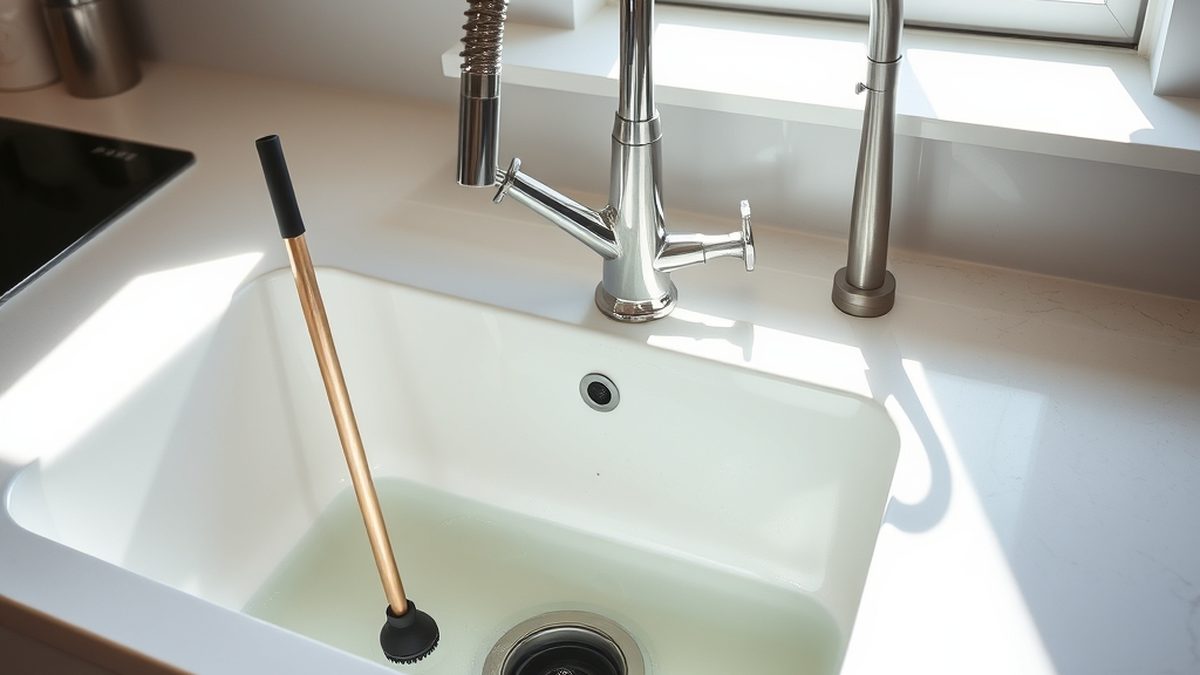
Illustration generated by Nexulab
- Most sink clogs are in the P-trap, the curved pipe directly under the sink. You can reach it, take it apart, and clean it without touching the wall.
- A plunger works by pushing and pulling water through the clog, not by suction. Cup plungers are for sinks; flange plungers are for toilets. Using the wrong one wastes effort.
- Baking soda and vinegar only work when the reaction is contained around the clog. If the water drains immediately, the fizz happens in the open pipe and does nothing useful.
- Never mix chemical drain cleaners with anything you already put down the drain, including vinegar or baking soda. The combinations can release toxic gas.
- A slow drain is the cheapest drain to fix. Waiting turns a partial clog into a compacted one that resists everything except mechanical removal.
A sink that drains slowly is sending you a signal: there is a clog forming, and right now is the cheapest moment to clear it.
Most people ignore the signal until the sink stops draining altogether, then grab a bottle of chemical drain cleaner because it promises a one-minute fix. That order is backwards.
Here is the sequence that clears most sink clogs without damaging the pipes, and the reason each step goes where it does.
What is actually blocking your sink
Before you put anything down the drain, it helps to know what you are dealing with.
A sink clog is almost never a single object lodged in the pipe. It is a composite: grease and soap scum coat the inside of the pipe, food particles and hair stick to that coating, and over weeks the passage narrows until water backs up.
The clog usually sits in one of two places. The first is the P-trap, the U-shaped pipe directly under the sink. It is designed to hold water to block sewer gas, and by design it also catches everything heavy enough to sink — food scraps, coffee grounds, rings. The second is the branch drain, the horizontal or gently sloped pipe inside the wall that connects the sink to the main stack.
A clog in the P-trap you can reach and clean yourself. A clog deep in the wall may need a drain snake, and that is the point where you consider calling a plumber.
Start with boiling water
Boiling water costs nothing, does not damage pipes, and dissolves the two things that hold most clogs together: grease and soap.
Bring a kettle or a pot to a rolling boil. Pour it directly into the drain in two or three stages, waiting a few seconds between each pour so the heat has time to soften the blockage rather than just washing over it.
Do this even if the sink is fully blocked and standing in water. The hot water sitting in the bowl transfers heat down into the clog, and the weight of the water column adds pressure. If the water level drops after a few minutes, the clog is softening and you can add more boiling water.
One caveat: if your pipes are PVC and the clog is near the surface, do not pour an entire kettle of boiling water onto a pipe full of standing cold water — the sudden temperature change can stress the joints. Pour gradually and give the pipe time to warm up.
The plunger, done right
If boiling water does not clear it, the plunger is next — but only with the correct technique and the correct plunger.
Which plunger. A cup plunger, the one with a flat rubber disc at the bottom, is for sinks and bathtubs. A flange plunger, with a soft rubber fold that extends from the cup, is for toilets. Using a flange plunger on a flat sink wastes strokes because it cannot form a seal. Using a cup plunger on a toilet is equally useless. They are not interchangeable.
How to plunge a sink. Fill the sink with enough water to cover the cup of the plunger — the water is what transmits the force, not the rubber. Block the overflow hole with a wet cloth if the sink has one: it exists to prevent overflow, not to help you plunge. On a double-basin kitchen sink, block the other drain with a wet cloth or hold a second plunger over it.
Push down slowly to seat the plunger and expel the air, then pump with short, sharp strokes — about one per second. The goal is not to ram water down the drain like a piston. It is to push and pull water through the clog, back and forth, loosening it. After ten to fifteen strokes, lift the plunger and check whether the water drains.
If it does, flush the drain with boiling water again to carry the loosened material all the way through. If it does not, try another round before moving to the next step.
Baking soda and vinegar: when it works and why
This combination is treated as a universal drain fix, and it works — but only under specific conditions.
Baking soda and vinegar react to produce carbon dioxide gas and sodium acetate dissolved in water. The gas expands rapidly inside the pipe, and the pressure of that expansion can break apart a soft clog. The key word is contained: the reaction only pushes against the clog if the gas has nowhere else to go.
For a fully blocked sink where standing water seals the pipe, this works well. Pour half a cup of baking soda directly into the drain, follow with half a cup of white vinegar, and immediately cover the drain opening with a stopper or a wet cloth. Hold it closed for five to ten minutes while the reaction runs its course, then flush with boiling water.
For a slow-but-still-draining sink, the method is less reliable because the gas escapes up the pipe before it builds pressure. You can improve the odds by pouring the baking soda into a mostly-dry drain — remove the standing water first — and plugging the drain hard after the vinegar goes in.
Do not expect the foam to push out a compacted, weeks-old clog of hair and solidified grease. That requires mechanical removal. And do not follow baking soda and vinegar with a chemical drain cleaner: acid residues from the vinegar react with the alkaline cleaner and produce dangerous fumes. The same caution applies across the house — mixing bleach with vinegar in a bathroom releases chlorine gas, and the small enclosed space makes it worse.
Cleaning the P-trap
When water, plunging and baking soda all fail, the clog is probably sitting inside the curved pipe under the sink. The P-trap is designed to be removed for exactly this reason.
Place a bucket or a bowl directly underneath the trap. The trap holds water by design, and it will spill when you open it.
The trap is held by two slip nuts — one where the pipe connects to the sink tailpiece above, one where it connects to the wall pipe. Most are hand-tightened plastic and you can unscrew them without tools. If they are metal or tight, use adjustable pliers with a cloth between the jaws to avoid scratching the finish.
Unscrew both nuts and pull the trap down and out. Tip the contents into the bucket. If the trap is full of sludge, hair, and debris, you have found the clog. Rinse the trap thoroughly in another sink or outside with a hose, reaching into the curve with your finger or a bottle brush to dislodge anything stuck.
Before reassembling, look into the pipe coming from the wall. If it is clear and clean, the clog was in the trap. Reassemble the trap — the slip nuts only need to be hand-tight — and run hot water for a full minute to confirm the drain flows freely.

If the trap is clean and the wall pipe is also clear, the clog is deeper in the branch drain. At this point you need a drain snake, sometimes called a plumber’s auger, to reach past the trap and into the wall. A manual snake costs less than a plumber’s call-out and is worth owning if you live in an older house.
Comparison at a glance
| Method | Works on | Cost | Risk to pipes | Time |
|---|---|---|---|---|
| Boiling water | Grease and soap | None | Low (gradual pour on PVC) | 5 minutes |
| Cup plunger | Soft clogs near the drain opening | None | None | 5 to 10 minutes |
| Baking soda and vinegar | Soft organic clogs in a sealed pipe | Cents | None | 15 minutes |
| Remove and clean P-trap | Clogs inside the trap | None | None (with care) | 15 to 20 minutes |
| Drain snake | Clogs past the P-trap in the wall | Cost of the tool | Low (can scratch pipes if forced) | 20 to 30 minutes |
| Chemical drain cleaner | Grease and organic clogs | A few dollars | Moderate (heat, corrosion over time) | 15 to 30 minutes |
| Call a plumber | Everything the snake cannot reach | Call-out and labour | None (their risk) | Varies |
Chemical drain cleaner is last on this list for a reason. It generates heat that can soften PVC and corrode metal, and if it fails to clear the clog you now have a sink full of caustic liquid standing against your pipes and waiting for a plumber who will not appreciate finding it there. Use it only after mechanical methods have failed, and never after baking soda and vinegar without rinsing thoroughly in between.
Stop the next clog before it forms
A sink that clogs once will clog again unless something changes. The change is usually small.
Pour a kettle of boiling water and a squirt of dish soap down the drain once a week. The soap emulsifies fresh grease and the hot water carries it through before it solidifies on the pipe wall.
Never pour cooking grease, coffee grounds or flour down the sink. Grease solidifies as it cools, coffee grounds compact like sediment, and flour mixed with water forms a paste that hardens. Scrape plates into the bin, not the sink.
A mesh strainer over the drain costs two dollars and catches the food particles and hair that start every clog. It is the simplest piece of prevention and the one most people skip. While you are at it, give the faucet area a quick wipe — cleaning a shower head follows the same principle of stopping buildup before it blocks the flow.
When a slow drain is more than a clog
Most slow drains are exactly what they look like. A few are not.
If you have cleaned the P-trap, snaked the branch drain and the sink still drains slowly, the vent pipe — the pipe that runs up through the roof to let air into the plumbing system — may be blocked. A blocked vent creates a vacuum that slows drainage, and the symptom is gurgling or bubbling from the drain when water runs. Clearing a roof vent is not a safe DIY job for most people; call a plumber.
If multiple fixtures in the house are slow or backing up at the same time, the problem is in the main drain line, not in any single sink. That is a plumber’s job and you do not want to delay it.
Frequently asked questions
Does baking soda and vinegar really unclog drains?
Yes, but only when the clog slows the water enough to hold the reaction around the blockage. The fizz is carbon dioxide gas expanding inside a confined space, and the pressure can break apart a soft clog made of grease, soap scum and food particles. If the water drains freely, the reaction happens in the wide open pipe where the pressure dissipates and you accomplish nothing. Pour the baking soda first, then the vinegar, and plug the drain immediately with a stopper or a wet cloth to trap the pressure where it matters.
Can I use a plunger on a kitchen sink with two basins?
Yes, but you have to seal the other basin first. A plunger works by forcing water back and forth through the clog, and an open second basin lets the pressure escape instead of hitting the blockage. Cover the drain of the second basin with a wet cloth, or hold a second plunger over it, or have someone block it. The same applies to the overflow hole in a bathroom sink: block it with a wet rag so the pressure goes to the clog, not out the overflow.
Why does my sink smell even though it drains?
Two common reasons. Grease and food particles coating the inside of the pipe rot slowly and release a smell even when the water flows past them. The fix is flushing the drain with boiling water and a squirt of dish soap once a week. The other reason is a dry or damaged P-trap: the curved pipe under the sink holds a plug of water that blocks sewer gas from coming up. If a sink is rarely used, the water evaporates and the gas rises. Pour a cup of water down the drain and see if the smell disappears within an hour.
When should I take apart the P-trap?
When water is not draining after boiling water, plunging, and the baking-soda-and-vinegar method, the clog is probably sitting inside the P-trap itself. That curved pipe is designed to be removed: it is held by two slip nuts you can undo by hand or with pliers, and cleaning it out takes minutes. Put a bucket underneath first, because the water sitting in the trap will spill. If you take it apart and the P-trap is clear, the clog is deeper in the wall and you need a drain snake, not more chemicals.
Can drain cleaner damage my pipes?
Yes. Chemical drain cleaners generate heat to dissolve clogs, and that heat can soften PVC pipes, particularly if the cleaner sits against one spot for a long time. Older metal pipes can corrode. Repeated use of chemical cleaners weakens plumbing over time — the heat-and-chemical cycle is harsh on seals and joints. Enzymatic cleaners are gentler and work for organic clogs, but they take hours or overnight and do not touch mineral buildup. Mechanical methods — plunger, P-trap, snake — are safer for the pipes and more reliable.