Why Do Cats Make Biscuits? It Starts Before They Open Their Eyes
A cat kneading a blanket with half-closed eyes looks like the picture of contentment. The behavior goes deeper than comfort, and the context tells you which reason is at play.
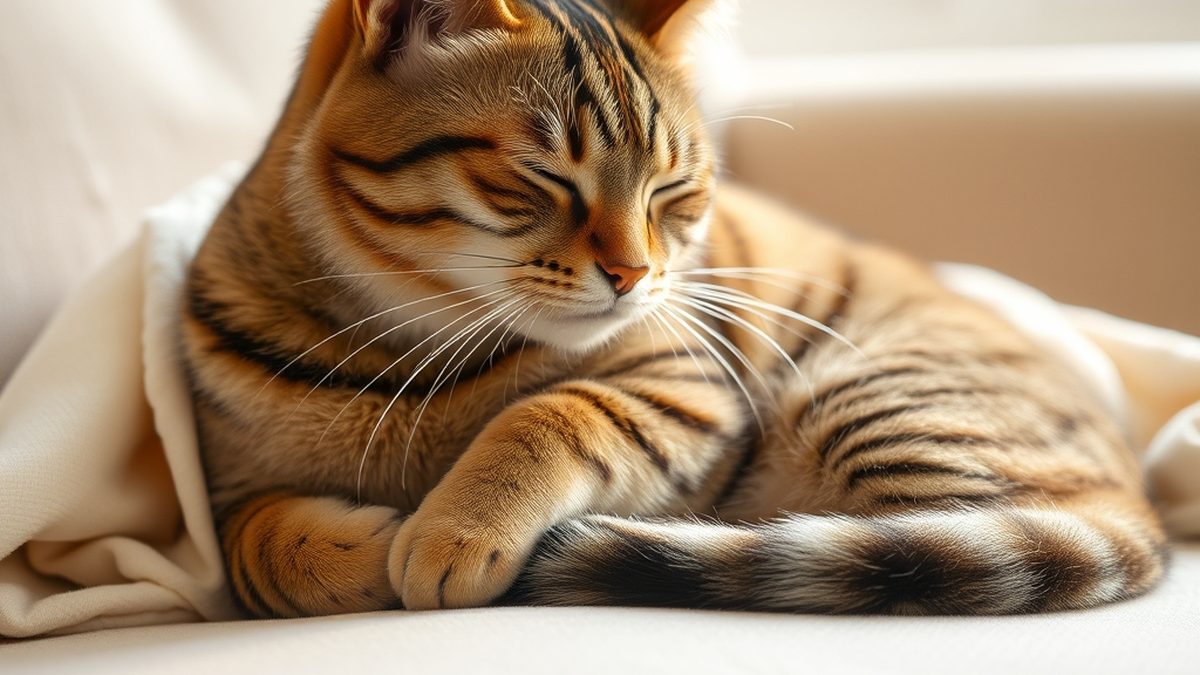
Illustration generated by Nexulab
- Kneading begins as a neonatal reflex: kittens press the mother's mammary glands to stimulate milk flow, before their eyes and ears open.
- Adult cats knead for several distinct reasons — comfort, territory marking, stretching, and nesting — and the context tells you which.
- Kneading on a person is usually a sign of trust and bonding, not a demand or a complaint.
- A cat that suddenly stops kneading after doing it for years is worth watching: pain or stress may be the cause.
- Punishing or pushing a kneading cat away breaks trust without teaching anything. Redirecting to a dedicated blanket works better for both of you.
A cat making biscuits — paws pushing rhythmically against a blanket, a cushion, or your lap — is one of the most recognizable feline behaviors. It is also one of the oldest. The motion begins before the cat can see or hear, and it never fully leaves.
The phrase comes from the resemblance to a baker kneading dough: alternating paws pressing down and pulling back. Some people call it kneading, some call it making biscuits, some call it treading. They all refer to the same rhythmic paw-pushing behavior.
Where it starts: the neonatal reflex
A newborn kitten arrives blind, deaf, and entirely dependent. It cannot regulate its own body temperature, it cannot eliminate waste without stimulation, and it cannot hunt. What it can do — from the first hours — is nurse.
The kneading motion is part of that. The kitten presses its front paws against the mother’s mammary tissue in an alternating rhythm, which stimulates milk let-down. This is not learned. It is a reflex, wired into the nervous system before birth, and it fires the first time the kitten touches the mother’s belly.
That early link between the paw motion and the sensation of warmth, food and safety is the foundation. In adult cats the milk is long gone, but the connection between the motion and the feeling remains.
Why adult cats keep doing it
The reflex does not fade after weaning. It broadens. What was once a single-purpose feeding behavior becomes a flexible response that cats deploy in several distinct situations.
Comfort and self-soothing
This is the most common context and the one people recognize. A cat settles onto a soft surface — a fleece blanket, a cushion, your lap — and begins kneading with half-closed eyes, often purring.
The trigger is tactile: something soft under the paws that mimics the texture of the mother’s belly. The response is deeply ingrained. The cat is not thinking about nursing; the sensory pathway is firing directly, and the result is a state of calm that resembles the safety of kittenhood.
Scent marking
Cats have scent glands in the pads of their paws that release pheromones when pressed against a surface. Kneading activates those glands, depositing a chemical signature that is invisible to humans but meaningful to cats.
This is not territorial in a defensive sense. It is more like leaving a familiar bookmark: this spot is mine, I have been here, it is safe. The message is for the cat as much as for anyone else. Returning to a surface that already carries its own scent reinforces the sense of security.
Stretching and muscle maintenance
Cats stretch constantly — after sleep, before activity, between naps. Kneading engages the flexor and extensor muscles of the forelimbs, the shoulders, and the spine in a way that resembles a targeted stretch. A cat that kneads after a long nap is doing the feline equivalent of morning stretches, using a soft surface as the prop.
Nesting behavior
Female cats, particularly unspayed ones, may knead more intensively as part of nesting. The behavior can appear during heat cycles or, in a pregnant cat, in the days before delivery. The kneading softens and shapes the chosen nesting spot, and the paw motion is the same one that prepared the nursing area in the ancestral den.
Spayed females and male cats can also show nesting-related kneading, though it is less hormonally driven and more about creating a comfortable resting spot.
Bonding with a person
A cat that kneads on you is not using you as furniture. It is treating you the way it treated its mother: as a source of warmth and safety. The behavior is selective — cats tend to knead on the person they trust most, not on every lap they encounter — and it is one of the clearer signs that a cat feels genuinely secure.
Kneading on a person often comes with purring, which adds another layer. Purring during kneading is the same combination the kitten produced while nursing, and the adult brain still links the two.
Comparing the contexts
| Context | When it happens | Body language | What it means |
|---|---|---|---|
| Comfort seeking | On soft surfaces, often before sleep | Eyes half-closed, purring, relaxed posture | Self-soothing, deep relaxation |
| Scent marking | On favored spots, repeats over days | Normal alertness, may sniff the surface first | Leaving a familiar chemical signature |
| Stretching | After waking, between naps | Full body extension, may yawn | Muscle maintenance and flexibility |
| Nesting | During heat or late pregnancy | More persistent than usual, seeks secluded spots | Preparing a safe space |
| Bonding | On a person, usually one specific person | Purring, may lick or nuzzle | Trust and attachment |
When kneading is worth a closer look
Kneading itself is almost never a problem. But changes in the pattern can be informative.
A cat that kneads excessively — hours at a time, to the point of interrupting eating or sleeping — may be self-soothing in response to stress or anxiety. The behavior becomes a coping mechanism, and the volume of kneading tells you the cat is struggling with something. Look for other stress signs: hiding, overgrooming, changes in appetite, litter box avoidance.
A cat that stops kneading suddenly after doing it for years may be dealing with pain. Arthritis in the paws or wrists makes the pushing motion uncomfortable, and a cat in discomfort will avoid it. Dental pain can also suppress kneading, particularly if the cat associated it with the oral component of nursing.
A cat that kneads aggressively, with claws fully extended and enough force to damage fabric or skin, may be overstimulated. This resembles the overstimulation that leads to biting during petting: the arousal crosses a threshold and the behavior tips from soothing to too much. The fix is the same: stop before that point, not after.
Making it easier for both of you
If your cat kneads on you and the claws are uncomfortable, trimming them regularly solves most of the problem. A cat with trimmed claws can knead without breaking skin.
If the cat kneads on furniture you want to protect, give it a dedicated kneading blanket — something thick, soft, and placed where the cat already likes to knead. Move the cat gently to the blanket when kneading starts elsewhere, and the habit usually redirects within a few days without any conflict.
What does not work: pushing the cat away, spraying water, scolding, or tapping the paws. Kneading is involuntary and deeply rooted. Punishing it teaches the cat that being relaxed near you is unsafe, which damages the relationship without changing the behavior.
A claw-trimming routine, a designated blanket, and a calm response when the paws start moving: that is the entire solution. The behavior itself is a good sign — it means the cat feels secure enough to do something that, in its brain, belongs to the safest place it has ever known.
For more on reading what your cat is telling you, the ASPCA’s cat care section covers a wide range of feline behavior and body language, and PetMD offers detailed articles on cat health and development from kittenhood through old age.
Frequently asked questions
Why do cats knead with their paws?
The motion originates in the first days of life. A newborn kitten, blind and deaf, presses its paws alternately against the mother's belly to stimulate milk flow while nursing. The behavior is hardwired into the nervous system so early that it becomes a permanent piece of the cat's motor repertoire. In adult cats the same motion persists, triggered now by soft surfaces, familiar people, or moments of deep relaxation. It is one of the few behaviors that survives unchanged from neonate to senior.
Why does my cat knead me but not other people?
Kneading on a person is selective. It tends to happen with the individual the cat feels safest around, which is why a cat may knead one family member and ignore the rest. The association is likely olfactory: you smell familiar, you smell safe, and the cat associates that scent with the comfort of nursing. Being the chosen kneading spot is a quiet vote of trust.
Is kneading a sign my cat was taken from its mother too early?
Not necessarily. Kittens that stayed with their mother well past weaning still knead as adults. The behavior is not a sign of deprivation or incomplete development. It persists because it became linked early to the sensation of comfort, and the brain retained the connection. A cat that kneads excessively — hours a day, to the exclusion of other activities — may be self-soothing from anxiety, but ordinary kneading is a normal adult behavior regardless of weaning age.
Why does my cat drool while kneading?
Some cats drool when they are deeply relaxed, and kneading often coincides with that state. The likely explanation is that the neural pathways for nursing — kneading, suckling, salivating — are bundled together from kittenhood, and sometimes the whole package fires at once even when there is nothing to nurse on. It is harmless unless the drooling also happens at other times, which could point to a dental or gastrointestinal issue.
Should I stop my cat from kneading?
Almost never. Kneading is a self-soothing, bonding behavior that does no harm in itself. The exceptions are if the cat is kneading a surface that gets damaged, or if the claws are causing you genuine discomfort. In those cases, redirect rather than punish: place a thick folded blanket between you and the paws, or guide the cat gently onto a dedicated kneading pad. Trimming the claws regularly reduces the sharpness without interfering with the behavior.