Why Does My Dog Stare at Me? It Is Not Just Love
Most people assume their dog stares because it loves them. That is partly true, but it is also the shallowest answer. Staring is how dogs read us, ask for things, and sometimes warn us. Here is what each kind of stare means and when to pay closer attention.
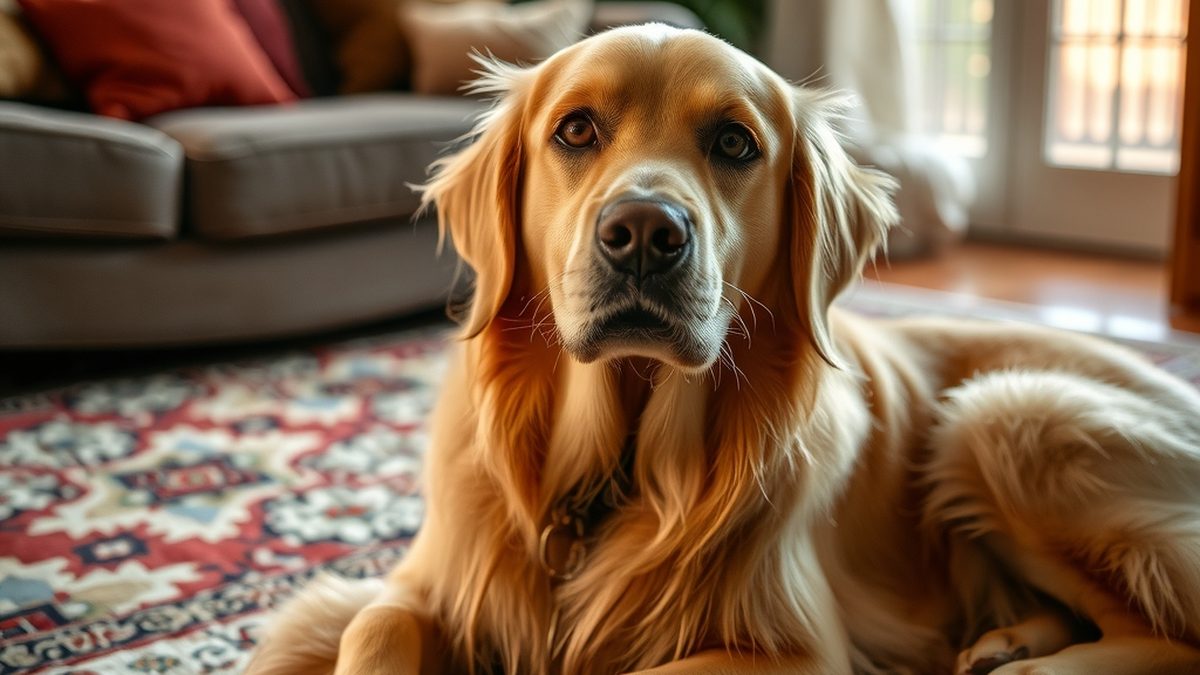
Illustration generated by Nexulab. Inline photo by Brixiv via Pexels
- Staring is a core piece of dog communication, not just affection. Dogs stare to read us, ask for things, bond, and sometimes to warn.
- The soft, blinking stare with a relaxed body is mutual bonding and releases oxytocin in both dog and human.
- The hard, fixed stare with a still body and visible sclera is a warning sign that should not be ignored or punished.
- Context is everything. The same stare means entirely different things depending on what the dog is doing, where it is, and what is happening around it.
- A dog that suddenly starts staring at walls or into empty corners needs a vet, not a trainer. That is a medical red flag, not a behavioural quirk.
If you are asking why does my dog stare at me, the first thing to know is that you are not imagining it. Dogs stare at their people far more than wolves stare at pack members, far more than cats stare at their owners, and far more than most people realise until they start paying attention.
The popular answer — your dog stares because it loves you — is not wrong. It is just incomplete in a way that stops people from noticing when the staring means something else.
Staring is one of the richest communication channels a dog has with a human. It serves at least five distinct functions, and treating every gaze as affection means missing the ones that are asking for something, the ones that are reading your next move, and the ones that are warning you. This article walks through each one so that the next time your dog holds your gaze, you know which conversation you are having.
The soft stare: bonding and oxytocin
When your dog lies on its bed, looks at you across the room, blinks slowly and exhales, that is mutual gazing. Japanese researchers demonstrated in 2015 that sustained eye contact between dogs and their owners raises oxytocin levels in both species — the same neurochemical loop that bonds human mothers and infants. Wolves do not do this with humans, even hand-reared ones. The behaviour appears to have co-evolved with domestication.
You can recognise a bonding stare by the rest of the body. The ears are neutral or slightly back, the mouth is open just enough to see the tongue, the forehead is smooth and the dog blinks. There is no tension in the shoulders or the tail. If you look back and blink slowly, many dogs will blink in return. That is the loop working.
This is the stare most people mean when they say their dog looks at them with love, and in this case the science backs the sentiment.
The reader stare: scanning for information
A dog that watches you move around the kitchen is not necessarily hoping for food. It is reading you.
Dogs are extraordinarily attentive to human body language — more so than chimpanzees, our closest relatives, in tasks that involve reading human gestures. Your dog tracks where you look, which direction your feet point, how your shoulders shift and whether your breathing changes. It is building a predictive model of what you are about to do.
This kind of stare is sustained but not intense. The dog follows you with its eyes or turns its head. The body stays soft. The moment you make a move that signals something relevant — standing up, reaching for a leash, opening the fridge — the energy shifts and the staring becomes the next type.
Understanding a stare as scanning rather than begging changes how you respond. A dog that is simply watching you move through the house does not need a command or a treat. It is doing what dogs do: paying attention to the most important thing in its world.
The request stare: asking for something
When the soft reader stare sharpens into something more directed, the dog has identified what it wants and is now asking for it. The target is usually one of four things: food, a walk, access to outside, or play.
You can tell a request stare from a reading stare because the dog breaks gaze to glance at the object of its desire and then looks back at you. A dog staring at you, then at the door, then at you again is communicating with surprising clarity. The behaviour is called referential looking and it is one of the ways dogs demonstrate an understanding that humans are agents who can be influenced.
This is also the stare that people accidentally reinforce the most. If your dog stares at you while you eat and you eventually give it a piece of food — even once — the dog learns that staring works. The behaviour persists not because the dog is stubborn but because it has been paid out, and intermittent rewards create the strongest habits. The American Kennel Club describes this as one of the most common drivers of staring that owners misinterpret as affection.
The cue-waiting stare: anticipating a command
In training contexts, a dog that stares at you without moving may be waiting for a cue. This is common in dogs that have been through reward-based training: they learn that paying close attention to the handler is the fastest way to earn reinforcement.
The body language is specific. The dog is often sitting or standing squarely. The mouth is closed, the ears are forward, and the stillness has a coiled quality — ready to move the moment the cue is given. There is little or no blinking. This is not bonding and it is not begging. It is focus.
This stare is desirable in training and working dogs because it means the dog is engaged. But in pet dogs it can sometimes look like anxiety if you do not recognise it for what it is. A dog that stares at you fixedly during a training session is working. A dog that stares at you fixedly in the living room with no clear cue expected may be confused about what you want.
The hard stare: a warning
Here is where context stops being subtle and becomes urgent. A hard stare is nothing like the soft mutual gaze. The dog’s body is completely still. The mouth is closed. The ears may be forward or pinned back depending on the dog, but the eyes are intense and unblinking, and you can often see the whites of the eyes — the sclera — around the iris. This is sometimes called whale eye when the dog’s head is turned slightly away but the eyes are locked on target.
In dog-dog communication, a hard stare is an aggressive signal. It says stop. It is often the last warning before a growl or a bite, and it is one of the reasons dogs that have been punished for growling become more dangerous: they learn to skip the vocal warning and go straight from the stare to the bite.
In dog-human communication, the hard stare most often appears around resources. A dog that freezes and stares at you while guarding a bone, a food bowl or a favourite resting spot is not being stubborn. It is telling you to back away. The correct response is to back away and then work with a qualified trainer on the underlying resource guarding — never to punish the stare or force the issue.
The table below summarises how to tell the five stares apart.
| Type of stare | Body language | Context | What to do |
|---|---|---|---|
| Soft bonding stare | Relaxed body, slow blinks, open mouth, neutral ears | Dog is resting, lying down, or near you with no demands | Blink back, speak softly, enjoy it |
| Reader stare | Loose body, follows you with eyes or head, calm | You are moving around the house, doing chores | Nothing — the dog is just watching |
| Request stare | Alert, glances between you and the target, may whine | Near food, a door, a leash, or a toy | Decide whether to reinforce or ignore; be consistent |
| Cue-waiting stare | Still, ears forward, closed mouth, coiled energy | During or after a training session | Give a cue or release the dog |
| Hard stare | Frozen body, visible sclera, unblinking, mouth shut tight | Near food, a bone, a bed, or when approached by a stranger | Back away slowly, do not punish, seek a trainer |
When staring is a medical warning
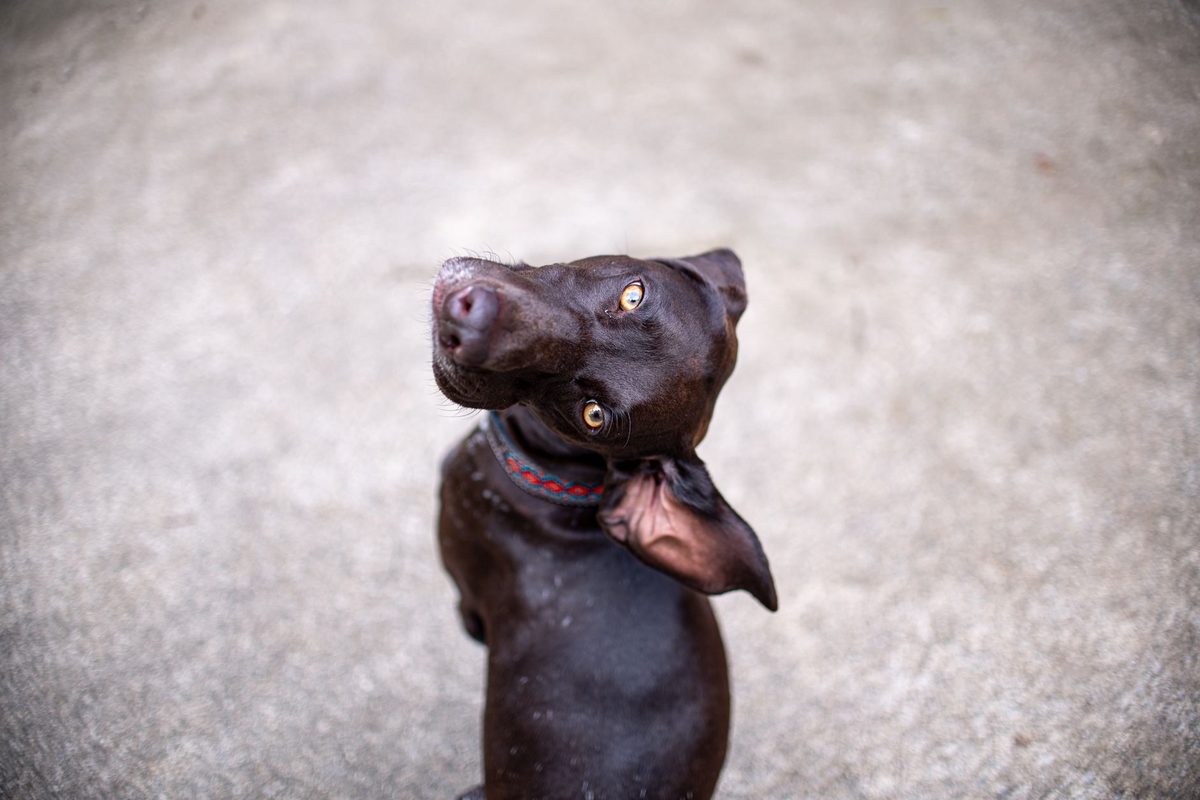
A dog that suddenly begins staring at walls, corners or empty spaces is not being spooky. It may have canine cognitive dysfunction — the dog equivalent of dementia — especially if the dog is older and the behaviour is accompanied by disrupted sleep, housetraining lapses or getting stuck behind furniture. It can also indicate a neurological problem such as a partial seizure.
This is a completely different category from the five social stares above. A dog that stares at you is communicating. A dog that stares at nothing may have something wrong inside its brain. If the behaviour is new and persistent, a vet visit comes before any behavioural explanation.
The same principle applies to the opposite change. If a dog that has always watched you closely suddenly stops engaging, stops tracking you with its eyes, and seems disconnected, that is also worth a vet check. Sudden changes in alertness and engagement often show up alongside other symptoms like lethargy and appetite loss.
Why the explanation matters
The answer you give yourself about why your dog stares changes what you do next.
If you call every stare love, you miss the request stare and wonder why your dog paws at you later. If you call every stare begging, you harden against the bonding gaze and lose a connection that is real and measurable. If you miss the hard stare, you push a dog that is telling you to stop and create a bite that did not come out of nowhere — it came after several minutes of staring that nobody read.
Dogs that stare at their owners are not broken or obsessed. They are paying attention to the creature that controls nearly every resource in their world. That attention is usually benign and often affectionate, but it is also strategic. A dog that follows you from room to room and stares at you when you stop is doing the same thing at close range: gathering data on what you are about to do and whether it involves them.
The stare is the question. Learning to read which question is being asked is one of the most useful things you can do for your dog.
Frequently asked questions
Is it true that my dog stares at me because it loves me?
It is partly true. When a dog gives you a soft, relaxed stare with slow blinks and a loose body, that is mutual gazing and it releases oxytocin in both of you — the same hormone that bonds human mothers and babies. But staring also serves other purposes: reading your next move, asking for something, watching for a cue, or guarding a resource. Love is one chapter of the story, not the whole book.
What does it mean when my dog stares at me while I eat?
That is a request, not affection. Your dog has learned that staring at a human who is eating sometimes results in food. It is a low-effort, high-reward behaviour and dogs are master optimists about it. Whether you reinforce it is your call, but the dog is not gazing lovingly at your sandwich — it is calculating the odds that a piece will fall.
Why does my dog stare at me before I leave the house?
Most likely it is reading you. Dogs learn the chain of events that signal a departure — keys jingling, shoes going on, a bag being picked up — and they watch for the first link in that chain. A dog staring at you as you get ready to leave is not being dramatic. It is gathering information about what happens next, and whether this time the routine ends with the door opening or with you sitting back down.
Should I stare back at my dog?
It depends entirely on the dog and the stare. Soft mutual gazing with a relaxed dog is bonding. But staring directly into the eyes of a dog that is already tense, still, or showing a hard stare can be read as a challenge or threat. If you are unsure, soften your gaze and look slightly to the side of the dog rather than directly into its eyes. With a dog you know well and trust, slow blinking back can deepen the bond.
When is staring a sign that something is medically wrong?
Three changes should get your attention. One, the dog starts staring at walls, corners or into empty space — this can indicate canine cognitive dysfunction in older dogs or a neurological issue. Two, a dog that normally stares at you stops doing so and appears disconnected or unresponsive. Three, staring is accompanied by disorientation, head pressing, or changes in sleep and appetite. Any of those is a vet visit, not a behaviour to train out.